
ICC IBC-2024 International Building Code
Buy the 2024 International Building Code (IBC), the current ICC model building code covering structural design, fire and life safety, occupancy, egress, accessibility, concrete, steel, masonry, tornad
About this publication
The 2024 International Building Code® (IBC®) is the International Code Council’s primary model building code for establishing minimum requirements intended to safeguard public health, safety, and general welfare in the design and construction of buildings and structures.
Used by architects, structural engineers, building officials, inspectors, contractors, plan reviewers, code consultants, developers, and other construction professionals, the IBC provides a comprehensive framework covering building occupancy, construction type, height and area, fire and life safety, means of egress, accessibility, structural design, materials, special inspections, and numerous other building-system requirements.
The 2024 IBC applies broadly to buildings and structures other than detached one- and two-family dwellings and townhouses up to three stories, which are generally addressed through the International Residential Code where adopted. As a model code, the IBC is adopted and modified by states and local jurisdictions, so professionals should always verify the edition and amendments legally applicable to a particular project.
The 2024 Edition represents a major update from the 2021 IBC, with important changes affecting both structural and nonstructural design. One of the most significant additions is the introduction of tornado loading provisions for the first time in the IBC. This change reflects the continuing evolution of structural hazard design and gives engineers and building officials new code provisions for addressing tornado effects where applicable.
Structural loading requirements have also been updated for wind, earthquake, snow, and rain. The revised rain-load provisions now account for the combination of static head, hydraulic head, and ponding head, while updated risk-category provisions address areas including photovoltaic systems and power-generation facilities. These revisions make the 2024 edition especially important for structural engineers, architects, and jurisdictions moving from the 2021 code cycle.
The 2024 IBC also introduces expanded provisions for temporary structures and new special-inspection requirements for metal building systems. For projects involving pre-engineered or metal building construction, these changes can directly affect inspection planning, quality assurance, and code-compliance responsibilities.
Concrete provisions receive substantial attention as well. Chapter 19 has been updated and reformatted for improved usability, and the 2024 edition introduces provisions addressing structural concrete reinforced with glass-fiber reinforcement. These changes reflect the increasing use of alternative reinforcement materials and evolving structural concrete technologies.
Masonry requirements have also been modernized. The 2024 IBC updates its references to the 2022 editions of TMS 402 and TMS 602, bringing the model code into alignment with the current Building Code Requirements and Specification for Masonry Structures. This is particularly important for engineers and designers working with structural masonry under the 2024 code framework.
Fire and life-safety provisions continue to form a major part of the IBC. Among the notable 2024 changes are updated requirements for fire-resistance-rated wall continuity, openings in shaft enclosures, and carbon monoxide detection. ICC notes that CO detection is now required across occupancies where a CO-producing device is present, subject to the applicable code provisions.
The code also includes updated provisions affecting roof assemblies and exterior building envelopes. Changes include new requirements concerning the wind resistance of aggregate-surfaced roofs, revised roof-underlayment provisions, updated vapor-retarder requirements, and clearer guidance for when testing under NFPA 285 is required for vertical and lateral flame propagation.
Occupancy and egress requirements have also changed. ICC highlights revised provisions for occupiable roof spaces, including situations where roofs used for more than maintenance or repair must satisfy applicable occupant-access and egress requirements. The 2024 edition also increases the allowable height for certain Group R-2 occupancies protected by NFPA 13R sprinkler systems.
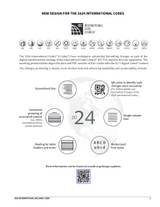
The 2024 IBC introduces a redesigned presentation intended to make a very large code somewhat less hostile to the person actually trying to find a requirement. ICC moved to a single-column layout, modernized typography, shaded table headers, improved placement of tables and figures, and QR codes identifying technical changes from the previous edition.
At 780 pages, the 2024 International Building Code is a substantial professional reference covering the core building regulations used throughout much of the U.S. construction industry. For architects, engineers, inspectors, contractors, code officials, and organizations working in jurisdictions adopting the 2024 I-Codes, it is a foundational code reference rather than an optional design handbook.
Why This Code Matters
The 2024 International Building Code is a core reference for professionals responsible for building design, construction, review, permitting, and inspection, including:
Architects and architectural firms
Structural and civil engineers
Building officials
Plans examiners and code reviewers
Building and special inspectors
General contractors and construction managers
Developers and owners
Code consultants
Fire and life-safety professionals
Structural steel and concrete professionals
Masonry design and construction teams
Engineering and architecture students
Government and institutional facilities departments
Building-code and construction libraries
Product Features
Official 2024 International Building Code®
Published by the International Code Council (ICC)
Current 2024 I-Code cycle
Covers building occupancy and classification
Addresses construction types
Covers allowable building heights and areas
Includes fire- and smoke-protection requirements
Covers interior finishes
Includes fire-protection and life-safety systems
Covers means of egress
Addresses accessibility requirements
Includes comprehensive structural-design provisions
Introduces tornado loading requirements
Includes updated wind, seismic, snow, and rain loads
Updates structural risk categories
Expands requirements for temporary structures
Adds special-inspection provisions for metal building systems
Includes new provisions for GFRP-reinforced structural concrete
Updates and reorganizes Chapter 19 concrete requirements
References TMS 402/602-22 for masonry
Updates roof and exterior-envelope provisions
Expands carbon monoxide detection requirements
Updates occupiable-roof and egress requirements
Includes new Appendix P addressing sleeping lofts in Group R dwelling and sleeping units
Uses QR codes to identify technical changes from the prior code cycle
Comprehensive 780-page professional code reference
Product Details
Title: ICC IBC-2024 International Building Code
Publisher: International Code Council (ICC)
Edition: 2024
Code Year: 2024
First Printing: August 2023
Number of Pages: 780
Soft-Cover ISBN: 978-1-959851-60-8
Loose-Leaf ISBN: 978-1-959851-61-5
PDF ISBN: 978-1-959851-62-2
Language: English
Designation: IBC-2024
Subject: Building Codes / Architecture / Structural Engineering / Construction / Fire & Life Safety