
ANSI/ASHRAE Standard 62.1-2025 — Ventilation and Acceptable Indoor Air Quality
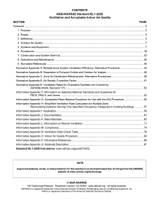
ANSI/ASHRAE 62.1-2025 covers ventilation, IAQ, outdoor air, filtration, humidity, DCV, exhaust, air cleaning and ventilation system operation.
About this publication
Product Description
ANSI/ASHRAE Standard 62.1-2025, Ventilation and Acceptable Indoor Air Quality establishes minimum ventilation rates and other measures intended to provide indoor air quality that is acceptable to human occupants and to minimize adverse health effects.
Standard 62.1 is one of ASHRAE's principal ventilation and indoor-air-quality standards and has served as an industry reference for building ventilation systems since the original Standard 62 was first published in 1973.
The standard provides requirements for both mechanical and natural ventilation systems and includes provisions covering filtration, air cleaning, ventilation controls, outdoor-air delivery, exhaust, humidity, building operation and maintenance.
2025 Edition
The 2025 edition updates and expands the ventilation and indoor-air-quality requirements found in the preceding edition. ASHRAE identifies the 2025 publication as the current edition of Standard 62.1.
Major 2025 changes include additional humidity-control requirements, mandatory air-density adjustments, demand control ventilation control sequences, emergency ventilation control requirements and new calculation methods for exhaust airflow, separation distances and filtration efficiency.
Purpose
The purpose of Standard 62.1 is to specify minimum ventilation rates and other measures intended to provide acceptable indoor air quality to human occupants and minimize adverse health effects.
The standard is intended for regulatory application to new buildings, additions to existing buildings and changes to existing buildings identified within the standard. It is also intended to guide efforts to improve indoor air quality in existing buildings.
Scope
Standard 62.1 applies to spaces intended for human occupancy within buildings, except dwelling units in residential occupancies where occupants are nontransient. Residential dwelling-unit ventilation is generally addressed by ASHRAE Standard 62.2.
The standard covers requirements related to ventilation system design, construction, startup, operation and maintenance where those activities affect indoor air quality.
Mechanical Ventilation
Mechanical ventilation systems use fans, air-handling equipment, duct systems and controls to introduce outdoor air and distribute it to occupied spaces.
Standard 62.1 establishes methods for determining outdoor-air requirements and coordinating outdoor-air delivery with system configuration, occupancy and ventilation-zone characteristics.
Natural Ventilation
The standard also contains provisions for natural ventilation where outdoor air is introduced through operable openings and other approved natural-airflow pathways.
Natural ventilation must satisfy applicable opening, location and operating requirements and must be appropriate for the intended space and environmental conditions.
Outdoor Air Quality
Outdoor air used for ventilation can itself contain contaminants. Standard 62.1 therefore requires consideration of outdoor-air quality and building location when designing ventilation systems.
Designers must evaluate outdoor contaminant sources and determine whether filtration, air cleaning or other measures are required before outdoor air is introduced into occupied spaces.
Outdoor Air Intakes
Outdoor-air intakes must be located and designed to reduce the likelihood that contaminated exhaust air or other pollutant sources will be drawn into ventilation systems.
The 2025 edition introduces a new method for calculating separation distances between outdoor-air intakes and exhaust or contaminant sources.
Ventilation Rate Procedure
The Ventilation Rate Procedure is one of the primary compliance methods in Standard 62.1. It establishes outdoor-air requirements based on occupancy and floor area and then adjusts those requirements according to ventilation effectiveness and system configuration.
This approach recognizes that both people and building-related sources contribute to indoor contaminants.
People Outdoor Air Rate
The people component of ventilation is based on expected occupancy and the applicable outdoor-air rate per person for the occupancy category.
This portion of the calculation addresses contaminants associated primarily with occupants and occupant activities.
Area Outdoor Air Rate
The area component of ventilation is based on the occupied floor area and the applicable outdoor-air rate per unit area.
This component accounts for building-related contaminant sources that are not directly proportional to the number of occupants.
Breathing Zone Outdoor Airflow
People and area outdoor-air components are combined to determine breathing-zone outdoor airflow for each ventilation zone.
Zone air-distribution effectiveness and system-level calculations are then applied as required to determine the outdoor-air quantity that must be delivered by the ventilation system.
Multiple-Zone Systems
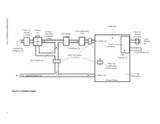
Multiple-zone recirculating systems require additional calculations because outdoor air introduced at a central air-handling unit is distributed among zones with different occupancy, airflow and ventilation requirements.
Standard 62.1 provides procedures for determining system ventilation efficiency and required outdoor-air intake flow for these systems.
2025 Air-Density Correction
A major 2025 change is the introduction of a mandatory air-density correction factor for ventilation zones.
Air density changes with elevation, temperature and other conditions. Applying an air-density adjustment improves consistency between required ventilation mass flow and volumetric airflow calculations.
Demand Control Ventilation
Demand control ventilation adjusts outdoor-air delivery in response to changes in occupancy or other indicators of ventilation demand.
The 2025 edition adds a new demand control ventilation control sequence, providing more explicit requirements for how ventilation airflow is reduced or increased as occupancy conditions change.
Ventilation Controls
Ventilation controls must maintain required outdoor-air delivery under normal operating conditions and respond appropriately to changes in occupancy and system operation.
The 2025 edition expands control requirements and clarifies the relationship between ventilation airflow, occupancy and demand-control operation.
Emergency Ventilation Controls
The 2025 edition introduces requirements for ventilation system emergency controls addressing atypical operating conditions.
These provisions recognize that ventilation systems may need to respond differently during abnormal building conditions or emergency events than during normal occupied operation.
Humidity Control
Indoor humidity affects occupant comfort, microbial growth, condensation and building durability. Standard 62.1 therefore includes requirements intended to limit problematic moisture conditions.
The 2025 edition significantly expands and refines humidity-control requirements. These changes are among the principal technical revisions identified by ASHRAE for the new edition.
Moisture and Building Integrity
Ventilation systems can introduce significant moisture loads, particularly in humid climates. Improper ventilation or dehumidification can contribute to condensation, mold growth and material deterioration.
The standard coordinates ventilation and moisture control so that outdoor-air requirements do not inadvertently compromise indoor-air quality or building integrity.
Filtration
Filtration requirements help reduce airborne particulate contaminants entering or recirculating through building ventilation systems.
Filter selection and placement can depend on outdoor-air quality, system configuration and the intended indoor-air-quality strategy.
2025 Filter Efficiency Calculations
The 2025 edition adds new calculation methods related to filter efficiency, including determination of end-of-useful-life performance for certain contaminants.
This recognizes that filter and air-cleaning system performance can change during service and should not necessarily be evaluated only under initial operating conditions.
Air Cleaning
Standard 62.1 recognizes air-cleaning systems as part of an indoor-air-quality strategy where permitted by the standard.
The 2025 edition expands requirements addressing air-cleaning system performance and the methods used to calculate or verify effectiveness.
Indoor Air Quality Procedure
The Indoor Air Quality Procedure provides an alternative compliance path to the prescriptive Ventilation Rate Procedure.
This method evaluates contaminants of concern, concentration limits, sources, air-cleaning performance and other factors to establish ventilation and air-cleaning requirements that achieve acceptable indoor-air quality.
Natural Ventilation Procedure
Where applicable, Standard 62.1 provides a natural-ventilation pathway based on qualifying openings and environmental conditions.
Buildings using natural ventilation must still satisfy the standard's applicable requirements for outdoor-air quality and system operation.
Exhaust Systems
Exhaust ventilation removes contaminants generated in spaces such as restrooms, kitchens, janitor rooms, laboratories, storage areas and other locations where contaminants should be captured or removed directly.
The standard establishes minimum exhaust requirements for applicable occupancy and space categories.
2025 Exhaust Airflow Calculations
The 2025 edition introduces new calculation methods for exhaust airflow rates and revises the performance path used for exhaust systems.
These revisions are intended to improve calculation consistency and better coordinate exhaust-system requirements with modern ventilation design.
Air Classification and Recirculation
Standard 62.1 classifies air based on contaminant concentration and potential health effects and uses those classifications to establish restrictions on recirculation and transfer of air between spaces.
Air from more contaminated spaces can be restricted from being transferred into cleaner spaces unless appropriate treatment or other permitted measures are provided.
Air Distribution
Providing sufficient outdoor air at an air-handling unit does not guarantee adequate ventilation at the occupant breathing zone. Air-distribution effectiveness therefore forms an important part of ventilation calculations.
Diffuser location, airflow direction, supply-air temperature and return-air arrangement can affect ventilation effectiveness.
System Design and Equipment
Standard 62.1 contains requirements for ventilation system components and configuration where those features affect indoor-air quality.
Requirements address matters such as air intakes, exhaust outlets, drain pans, air distribution, access for maintenance, filtration and moisture management.
Separation of Intakes and Exhausts
Outdoor-air intakes must be separated from exhaust outlets and contaminant sources to reduce reentrainment.
The 2025 edition adds a new calculation method for determining required separation distances, giving designers an additional technical approach beyond simple fixed distances.
Construction Requirements
Indoor-air-quality performance can be compromised during construction if ductwork, equipment and building materials become contaminated by dust, moisture or debris.
Standard 62.1 includes requirements affecting construction-phase protection, cleanliness and system preparation before occupancy.
System Startup
Ventilation systems must be prepared and verified before occupied operation. Startup activities can include cleaning, inspection, testing and confirmation that ventilation components operate as intended.
These requirements help ensure that systems designed to provide acceptable indoor-air quality are actually functioning at the time the building is occupied.
Operation and Maintenance
Ventilation systems can only maintain their intended indoor-air-quality performance when they are operated and maintained correctly.
Standard 62.1 therefore includes requirements affecting filters, air-cleaning devices, outdoor-air controls, drain pans, dampers and other system components whose degradation can reduce ventilation effectiveness.
Existing Buildings
Although Standard 62.1 is intended for regulatory application to new construction and specified alterations, ASHRAE also identifies it as a guide for improving indoor-air quality in existing buildings.
Owners and facility personnel can use the standard to evaluate ventilation systems and identify opportunities to improve outdoor-air delivery, filtration, maintenance and moisture control.
Relationship to ASHRAE Standard 62.2
Standard 62.1 primarily addresses nonresidential occupancies and other spaces within its defined scope. ASHRAE Standard 62.2 addresses ventilation and acceptable indoor-air quality in residential dwelling units where occupants are nontransient.
Correct selection between Standards 62.1 and 62.2 depends on building type and occupancy.
Relationship to ASHRAE Standard 241
ASHRAE Standard 241 addresses control of infectious aerosols during periods of elevated disease-transmission risk. Standard 62.1 provides the normal-building ventilation and indoor-air-quality baseline, while Standard 241 can establish additional infectious-aerosol mitigation requirements when applicable.
Relationship to Building Codes
Standard 62.1 is widely referenced by building, mechanical, energy and green-building codes. Where incorporated by a jurisdiction, its ventilation requirements can become part of the regulatory basis for building design and operation.
Users should verify the specific edition adopted by the authority having jurisdiction because publication of the 2025 edition does not automatically replace an earlier edition already adopted into law.
ANSI Status
ASHRAE Standard 62.1-2025 is approved as an American National Standard and is maintained through ASHRAE's consensus standards process.
Continuous Maintenance
Standard 62.1 is maintained on a continuous-maintenance basis. ASHRAE can publish addenda between full editions to revise or clarify requirements.
Users applying the standard should therefore review current ASHRAE addenda and errata in addition to the base 2025 publication.
Addendum a — 2026
ASHRAE published Addendum a to Standard 62.1-2025 on June 30, 2026. The addendum modifies the current edition and should be reviewed by users applying the standard after its publication.
2025 Edition Errata
ASHRAE has published errata for Standard 62.1-2025. The first-printing errata dated January 27, 2026 corrected Equation 6-10 in the outdoor-air-intake calculation. ASHRAE's current errata listing identifies a further Standard 62.1-2025 errata sheet dated August 27, 2026.
Users should consult the current ASHRAE errata page to ensure that applicable corrections are incorporated.
Who Should Use ASHRAE 62.1-2025
- HVAC engineers and designers;
- mechanical engineers;
- architects;
- building owners and facility managers;
- commissioning professionals;
- indoor-air-quality consultants;
- mechanical contractors;
- building-code officials;
- mechanical inspectors and plan reviewers;
- energy and sustainability consultants;
- air-filtration and air-cleaning professionals;
- building automation and controls professionals;
- design-build firms;
- authorities having jurisdiction.
Why Standard 62.1 Matters
Ventilation is one of the principal controls used to manage indoor contaminants generated by people, materials, equipment and building activities. Too little ventilation can allow contaminants to accumulate, while improperly designed ventilation can introduce outdoor pollutants, excessive humidity or unnecessary energy use.
ANSI/ASHRAE Standard 62.1-2025 provides a coordinated technical framework for determining minimum ventilation, controlling air quality and maintaining ventilation-system performance throughout the building life cycle.
Major 2025 Changes
- expanded humidity-control requirements;
- mandatory air-density correction factors;
- new demand control ventilation control sequences;
- ventilation system emergency control requirements;
- new exhaust-airflow calculation methods;
- new outdoor-air intake and exhaust separation-distance calculation methods;
- new filtration-efficiency calculation methods;
- air-cleaning system performance requirements;
- revisions to exhaust-system performance-path requirements;
- clarifications and coordination with related codes and standards.
Product Features
- 2025 edition of ANSI/ASHRAE Standard 62.1
- Current ASHRAE commercial and institutional ventilation standard
- ANSI approved
- 90 pages
- Dual I-P and SI units
- Covers mechanical and natural ventilation
- Establishes minimum outdoor-air requirements
- Includes Ventilation Rate Procedure requirements
- Includes Indoor Air Quality Procedure requirements
- Covers outdoor-air quality and intake location
- Includes demand control ventilation requirements
- Includes expanded humidity-control provisions
- Includes mandatory air-density adjustments
- Covers filtration and air-cleaning performance
- Includes exhaust-system requirements
- Covers construction, system startup, operation and maintenance
- Includes emergency ventilation-control requirements
- Published addenda and errata should be reviewed with the base standard
Product Details
- Standard: ANSI/ASHRAE 62.1-2025
- Title: Ventilation and Acceptable Indoor Air Quality
- Publisher: ASHRAE
- Edition: 2025 Edition
- Publication: November 2025
- Page Count: 90
- Units: Dual — I-P and SI
- ASHRAE Print Product Code: 86009
- ASHRAE Digital Product Code: D-86009
- ANSI Status: American National Standard
- Previous Edition: ANSI/ASHRAE Standard 62.1-2022
- Maintenance: Continuous Maintenance
- Language: English
- Publication Type: Ventilation and Indoor Air Quality Standard
Edition Status Note
ANSI/ASHRAE Standard 62.1-2025 is the current edition as of October 2026. It supersedes the 2022 edition as ASHRAE's current Standard 62.1 publication. ASHRAE published Addendum a on June 30, 2026 and lists current errata for the 2025 edition dated August 27, 2026. Because Standard 62.1 is under continuous maintenance, users should review current ASHRAE addenda and errata whenever applying the standard.