
ANSI/ASHRAE Standard 62.2-2025 — Ventilation and Acceptable Indoor Air Quality in Residential Buildings
ANSI/ASHRAE 62.2-2025 covers residential ventilation, local exhaust, MERV 11 filtration, IAQ procedures, air cleaning and source control.
About this publication
Product Description
ANSI/ASHRAE Standard 62.2-2025, Ventilation and Acceptable Indoor Air Quality in Residential Buildings, establishes minimum requirements for mechanical ventilation, natural ventilation and other measures intended to provide acceptable indoor air quality in individual dwelling units in residential occupancies where occupants are nontransient.
The standard provides a coordinated framework for whole-dwelling ventilation, local mechanical exhaust and contaminant source control. It also establishes requirements affecting air-moving equipment, filtration, airflow measurement, controls, equipment labeling, operation and maintenance and existing residential buildings.
Residential Indoor Air Quality Standard
Standard 62.2 is ASHRAE's principal consensus standard for residential dwelling-unit ventilation and indoor air quality. It complements ANSI/ASHRAE Standard 62.1, which primarily addresses nonresidential spaces and other occupancies outside the residential dwelling-unit scope of Standard 62.2.
The 2025 edition supersedes ANSI/ASHRAE Standard 62.2-2022 and continues ASHRAE's continuous-maintenance process for residential ventilation requirements.
Purpose
The purpose of Standard 62.2 is to define the roles and minimum requirements for mechanical and natural ventilation systems and other measures intended to provide acceptable indoor air quality in individual dwelling units.
The standard recognizes that ventilation is only one part of residential indoor-air-quality control. Source control, filtration, local exhaust, outdoor-air quality, equipment operation and occupant activities can all affect actual indoor conditions.
Scope
Standard 62.2 applies to dwelling units in residential occupancies where the occupants are nontransient.
The standard considers chemical, physical and biological contaminants that can affect indoor air quality. Thermal comfort requirements are outside its scope and are addressed separately by standards such as ANSI/ASHRAE Standard 55.
Acceptable Indoor Air Quality
ASHRAE expressly recognizes that compliance with the standard cannot guarantee acceptable indoor air quality under every condition. Indoor pollutant sources, occupant sensitivity, outdoor-air quality, contaminant transfer from adjacent spaces, unusual high-polluting events and improper system operation can all affect actual indoor conditions.
The standard therefore combines ventilation requirements with source-control and equipment-performance provisions rather than treating a single airflow rate as a complete indoor-air-quality solution.
Standard Organization
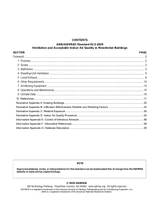
The 2025 edition is organized into the following principal sections:
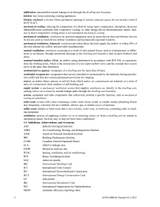
- Section 1 — Purpose
- Section 2 — Scope
- Section 3 — Definitions
- Section 4 — Dwelling-Unit Ventilation
- Section 5 — Local Exhaust
- Section 6 — Other Requirements
- Section 7 — Air-Moving Equipment
- Section 8 — Operations and Maintenance
- Section 9 — Climate Data
- Section 10 — References
The standard also includes normative appendices addressing existing buildings, infiltration, relative exposure and the Indoor Air Quality Procedure, together with informative appendices covering infectious aerosols, references and edition changes.
Section 4 — Dwelling-Unit Ventilation
Section 4 establishes the core dwelling-unit ventilation requirements. Whole-dwelling ventilation is intended to dilute contaminants generated by occupants, building materials and background processes that cannot reasonably be controlled solely through local source removal.
Residential ventilation systems can use supply, exhaust or balanced configurations depending on design conditions and applicable requirements.
Mechanical Ventilation
Mechanical dwelling-unit ventilation uses powered equipment to provide or remove air at rates sufficient to satisfy the standard's ventilation requirements.
System design must account for required airflow, controls, equipment performance and measurement of installed airflow rather than relying solely on nominal equipment ratings.
Natural Ventilation
Standard 62.2 also recognizes natural ventilation within the limits and conditions established by the standard. Operable openings alone do not necessarily replace required mechanical ventilation where the standard requires a mechanical system.
Ventilation Airflow
The dwelling-unit ventilation provisions establish minimum airflow based on characteristics of the dwelling and occupancy.
The objective is to provide sufficient dilution for contaminants generated throughout the residence while avoiding dependence on uncontrolled infiltration as the only source of ventilation.
Infiltration
Air leakage through the building enclosure can contribute outdoor air, but infiltration varies with building tightness, weather and shielding conditions. Standard 62.2 contains procedures for recognizing qualifying infiltration when determining ventilation requirements.
Normative Appendix B provides infiltration-effectiveness, weather and shielding factors used with the applicable calculation methods.
Airflow Measurement
Installed ventilation airflow must be measured to demonstrate that required performance is actually being delivered.
Measurement can involve appropriate airflow-measuring equipment at terminals, grilles or connected ducts and must account for applicable equipment operating modes.
2026 Addendum c — Integrated Diagnostic Equipment
ASHRAE published Addendum c to Standard 62.2-2025 on June 30, 2026. The addendum clarifies that integrated diagnostic equipment can be used to measure airflow for dwelling-unit ventilation and local exhaust systems when measurement is performed in accordance with the applicable manufacturer instructions.
Section 5 — Local Exhaust
Local mechanical exhaust removes contaminants close to their source before those contaminants spread throughout the dwelling.
Kitchen, bathroom and toilet-room activities can generate moisture, odors, particles and other contaminants at levels much higher than typical background residential sources, making local exhaust an important complement to whole-dwelling ventilation.
Kitchen Exhaust
Cooking can generate moisture, particulate matter, combustion products and other contaminants. Standard 62.2 establishes local exhaust requirements intended to capture or remove cooking-related pollutants.
System configuration and airflow must satisfy the applicable requirements for the installed exhaust system.
Bathroom Exhaust
Bathrooms are significant sources of moisture and require local exhaust provisions intended to remove moisture and other contaminants directly from the space.
Effective exhaust can help reduce condensation and moisture accumulation that could otherwise contribute to biological growth or material deterioration.
Toilet-Room Exhaust — New for 2025
One of the significant changes in the 2025 edition is a requirement for local mechanical exhaust in toilet rooms.
This revision expands local contaminant-removal requirements beyond traditional kitchen and bathroom applications and provides clearer treatment of separate toilet rooms.
2026 Addendum z — Local Mechanical Exhaust Clarification
ASHRAE published Addendum z on July 23, 2026. It clarifies Section 5.1 language concerning local mechanical exhaust and the use of exhaust inlets when one exhaust system serves multiple rooms.
The clarification is intended to avoid the interpretation that a whole-house exhaust system also serving as a local exhaust system must necessarily exhaust independently from every room in the dwelling.
Local Exhaust Airflow Measurement
Local exhaust airflow must be verified after installation. Actual installed airflow can differ from nominal fan ratings because duct length, fittings, terminations and system resistance influence performance.
The 2026 Addendum c expressly permits integrated diagnostic equipment as one method of verifying these airflows.
Section 6 — Other Requirements
Section 6 contains supporting requirements that address contaminant control and building conditions affecting residential indoor air quality.
These provisions work with the ventilation and local exhaust requirements to limit pollutant entry, migration and accumulation.
Filtration
Filtration is an important component of residential air-quality control where mechanical systems circulate or introduce air through applicable equipment.
A major 2025 change raises the filtration requirement from MERV 6 to MERV 11. The higher filtration level provides increased removal efficiency for airborne particles compared with the prior minimum requirement.
MERV 11 Requirement
The shift to MERV 11 reflects greater attention to particulate exposure within residences. Designers and contractors should also consider system pressure drop, filter area, fan capability and maintenance so that higher-efficiency filtration does not compromise required airflow.
Air Cleaning Devices and Ozone
The 2025 edition introduces requirements addressing ozone emissions from air-cleaning devices.
Air-cleaning equipment should improve indoor-air quality without introducing harmful levels of secondary contaminants. Ozone-related provisions therefore form part of the standard's broader source-control framework.
Outdoor-Air Intake Location
Outdoor-air intakes must be located to reduce the likelihood that exhaust air or other contaminants will be drawn back into the dwelling.
The 2025 edition adds a new exception allowing a shorter separation distance between an outdoor-air intake and a dwelling-unit exhaust under specified conditions.
Source Control
Removing or limiting contaminants at their source can reduce the burden placed on general ventilation systems. Standard 62.2 therefore contains requirements dealing with pollutant sources, exhaust, filtration and building conditions in addition to whole-house ventilation.
Exposed Earth and Ground Cover
The 2025 edition adds requirements for ground cover over exposed earth within applicable building areas.
Covering exposed soil can help reduce migration of soil moisture and soil-related contaminants into the dwelling environment.
Duct Sizing
Ventilation and exhaust duct dimensions affect resistance to airflow and therefore actual fan performance.
The 2025 edition replaces the previous use of hydraulic diameter with equivalent diameter in the prescriptive duct-sizing provisions, providing revised treatment of noncircular duct geometry.
Section 7 — Air-Moving Equipment
Section 7 addresses performance characteristics of fans and other ventilation equipment.
Requirements include matters such as airflow ratings, sound ratings, equipment controls and identification necessary to support effective residential ventilation-system operation.
Fan Performance
A fan must provide the required airflow after installation in the actual duct system. Equipment selection therefore requires consideration of system resistance and installed conditions, not merely free-air fan ratings.
Sound Performance
Excessive ventilation-system noise can discourage occupants from operating equipment. Standard 62.2 includes fan sound provisions intended to support ventilation systems that occupants can reasonably use as designed.
Controls
Dwelling-unit ventilation systems require controls that allow the systems to operate in accordance with the intended ventilation strategy.
Controls should be understandable and accessible enough that occupants and service personnel can identify and properly operate the ventilation equipment.
Section 8 — Operations and Maintenance
Residential ventilation performance depends on continued operation and maintenance after installation.
Section 8 addresses information needed for system operation and maintenance, including upkeep of filters and other components whose deterioration can reduce airflow or air-cleaning effectiveness.
Filter Maintenance
Filters accumulate particles during use and can create increasing resistance if not serviced or replaced appropriately.
The move to MERV 11 makes proper filter sizing, accessibility and maintenance especially important for maintaining intended ventilation-system performance.
Section 9 — Climate Data
Climate conditions influence infiltration and other residential ventilation calculations. Section 9 provides climate information used by the applicable procedures in the standard.
Normative Appendix A — Existing Buildings
Standard 62.2 includes a dedicated compliance pathway for existing buildings.
This allows the standard to address retrofit and renovation conditions where existing construction, equipment and infiltration characteristics can differ substantially from new residential construction.
Normative Appendix B — Infiltration Effectiveness
Appendix B contains weather and shielding factors used in calculating the ventilation contribution from infiltration.
These factors recognize that uncontrolled air leakage depends on climate, building exposure and other environmental conditions.
Normative Appendix C — Relative Exposure
Appendix C provides a method for evaluating relative contaminant exposure associated with ventilation operation.
This framework supports ventilation strategies that vary airflow over time while maintaining acceptable equivalent exposure.
Normative Appendix D — Indoor Air Quality Procedure
The 2025 edition adds a new optional Indoor Air Quality Procedure as an alternative pathway for meeting the dwelling-unit ventilation requirement.
The procedure provides a more performance-oriented approach to residential IAQ by considering contaminants, source strength, air cleaning and ventilation rather than relying solely on the prescriptive ventilation-rate path.
Optional Performance Path
The Indoor Air Quality Procedure is optional rather than a replacement for the standard dwelling-unit ventilation method.
It gives designers another compliance approach where sufficient information is available to evaluate contaminant control and system performance.
Informative Appendix E — Control of Infectious Aerosols
The 2025 edition adds an informative appendix addressing management of infectious aerosols.
The appendix is based on concepts from ANSI/ASHRAE Standard 241 and provides information relevant to residential strategies for reducing airborne disease-transmission risk.
Relationship to ASHRAE Standard 241
Standard 241 addresses control of infectious aerosols and establishes requirements intended for periods of elevated airborne infection risk.
The infectious-aerosol appendix in Standard 62.2 provides residential information based on Standard 241 concepts but does not turn Standard 62.2 into a substitute for all Standard 241 requirements.
Relationship to ASHRAE Standard 62.1
Standards 62.1 and 62.2 divide much of ASHRAE's ventilation and IAQ coverage by occupancy. Standard 62.2 addresses individual dwelling units in residential occupancies with nontransient occupants, while Standard 62.1 addresses most other occupied building spaces within its scope.
Relationship to Energy Codes
Residential energy codes increasingly require tighter building envelopes. As uncontrolled air leakage decreases, intentional mechanical ventilation becomes increasingly important to maintaining predictable indoor-air-quality performance.
Standard 62.2 provides the ventilation framework commonly coordinated with energy-efficient residential construction.
Relationship to Building Codes
Standard 62.2 can be referenced by residential, mechanical, energy and green-building codes and programs.
The edition legally applicable to a project depends on the code or standard adopted by the authority having jurisdiction. Publication of the 2025 edition does not automatically replace an older edition already adopted into law.
ANSI Status
ANSI/ASHRAE Standard 62.2-2025 is approved as an American National Standard.
ASHRAE develops and maintains the standard through a consensus process that includes public review and ongoing consideration of proposed changes.
Continuous Maintenance
Standard 62.2 is maintained under ASHRAE's continuous-maintenance process. Requirements can therefore be revised between full editions through separately published addenda.
Users should review current ASHRAE addenda whenever applying the 2025 standard.
Published 2026 Addenda
As of October 2026, ASHRAE lists two published addenda to Standard 62.2-2025:
- Addendum c — June 30, 2026: clarifies use of integrated diagnostic equipment for measurement of dwelling-unit ventilation and local exhaust airflow.
- Addendum z — July 23, 2026: clarifies local mechanical exhaust requirements and terminology for exhaust systems and exhaust inlets serving applicable rooms.
2025 Edition Changes
Major changes identified by ASHRAE for the 2025 edition include:
- increase from MERV 6 to MERV 11 filtration;
- new optional Indoor Air Quality Procedure compliance path;
- required local exhaust in toilet rooms;
- new exception for shorter separation between certain air intakes and dwelling-unit exhausts;
- new ozone requirements for air-cleaning devices;
- replacement of hydraulic diameter with equivalent diameter in prescriptive duct sizing;
- ground-cover requirements over exposed earth;
- new informative appendix for control of infectious aerosols based on ASHRAE Standard 241.
Who Should Use Standard 62.2-2025
- residential HVAC engineers and designers;
- mechanical engineers;
- residential architects;
- HVAC contractors and installers;
- home builders and residential developers;
- energy-efficiency and weatherization professionals;
- indoor-air-quality consultants;
- building-code and mechanical-code officials;
- plans examiners and inspectors;
- ventilation-equipment manufacturers;
- building-performance professionals;
- home energy raters;
- multifamily design and construction professionals;
- authorities having jurisdiction.
Why Standard 62.2 Matters
Modern homes are often constructed or retrofitted with increasingly tight building envelopes to reduce unwanted heat loss and energy consumption. Tighter construction reduces uncontrolled air leakage but can also allow moisture and internally generated contaminants to accumulate if ventilation is inadequate.
Standard 62.2 provides a structured method for introducing outdoor air, exhausting high-emission sources, controlling contaminants and verifying equipment performance rather than relying on unpredictable leakage through the building enclosure.
Product Features
- 2025 edition of ANSI/ASHRAE Standard 62.2
- Current residential ventilation and IAQ standard
- ANSI approved
- 62 pages
- Dual I-P and SI units
- Covers dwelling-unit mechanical ventilation
- Covers local mechanical exhaust
- Addresses source control
- Includes MERV 11 filtration requirements
- Includes optional Indoor Air Quality Procedure
- Requires local exhaust in toilet rooms
- Addresses air-cleaner ozone emissions
- Includes airflow measurement requirements
- Includes fan and equipment performance provisions
- Includes duct-sizing requirements using equivalent diameter
- Includes ground-cover requirements over exposed earth
- Includes existing-building compliance provisions
- Includes relative-exposure methodology
- Includes informative infectious-aerosol guidance based on Standard 241
- Maintained through ASHRAE's continuous-maintenance process
Product Details
- Standard: ANSI/ASHRAE Standard 62.2-2025
- Title: Ventilation and Acceptable Indoor Air Quality in Residential Buildings
- Publisher: ASHRAE
- Edition: 2025 Edition
- Publication: July 2025
- Page Count: 62
- Units: Dual — I-P and SI
- ASHRAE Print Product Code: 86971
- ASHRAE Digital Product Code: D-86971
- ANSI Status: American National Standard
- Previous Edition: ANSI/ASHRAE Standard 62.2-2022
- Maintenance: Continuous Maintenance
- Language: English
- Publication Type: Residential Ventilation and Indoor Air Quality Standard
Edition Status Note
ANSI/ASHRAE Standard 62.2-2025 is the current edition as of October 2026 and supersedes Standard 62.2-2022. ASHRAE currently lists two published addenda to the 2025 edition: Addendum c, approved June 30, 2026, and Addendum z, approved by ANSI July 23, 2026. Standard 62.2 remains under continuous maintenance, so users should consult ASHRAE's current addenda and errata resources whenever applying the standard.