
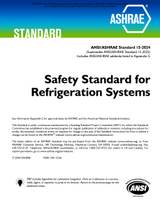
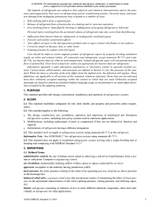
ANSI/ASHRAE Standard 15-2024 & Standard 34-2024 Package — Safety Standard for Refrigeration Systems and Designation and Safety Classification of Refrigerants
ASHRAE 15-2024 and 34-2024 package covering refrigeration-system safety, refrigerant designations, flammability, toxicity and concentration limits.
About this publication
Product Description
This ASHRAE package brings together two closely related American National Standards used throughout HVAC and refrigeration engineering: ANSI/ASHRAE Standard 15-2024, Safety Standard for Refrigeration Systems, and ANSI/ASHRAE Standard 34-2024, Designation and Safety Classification of Refrigerants.
The standards are intended to be used together. Standard 15 establishes requirements for safely applying refrigeration systems and refrigerants in buildings and stationary installations, while Standard 34 establishes the common refrigerant designation system and the toxicity, flammability and refrigerant concentration classifications used when applying those requirements.
Why Standards 15 and 34 Are Packaged Together
Refrigeration system safety depends both on the design and installation of the equipment and on the characteristics of the refrigerant contained within the system. Standard 15 addresses the system and installation side of that relationship. Standard 34 supplies the refrigerant identification and safety-classification information needed to apply many of Standard 15's requirements.
ASHRAE therefore offers the standards as a coordinated set for HVAC/R engineers, equipment manufacturers, code officials, contractors, inspectors, designers and facility professionals who need both system-safety requirements and refrigerant classification data.
ANSI/ASHRAE Standard 15-2024
Standard 15-2024 specifies requirements for the safe design, construction, installation and operation of refrigeration systems. Its purpose is to establish safeguards for life, health and property and to prescribe safety requirements for refrigeration-system applications.
The scope includes the design, construction, testing, installation, operation and inspection of mechanical and absorption refrigeration systems, including heat-pump systems used in stationary applications. It also addresses modifications where replacement components are not identical in function and capacity and refrigerant substitutions involving a different refrigerant designation.
Stationary Refrigeration Systems
Standard 15 is directed toward stationary mechanical and absorption refrigeration systems and associated heat-pump systems. Its provisions establish a system-safety framework for refrigeration equipment installed in buildings and other stationary applications.
Life, Health and Property Safeguards
The standard's scope is explicitly safety focused. Requirements are intended to protect life, health and property from hazards associated with refrigeration systems and refrigerant releases.
System Design and Construction
Standard 15 applies safety requirements beginning at the design and construction stages. Designers must consider the refrigerant, system configuration, equipment arrangement and installation environment when applying the provisions of the standard.
Installation Requirements
The standard addresses how refrigeration systems and associated equipment are installed. Installation requirements interact with refrigerant characteristics, occupancy, equipment location, ventilation provisions and other safety measures established by the standard.
Testing and Inspection
Standard 15 applies to system testing and inspection as part of its overall safety framework. These activities support confirmation that refrigeration equipment and piping have been installed and maintained in accordance with applicable safety requirements.
Operation
Operational requirements form part of the standard because refrigeration safety continues after design and installation. Safe operation depends on maintaining the conditions and protective measures assumed when the system was designed and installed.
Refrigerant Substitution
The scope specifically includes substitutions involving refrigerants having a different designation. This is particularly important as existing HVAC and refrigeration systems are evaluated for newer refrigerants with different pressure, flammability or other safety characteristics.
Flammable Refrigerants
The 2024 edition contains substantial revisions associated with use of flammable refrigerants. These changes are especially significant as the HVAC/R industry transitions toward refrigerants with lower global warming potential, including mildly flammable A2L refrigerants and other refrigerant classes addressed by Standard 34.
ASHRAE identifies flammable-refrigerant use as one of the principal areas updated in Standard 15-2024. The revisions are intended to improve application of safety measures for systems containing refrigerants whose flammability classifications affect system design and installation.
Leakage Safety and Mitigation
Refrigerant leakage is a central concern in system safety because a release can create toxicity, flammability or displacement hazards depending on the refrigerant and space involved. The 2024 edition includes revisions intended to clarify refrigerant leakage safety mitigations.
Standard 15 uses information from Standard 34, including refrigerant safety classifications and concentration limits, when determining which safety provisions apply to a particular refrigerant and application.
Effective Dispersal Volume Charge
The 2024 edition updates conversion factors used in calculations involving effective dispersal volume charge, or EDVC. These calculations are part of the technical framework used to evaluate refrigerant charge and dispersal conditions in applicable spaces.
Machinery Rooms
Machinery-room requirements are an important part of refrigeration-system safety. Standard 15 establishes provisions applicable where refrigeration machinery or refrigerant quantities require a dedicated machinery-room arrangement and associated safeguards.
The 2024 revision includes clarifications and alignment work affecting machinery-room and refrigerant-safety provisions, supporting closer coordination with current model codes.
Mechanical Ventilation
Mechanical ventilation can be required as a mitigation measure where leaked refrigerant could accumulate. Standard 15 includes ventilation requirements intended to remove or control refrigerant released into applicable spaces.
The January 2, 2025 errata sheet for the first printing includes a correction to Section 7.6.4 concerning mechanical ventilation, making the errata particularly relevant to owners of the original 2024 printing.
Pressure Relief Devices
The 2024 edition clarifies requirements relating to pressure relief devices. Pressure-relief provisions form an important part of refrigeration-system safety by providing protection against excessive system pressure under applicable conditions.
ASHRAE also revised portions of Standard 15 to make clearer when specific requirements take precedence over more general requirements.
Handling, Transportation and Storage of Flammable Refrigerants
Standard 15-2024 modifies requirements addressing handling, transportation and storage of flammable refrigerants. These provisions recognize that refrigerant safety is not limited to normal system operation and can extend to activities involving refrigerant containers and materials at installation or service locations.
Data Centers
ASHRAE identifies additional requirements related to data centers among the changes made in the 2024 edition of Standard 15. Data-center refrigeration and cooling applications can involve large equipment installations, significant refrigerant quantities and specialized occupied-space configurations requiring careful application of refrigeration safety requirements.
Model Code Alignment
One objective of the 2024 revision was closer alignment with current model building and mechanical codes. ASHRAE notes that Standards 15 and 34 provide key technical criteria used in refrigeration safety provisions incorporated into major model codes and regulations.
This makes the standards especially relevant to engineers and code professionals working with requirements derived from the International Mechanical Code, Uniform Mechanical Code and other adopted building-safety regulations.
Standard 15 Scope Exclusions
The published scope identifies important limitations. Standard 15 does not apply to systems using ammonia, R-717, as the refrigerant. It also excludes residential refrigeration systems serving only a single dwelling unit or sleeping unit when those systems comply with ANSI/ASHRAE Standard 15.2.
ANSI/ASHRAE Standard 34-2024
Standard 34-2024 establishes the standardized designation and safety-classification system used for refrigerants. Its purpose is to provide a simple, unambiguous way to identify refrigerants without relying on full chemical names, formulas or commercial trade names.
The standard assigns refrigerant reference numbers, composition-designating prefixes, toxicity and flammability safety classifications and refrigerant concentration limits. It also establishes requirements for applying for refrigerant designations and safety classifications and for determining applicable concentration limits.
Refrigerant Number Designations
Standard 34 provides the familiar standardized refrigerant-numbering system used throughout HVAC/R engineering, equipment documentation, codes, standards and regulatory programs.
Consistent refrigerant numbers eliminate ambiguity that could result from the use of chemical names, abbreviations or manufacturer trade names and allow refrigerants to be referenced consistently across equipment and safety documents.
Refrigerant Safety Classifications
Standard 34 assigns refrigerant safety classifications based on toxicity and flammability data. These classifications are widely used when applying equipment, system and occupancy requirements.
The safety classification provides an important connection between the properties of a refrigerant and the safeguards required when that refrigerant is used in a refrigeration or air-conditioning system.
Toxicity Classification
Toxicity information forms one dimension of the Standard 34 safety-classification system. The standard establishes criteria used to distinguish refrigerants according to relevant toxicity information and exposure considerations.
Flammability Classification
Flammability forms the second major dimension of the safety-classification system. Standard 34 provides the classifications used to differentiate refrigerants according to flammability characteristics.
These classifications are particularly significant as the industry adopts lower-GWP refrigerants that can exhibit different flammability behavior from many legacy refrigerants.
A2L Refrigerants
The growing use of A2L refrigerants is one reason coordinated use of Standards 15 and 34 has become increasingly important. Standard 34 supplies the safety classification, while Standard 15 establishes requirements affecting how refrigerants with those characteristics are safely applied in systems and buildings.
Refrigerant Concentration Limits
Standard 34 establishes refrigerant concentration limits in addition to designation and safety classifications. These concentration values provide technical information used when evaluating potential refrigerant releases and associated safety provisions.
Refrigerant Blends
The designation system covers both individual refrigerants and refrigerant blends. Standard 34 provides rules for numbering and classifying blends and establishes requirements for applications seeking new designations and safety classifications.
Twenty-Eight Refrigerants Added in 2024
ASHRAE identifies the addition of 28 refrigerants as one of the major changes in Standard 34-2024. The additions update the standard to reflect refrigerants entering or being evaluated for modern HVAC and refrigeration applications.
Burning Velocity Data
The 2024 edition adds burning-velocity data for flammable refrigerants to Tables 4-1 and 4-2. This expands the technical information available alongside refrigerant designations, classifications and concentration limits.
Zeotropic Refrigerant Blend Numbering
The 2024 revision provides additional delineation of designation numbering for zeotropic refrigerant blends following assignment of R-499A. This supports continued expansion of the refrigerant-numbering system while maintaining consistent designation practices.
Ethane and Ethene Series
Standard 34-2024 expands refrigerant numbering descriptions of the ethane series to incorporate the ethene series. This is one of several revisions intended to modernize the designation system as additional refrigerant chemistries are introduced.
Ethers and Cyclobutene
The 2024 edition adds ethers and cyclobutene to the substances that can be explicitly determined from refrigerant numbers, further developing the systematic relationship between refrigerant chemistry and assigned designations.
Flammability Testing
The revision clarifies the allowable pressure range for flammability testing used in the refrigerant-classification process. Accurate and consistently applied test conditions are important because flammability data directly affect assigned safety classifications.
Alignment With ISO 817
Standard 34-2024 includes revisions intended to further align the ASHRAE refrigerant-classification framework with ISO 817. These changes include updating the definition of occupational exposure limit, clarifying toxicity data and revising application requirements.
Closer alignment supports organizations working across international HVAC/R markets while retaining the specific requirements of the ASHRAE standard.
EPA and Regulatory Use of ASHRAE Refrigerant Designations
ASHRAE notes that the U.S. Environmental Protection Agency references ASHRAE refrigerant designations and safety classifications in its Significant New Alternatives Policy program. This illustrates the broader regulatory importance of the Standard 34 classification system as refrigerant technologies evolve.
Relationship Between Standards 15 and 34
The standards perform complementary functions. Standard 34 identifies and classifies the refrigerant; Standard 15 uses refrigerant properties and classifications when determining how systems using those refrigerants must be designed, installed and operated safely.
Using only one of the two documents can leave an incomplete technical picture. System requirements in Standard 15 depend on refrigerant information standardized by Standard 34, while Standard 34 does not by itself establish whether a particular refrigerant or system configuration is appropriate for a specific application.
2024 Edition Changes
The 2024 package supersedes the corresponding 2022 editions. Both standards were revised in 2024 in part to align their publication timing more closely with building-code development cycles.
Standard 15 revisions focus on flammable refrigerant use, leakage mitigation, pressure-relief provisions, EDVC conversion factors, handling and storage, data-center requirements, model-code alignment and improved consistency with Standard 34.
Standard 34 revisions include 28 added refrigerants, burning-velocity data, changes to refrigerant numbering, revised toxicity and flammability application information and closer alignment with ISO 817.
Continuous Maintenance and Published Addenda
Both Standard 15 and Standard 34 are maintained under ASHRAE's continuous-maintenance process. This means approved technical changes can be issued as addenda between full editions.
As of October 2026, ASHRAE lists numerous published addenda to both 2024 standards. For Standard 15-2024, published addenda include a, b, c, d, g, i, j, m, o, s, y, z and af. For Standard 34-2024, published addenda include a through l as applicable, plus m, n and o. These addenda are separate from the original 2024 base package unless specifically incorporated into a later consolidated product.
Standard 15 Errata
ASHRAE issued an errata sheet for Standard 15-2024 dated January 2, 2025. The errata applies to the first printing identified by product code 86938 and corrects material involving mechanical ventilation, an informative note concerning pressure-relief calculations and the leak-testing protocol.
Purchasers and users of the original base standard should consult ASHRAE's current errata and addenda pages when applying the document.
ANSI Status
Both Standard 15-2024 and Standard 34-2024 are published as American National Standards. ASHRAE maintains both through standing standards project committees using its continuous-maintenance procedures.
Who Should Use This Package
HVAC and refrigeration engineers
Mechanical engineers
Refrigeration system designers
Heat-pump system designers
HVAC/R equipment manufacturers
Mechanical contractors and installers
Building and mechanical code officials
Authorities having jurisdiction
Commissioning professionals
Facility engineers and plant operators
Refrigerant manufacturers and suppliers
Safety and compliance professionals
Engineering consultants
Professionals working with A2L and other flammable refrigerants
Why This Package Matters
The continuing transition from legacy refrigerants toward lower-global-warming-potential alternatives has made refrigerant safety classification and system application increasingly interconnected. A refrigerant cannot be evaluated simply by its cooling performance; toxicity, flammability, concentration limits, allowable charge, occupancy and system safeguards must also be considered.
This package combines the two ASHRAE standards at the center of that process. Standard 34 establishes what the refrigerant is and how it is classified. Standard 15 establishes how refrigeration systems using those refrigerants are safely designed, constructed, installed and operated.
Product Features
Package containing ANSI/ASHRAE Standard 15-2024 and ANSI/ASHRAE Standard 34-2024
Both documents are American National Standards
Dual-unit presentation
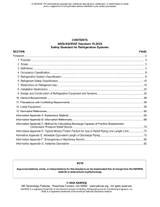
Standard 15 covers safe refrigeration-system design, construction, installation and operation
Applies to stationary mechanical and absorption refrigeration and heat-pump systems within its scope
Addresses refrigerant substitutions and applicable system modifications
Includes updated flammable-refrigerant requirements
Includes leakage mitigation and machinery-room provisions
Addresses pressure-relief-device requirements
Updates effective dispersal volume charge calculation factors
Includes updated handling, transportation and storage provisions for flammable refrigerants
Includes additional 2024 requirements affecting data centers
Standard 34 establishes refrigerant numbering and designation requirements
Provides toxicity and flammability safety classifications
Provides refrigerant concentration limits
Adds 28 refrigerants in the 2024 edition
Adds burning-velocity data for flammable refrigerants
Updates refrigerant blend and chemical-family numbering provisions
Includes revisions supporting alignment with ISO 817
Standards are maintained continuously through ASHRAE addenda
Product Details
Standards: ANSI/ASHRAE Standard 15-2024 and ANSI/ASHRAE Standard 34-2024
Titles: Safety Standard for Refrigeration Systems; Designation and Safety Classification of Refrigerants
Publisher: ASHRAE
Edition: 2024 Editions
Publication: October 2024
Publication Year: 2024
Page Count: 167 pages, package catalog record
Units: Dual
Print Product Code: 86938
Digital Product Code: D-86938
ANSI Status: American National Standards
Previous Editions: ANSI/ASHRAE Standard 15-2022 and ANSI/ASHRAE Standard 34-2022
Maintenance: Continuous maintenance
Language: English
Publication Type: Standards Package
Edition Status Note
ANSI/ASHRAE Standard 15-2024 and ANSI/ASHRAE Standard 34-2024 remain the current published base editions and supersede their respective 2022 editions. Both standards are on continuous maintenance and ASHRAE has issued multiple approved addenda since publication. Standard 15-2024 also has an errata sheet dated January 2, 2025. This product listing represents the 2024 base package; users applying the standards should also consult ASHRAE's current addenda and errata listings.