
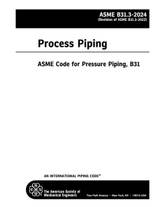
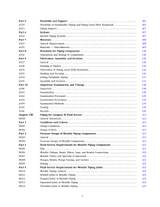
ASME B31.3-2024 Process Piping
ASME B31.3-2024 covers process piping design, materials, stress analysis, fabrication, welding, examination, testing and special fluid services.
About this publication
Product Description
ASME B31.3-2024, Process Piping, is the 2024 edition of the ASME Code for Pressure Piping section governing process piping systems used throughout petroleum refining, chemical processing, pharmaceutical manufacturing, hydrogen facilities, semiconductor manufacturing, cryogenic facilities, power generation and other processing plants and terminals.
The Code establishes requirements for materials and piping components, engineering design, fabrication, assembly, erection, examination, inspection and testing. It provides the technical framework used by piping designers, engineers, fabricators, constructors, inspectors, owner-users and authorities responsible for piping systems carrying a broad range of process fluids.
Scope of ASME B31.3
ASME B31.3 applies to process piping typically found in petroleum refineries; onshore and offshore petroleum and natural-gas production facilities; chemical, pharmaceutical, textile, paper, ore-processing, semiconductor and cryogenic plants; food and beverage processing facilities; power-generation and related processing installations; and associated terminals.
The Code also includes piping that interconnects pieces or stages within packaged equipment assemblies when that piping falls within the defined B31.3 scope.
Fluids Covered
ASME identifies B31.3 as applicable to piping for a wide range of fluids, including:
raw, intermediate and finished chemicals;
petroleum products;
gas;
steam;
air;
water;
fluidized solids;
refrigerants;
cryogenic fluids.
The diversity of these services is one reason B31.3 contains separate requirements for specialized fluid services and piping systems whose hazards or operating conditions require additional controls.
ASME B31 Code for Pressure Piping
B31.3 is one independently published section of the broader ASME B31 Code for Pressure Piping. Different B31 sections address different industries and piping applications. B31.3 is specifically focused on process piping and serves as a companion to other sections such as B31.1 Power Piping, B31.4 Pipeline Transportation Systems for Liquids and Slurries, B31.5 Refrigeration Piping, B31.8 Gas Transmission and Distribution, B31.9 Building Services Piping and B31.12 Hydrogen Piping and Pipelines.
Selection of the appropriate B31 Code section is the responsibility of the owner and depends on the piping application, facility, fluid service and jurisdictional requirements.
Code Organization
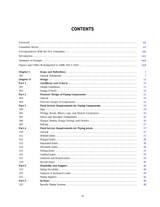
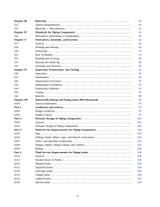
ASME B31.3-2024 is organized into ten principal chapters plus mandatory and nonmandatory appendices:
Chapter I — Scope and Definitions
Chapter II — Design
Chapter III — Materials
Chapter IV — Standards for Piping Components
Chapter V — Fabrication, Assembly, and Erection
Chapter VI — Inspection, Examination, and Testing
Chapter VII — Nonmetallic Piping and Piping Lined With Nonmetals
Chapter VIII — Piping for Category M Fluid Service
Chapter IX — High Pressure Piping
Chapter X — High Purity Piping
Chapter I — Scope and Definitions
Chapter I establishes the applicability of B31.3 and provides definitions and nomenclature used throughout the Code. The scope provisions distinguish process piping governed by B31.3 from piping systems controlled by other ASME Code sections, other standards or exclusions contained in B31.3 itself.
The 2024 edition revises several definitions and general statements and adds updated correspondence information for users requesting interpretations, reporting errata or proposing Code revisions.
Chapter II — Design
Chapter II contains the principal engineering-design requirements for process piping. It addresses design conditions, pressure design, component selection, joints, piping flexibility, stress analysis, supports and related structural considerations.
The design requirements require consideration not only of normal internal pressure but also of temperature, weight, thermal displacement, dynamic effects, occasional loads and other conditions that can affect the integrity of the piping system.
Design Pressure
The piping system must be designed for the most severe coincident pressure and temperature conditions expected during service, subject to the specific requirements and allowances established by the Code.
Design Temperature
Material and component design temperature is determined from the expected metal temperature under operating conditions. Temperature affects allowable stress, component ratings, material selection, thermal expansion and other design requirements.
Ambient and Dynamic Effects
B31.3 requires designers to consider applicable environmental and dynamic loads. These can include wind, earthquake, impact, pressure effects, vibration and other loads that can act on the piping system in addition to normal operating pressure.
Pressure Design
The Code establishes pressure-design rules for straight pipe and numerous piping components. These rules are used to determine minimum required wall thickness or determine whether a component is suitable for the intended design pressure and temperature.
Straight Pipe
Pressure design of straight pipe considers design pressure, pipe diameter, allowable stress, material coefficient, weld-joint quality or related factors and applicable allowances for corrosion, erosion, threading or mechanical requirements.
Branch Connections
Branch connections remove pressure-resisting material from the run pipe and can introduce localized stresses. B31.3 provides requirements for pressure design and reinforcement of welded and other branch connections.
Closures and Special Components
The Code provides design provisions for closures, reducers, bends, miters and other components where pressure design cannot rely solely on a listed pressure-temperature rating.
Listed and Unlisted Components
B31.3 distinguishes between components that conform to listed standards accepted by the Code and components that are not covered by those listed standards. Listed components can generally use the pressure-temperature ratings and dimensional requirements of the applicable referenced standard subject to B31.3 requirements.
Unlisted components require additional engineering evaluation to demonstrate suitability for the intended design conditions.
2024 Unlisted Valve Revision
ASME identifies unlisted valves as one of the principal technical subjects revised in the 2024 edition. The changes clarify requirements applicable when valve designs are not governed by a listed component standard providing accepted ratings.
Piping Flexibility and Stress Analysis
Process piping expands and contracts as temperature changes. If these movements are excessively restrained, substantial forces, moments and cyclic stresses can develop in the piping, supports, equipment nozzles and connected components.
B31.3 therefore establishes requirements for piping flexibility and evaluation of displacement stress ranges. Designers must consider thermal expansion and contraction together with system geometry, restraints, flexibility factors and stress intensification factors.
Flexibility Analysis
The Code provides criteria for determining when formal flexibility analysis is required and establishes the stress equations and allowable stress ranges used to evaluate piping displacement cycles.
Stress Intensification and Flexibility Factors
Stress intensification factors and flexibility factors account for the behavior of bends, branches and other piping components relative to straight pipe. Modern B31.3 editions coordinate these calculations with ASME B31J, which provides detailed methods for determining i-factors and k-factors for metallic piping components.
ASME specifically identifies revisions to paragraphs 319 and 320 concerning flexibility and stress intensification factors as major changes in the 2024 edition.
Sustained Loads
Sustained-load evaluation generally considers loads such as pressure and weight that remain present for extended periods during operation.
Occasional Loads
The Code includes stress limits for applicable occasional load conditions, which can include wind, earthquake, relief loads and other short-duration events as applicable to the piping system.
Piping Supports
Supports, restraints, anchors, guides and hangers must control weight and movement while allowing the flexibility necessary to prevent unacceptable piping stresses or equipment loads.
The Code coordinates support design with sustained loads, thermal expansion, dynamic effects and the requirements of connected equipment.
Chapter III — Materials
Chapter III establishes requirements governing materials used in process piping. Materials must be suitable for the fluid, pressure, temperature, fabrication process and other service conditions applicable to the piping system.
Listed Materials
Appendix A and related material tables provide allowable stress and other design data for metallic materials recognized by B31.3. The 2024 edition extensively updates these tables and associated notes.
Unlisted Materials
The Code permits use of certain unlisted materials subject to qualification requirements demonstrating that the material is suitable for the intended service and that appropriate design data can be established.
Temperature Limitations
Material properties and permissible use can change substantially with temperature. B31.3 material tables and rules establish limits and allowable stresses across defined temperature ranges.
Impact Testing and Brittle Fracture
Impact testing is used to demonstrate adequate notch toughness where low temperature, material thickness, composition or other conditions create concern for brittle fracture.
ASME identifies revisions to paragraphs 323.2.2 and 323.3.1 concerning impact testing as major technical changes in the 2024 edition. Related material tables and thickness provisions were also revised.
Chapter IV — Standards for Piping Components
Chapter IV identifies dimensional standards and pressure-rating standards for piping components accepted by B31.3. These references cover many common flanges, fittings, valves, bolting products and other components.
Table 326.1.1-1 identifies recognized component standards from ASME, ASTM, AWWA and other standards-development organizations. The Code also establishes how components not fully covered by those listed standards are to be evaluated.
Chapter V — Fabrication, Assembly, and Erection
Chapter V establishes requirements controlling construction of the piping system after the engineering design and material selection have been completed. It covers welding, brazing, bonding, forming, bending, heat treatment, assembly and erection.
Welding
Welding requirements include joint preparation, alignment, welding workmanship, procedure and personnel qualifications and fabrication controls. Applicable welding procedure and performance qualifications are coordinated with ASME BPVC Section IX.
Flange Attachment Welds
ASME identifies revisions to paragraph 328.5.2 concerning flange attachment welds as a key change in B31.3-2024. This area addresses weld details used to attach flanges and other applicable components to piping.
Brazing
Where brazed construction is permitted, the Code establishes requirements for joint preparation, filler materials, procedure qualification and workmanship appropriate to the process and fluid service.
Bonding
Nonmetallic piping systems can rely on adhesive, solvent-cemented, heat-fused or other bonded joints. B31.3 contains qualification and fabrication provisions appropriate to these joining methods.
Bending and Forming
Fabricated bends and formed piping components must satisfy requirements addressing wall thinning, ovality, temperature, heat treatment and other effects of forming operations.
Heat Treatment
Heat treatment can be required before welding, after welding or after forming depending on material, thickness, joining process and service conditions. B31.3 establishes requirements governing preheat and postweld heat treatment as applicable.
ASME identifies revisions to paragraphs 330.1 and 331.1 concerning heat treatment among the principal changes in the 2024 edition.
Assembly and Erection
The Code addresses alignment, bolting, threaded joints, flange assembly, cleaning and other operations required to assemble and erect completed piping systems.
Construction practices must not introduce excessive strain, misalignment, damage or contamination that would compromise the design or service requirements of the finished system.
Chapter VI — Inspection, Examination, and Testing
Chapter VI establishes quality-verification requirements following and during piping fabrication and assembly. It distinguishes among inspection responsibilities, examinations performed by qualified examination personnel and pressure or leak testing of completed piping.
Inspection
The owner's Inspector verifies that the piping has been constructed, examined and tested in accordance with the engineering design and applicable Code requirements. B31.3 defines the responsibilities and qualifications associated with this inspection function.
Visual Examination
Visual examination is one of the basic examination methods used to evaluate piping materials, components, fabrication and welds. The extent of required examination varies according to fluid service, joint type and other Code provisions.
Radiographic Examination
Radiography can be required or selected for examination of applicable welds. Examination techniques are coordinated with ASME BPVC Section V, while B31.3 establishes applicable extent and acceptance criteria.
Ultrasonic Examination
Ultrasonic examination can be used for specified piping weld examinations and other applicable inspection tasks. B31.3 coordinates these requirements with the applicable ASME Section V NDE methods.
Liquid Penetrant and Magnetic Particle Examination
Surface examination methods including liquid penetrant and magnetic particle testing are used where required by the applicable material, weld or service requirements.
Leak and Pressure Testing
Completed piping systems are generally subjected to a leak test before initial operation. B31.3 establishes requirements for hydrostatic, pneumatic and other permitted testing methods.
Hydrostatic Testing
Hydrostatic testing uses liquid as the test medium and is the preferred test method for many process piping systems because the stored energy is comparatively lower than in an equivalent pneumatic test.
Pneumatic Testing
Pneumatic testing can be permitted when hydrostatic testing is impractical or undesirable, but compressed gas stores substantially more energy. B31.3 therefore includes additional precautions and pressure-control requirements for pneumatic tests.
Alternative Leak Tests
Under specified circumstances, the Code provides other leak-test approaches and requirements where conventional hydrostatic or pneumatic testing is not appropriate.
Chapter VII — Nonmetallic Piping and Piping Lined With Nonmetals
Chapter VII contains requirements specifically developed for nonmetallic piping and metallic piping lined with nonmetals. These materials can differ substantially from conventional metallic piping in strength behavior, temperature sensitivity, joining methods and long-term performance.
The Chapter modifies or supplements the general design, material, fabrication, examination and testing requirements where necessary for plastics, reinforced thermosetting materials, lined systems and other permitted nonmetallic constructions.
Chapter VIII — Category M Fluid Service
Category M Fluid Service applies to highly hazardous fluid services meeting the definition established by B31.3, where exposure to even a very small quantity of a toxic fluid can cause serious irreversible harm.
Chapter VIII modifies the ordinary B31.3 requirements to provide additional controls appropriate to the consequences of leakage in Category M service. These can affect materials, components, fabrication, examination, inspection and testing.
Chapter IX — High Pressure Piping
Chapter IX contains specialized rules for High Pressure Fluid Service. These requirements address piping systems whose design pressures and conditions warrant more stringent design, material, fabrication, examination and testing controls than the base rules.
High-Pressure Pressure Design
ASME specifically identifies revisions to paragraph K302.3.2 affecting High Pressure Fluid Service pressure design as a major 2024 change.
High-Pressure Fatigue Analysis
The 2024 edition also revises high-pressure fatigue requirements in paragraphs K302.3 and K304.8. Fatigue analysis becomes particularly important where high-pressure piping experiences repeated pressure or thermal cycles capable of producing progressive damage.
High-Pressure Examination and Testing
Chapter IX contains examination and testing requirements specifically adapted to high-pressure piping and the elevated consequences associated with loss of containment.
Chapter X — High Purity Piping
Chapter X provides requirements for High Purity Piping, designated by U-prefixed paragraph numbers. These systems are used where internal cleanliness, surface condition, joint quality and contamination control are particularly important.
High-purity piping is relevant to industries such as semiconductor, pharmaceutical, biotechnology and other processing applications requiring exceptional control over contaminants and internal piping conditions.
High-Purity Fabrication
The Chapter includes specialized fabrication and joining requirements appropriate to systems whose internal condition and weld quality can directly affect product purity or process performance.
High-Purity Examination
Special examination requirements provide additional verification appropriate to high-purity fabrication and service expectations.
Severe Cyclic Conditions
B31.3 includes additional requirements for piping subjected to severe cyclic conditions. Repeated stress cycles can initiate and propagate fatigue cracking even where individual loading events remain below the material's static strength.
Designers must therefore evaluate cyclic service together with weld details, stress intensification, flexibility, examination and fabrication requirements.
Allowable Stresses and Material Tables
Appendix A contains extensive material data used in metallic piping design. The 2024 edition revises material tables and associated notes, including updates to Tables A-1 and A-1C.
The Code provides SI design values and corresponding U.S. Customary tables. B31.3 explains that the values in the two unit systems should be applied according to the applicable table and calculation system rather than casually mixing values between systems.
Referenced Standards
B31.3 relies on numerous external component and material standards. Appendix E identifies referenced standards and approved editions from organizations including ASME, ASTM International, API, AWWA, MSS and other standards bodies.
This approach allows B31.3 to coordinate process-piping requirements with established component specifications, material standards, flange and fitting standards, valve standards and examination practices.
Relationship to ASME B31J
B31.3 uses ASME B31J for stress intensification and flexibility factors applicable to many metallic piping components. Earlier editions of B31.3 contained more of this information directly in Appendix D, but that appendix was removed beginning with the 2020 edition in favor of the dedicated B31J standard.
Relationship to ASME BPVC Section IX
Welding and brazing procedure and personnel qualification for B31.3 construction are coordinated with ASME BPVC Section IX. Section IX establishes the qualification rules, while B31.3 establishes the process-piping fabrication and service requirements that invoke those qualifications.
Relationship to ASME BPVC Section V
Nondestructive examination methods referenced by B31.3 commonly rely on ASME BPVC Section V for examination procedures and techniques. B31.3 determines the extent of examination and applicable acceptance criteria for process piping.
Relationship to ASME B31.1
B31.3 Process Piping is frequently used alongside or compared with B31.1 Power Piping. The two Codes address different piping applications and include differences in design criteria, material rules, fabrication and examination requirements. ASME specifically describes B31.3 as a companion to B31.1 and the other B31 Code sections.
2024 Edition Changes
ASME B31.3-2024 revises and supersedes ASME B31.3-2022. ASME identifies the following principal technical revision areas:
Unlisted valves;
flexibility and stress intensification factors in paragraphs 319 and 320;
impact testing requirements;
flange attachment welds;
heat treatment;
High Pressure Fluid Service pressure design;
High Pressure Fluid Service fatigue analysis.
The edition also redesignates many figures and tables according to their parent paragraph and updates cross-references throughout the Code.
Figure and Table Redesignation
A notable editorial restructuring in the 2024 edition is the redesignation of numerous figures and tables to align their numbering with the parent paragraph. ASME includes a conversion table showing former and current designations to assist users transitioning from previous editions.
This is especially relevant to engineering organizations with internal specifications, procedures, calculation templates or training material that referenced table and figure numbers from the 2022 or earlier editions.
ANSI Approval and Effective Date
ASME B31.3-2024 was approved by the American National Standards Institute on July 9, 2024. The Code was issued on December 27, 2024 and states that it becomes effective six months after its date of issuance.
Who Should Use ASME B31.3-2024
process piping engineers and designers;
mechanical engineers;
piping stress engineers;
petroleum refinery engineering organizations;
chemical and petrochemical plant personnel;
pharmaceutical and biotechnology facility engineers;
hydrogen facility designers;
semiconductor facility engineers;
cryogenic system designers;
piping fabricators and constructors;
welding engineers and inspectors;
NDE and examination personnel;
quality assurance and quality control professionals;
owner-users and mechanical integrity organizations;
engineering, procurement and construction contractors;
authorities having jurisdiction and regulatory personnel.
Why ASME B31.3 Matters
Process piping can transport hazardous, toxic, flammable, corrosive, high-pressure, cryogenic or high-purity fluids through complex plants containing thousands of components and joints. Safe piping design therefore requires far more than selection of a pipe wall thickness.
B31.3 integrates design conditions, material properties, component ratings, pressure design, flexibility, stress analysis, supports, joining, heat treatment, examination, inspection and testing into a coordinated Code framework. Specialized chapters then add requirements for nonmetallic piping, Category M Fluid Service, High Pressure Fluid Service and High Purity Piping.
This breadth has made B31.3 one of ASME's most frequently requested Codes and a core reference for engineering organizations responsible for process-plant piping systems.
Product Features
2024 edition of ASME B31.3 Process Piping
American National Standard
594 pages
Covers process piping materials and components
Includes pressure and temperature design requirements
Covers pressure design of pipe, branches, bends and components
Addresses piping flexibility and stress analysis
Includes stress intensification and flexibility-factor requirements
Covers piping supports and restraints
Addresses listed and unlisted materials and components
Covers welding, brazing, bonding, assembly and erection
Includes preheat and postweld heat-treatment requirements
Covers inspection, examination and leak testing
Includes nonmetallic and lined piping requirements
Contains dedicated Category M Fluid Service requirements
Contains dedicated High Pressure Fluid Service requirements
Contains dedicated High Purity Piping requirements
Includes 2024 revisions for unlisted valves and impact testing
Includes revised flange attachment weld and heat-treatment requirements
Includes revised high-pressure design and fatigue-analysis provisions
Product Details
Standard: ASME B31.3-2024
Title: Process Piping
Code Series: ASME Code for Pressure Piping, B31
Publisher: ASME International
Edition: 2024 Edition
Date of Issuance: December 27, 2024
Print ISBN: 9780791876725
Page Count: 594
ASME PDF Order Number: A0372U
ANSI Status: American National Standard
ANSI Approval Date: July 9, 2024
Previous Edition: ASME B31.3-2022
Language: English
Publication Type: Process Piping Code
Edition Status Note
ASME B31.3-2024 is the current edition of Process Piping and revises ASME B31.3-2022. ASME's current product page continues to identify the 2024 edition as the edition in effect. The Code was issued December 27, 2024 and became effective six months after issuance. ASME also identifies B31.3 as being on stabilized maintenance while requests and recommendations for change continue to be accepted.
The 2024 text incorporates corrections identified as errata in several locations within its published tables and requirements. Users applying B31.3 should consult ASME's B31 Committee resources for any current Code Cases, interpretations or additional posted errata applicable to the edition.