
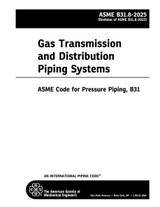

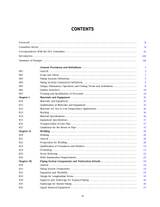
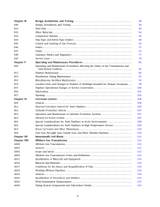
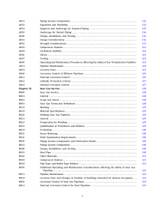
ASME B31.8-2025 Gas Transmission and Distribution Piping Systems
ASME B31.8-2025 covers gas transmission and distribution pipelines, design, welding, plastic pipe, testing, maintenance, corrosion and CO2 systems.
Wrong edition, wrong file, or a file that won’t open? We replace or refund — contact us within 7 days.
About this publication
Product Description
ASME B31.8-2025, Gas Transmission and Distribution Piping Systems, is the current edition of the ASME Code for Pressure Piping section governing gas transmission, gathering and distribution pipeline systems.
The Code establishes requirements addressing materials, design, fabrication, welding, assembly, installation, inspection, examination, testing, operation, maintenance and corrosion control for gas pipeline facilities. It is used by gas utilities, pipeline operators, engineering firms, constructors, inspectors, regulators and equipment manufacturers responsible for natural-gas and related gaseous pipeline systems.
Current 2025 Edition
The 2025 edition supersedes ASME B31.8-2022. ASME released the new edition on August 22, 2025 after approval by the ASME B31 Standards Committee and approval as an American National Standard.
Significant 2025 additions include personnel training and qualification provisions, a dedicated damage prevention program, revised plastic-pipe design provisions and a new chapter specifically addressing gaseous carbon dioxide pipeline systems.
Scope of ASME B31.8
B31.8 covers pipeline facilities used for transportation of gas and gas-liquid mixtures, including fuel gas, sour gas and gaseous carbon dioxide.
The Code addresses safety-related aspects of both construction and continued operation of gas transmission and distribution systems.
Gas Facilities Covered
The scope includes a broad range of gas-system facilities such as:
gas transmission pipelines;
gas gathering pipelines;
gas distribution mains;
gas service lines;
compressor stations;
metering facilities;
pressure-regulating stations;
pressure-limiting and pressure-relief facilities;
closed-pipe gas storage equipment;
gas storage lines;
offshore gas transmission pipelines;
gaseous carbon dioxide pipeline systems within Chapter X.
Customer Service-Line Boundary
The Code extends through applicable gas mains and service lines to the outlet of the customer's meter set assembly.
This scope boundary is important because piping downstream of the applicable customer-meter boundary can fall under other fuel-gas, building or jurisdictional codes.
General Provisions and Definitions
The introductory sections establish scope, intent, piping-system definitions, component definitions and terminology used throughout the Code.
The 2025 edition substantially revises terminology and adds definitions supporting modern gas-pipeline operation, including terminology relating to pipeline facilities, components, operational changes, service conversions, remotely operated valves, carbon dioxide systems and other current pipeline practices.
2025 Definition Updates
The 2025 edition revises or adds numerous definitions to improve consistency throughout the Code. These include updated concepts associated with pipeline facilities, pipeline sections and segments, customers and meter facilities, class locations, service conversions, operational changes and rapid gas decompression.
A definition addressing the Joule-Thomson effect was also added, reflecting its importance in gas pressure reduction and low-temperature operating conditions.
Training and Qualification of Personnel
A major new 2025 provision is Section 807 addressing training and qualification of personnel.
The Code requires operating companies to establish appropriate qualification and training for personnel performing functions that can affect pipeline safety and integrity.
The qualification framework considers task requirements, abnormal operating conditions, initial and continuing qualification, suspension or revocation of qualification, reinstatement, organizational responsibilities and documentation.
Operating and Maintenance Training
The 2025 edition specifically requires operating companies to provide comprehensive training for employees responsible for operation and maintenance functions.
ASME B31Q is identified as a useful companion reference for management of pipeline personnel qualification.
Chapter I — Materials and Equipment
Chapter I establishes requirements for materials and equipment used in gas pipeline systems.
Materials and equipment that become permanent parts of a B31.8 piping system must be suitable for the conditions under which they are used and must be qualified in accordance with recognized standards, specifications or other qualification methods permitted by the Code.
Material Qualification
The Code distinguishes among materials and equipment conforming to referenced specifications, nonconforming but potentially acceptable products, proprietary items, equipment for which no recognized specification exists, and unidentified or previously used pipe.
Qualification requirements depend on the importance of the item, its intended service and the available documentation or test evidence.
Low-Temperature Applications
Material selection must consider low-temperature behavior where gas expansion, environmental conditions or operating scenarios can expose pipeline components to temperatures at which brittle fracture could become a concern.
Low-temperature suitability is especially important around pressure-reduction facilities, blowdown systems and carbon dioxide applications.
Line Pipe
B31.8 incorporates recognized material specifications for steel line pipe and other permitted piping materials.
The design, grade, manufacturing process, wall thickness and specified minimum yield strength of line pipe all influence allowable operating pressure and applicable construction requirements.
Reuse of Pipe
The Code provides conditions under which previously used pipe can be considered for reuse.
Reused pipe must be evaluated and demonstrated to be suitable for the intended service, taking into account its material properties, condition, history and applicable examination requirements.
Chapter II — Welding
Chapter II contains requirements for welding of gas pipelines and pipeline facilities.
Topics include weld preparation, welding procedures, welder qualification, preheating, stress relieving and examination of completed welds.
Welding Procedure Qualification
Welding procedures and welding personnel must be qualified in accordance with recognized qualification requirements applicable to B31.8 construction.
The selected welding method and procedure must be suitable for the pipe material, wall thickness, joint configuration and field or shop construction conditions.
Weld Examination
Completed welds are subject to visual and applicable nondestructive examination requirements.
The required extent of examination can depend on pipeline service, location, construction conditions and other Code provisions.
Chapter III — Piping System Components and Fabrication Details
Chapter III addresses piping components, fabrication details, flexibility, longitudinal stress, supports and anchorage.
Requirements apply to components such as fittings, branch connections, flanges, valves and other pressure-containing items used in pipeline systems.
Branch Connections
Welded branch connections require adequate reinforcement and compatible geometry so that pressure and external loads can be transferred safely between the run pipe and branch.
The Code includes rules and supporting appendices for extruded headers and welded branch reinforcement.
Expansion and Flexibility
Aboveground and exposed piping systems can experience displacement from thermal expansion, pressure, equipment movement and other loads.
B31.8 provides flexibility and stress-intensification requirements intended to prevent excessive stress, reactions or movement at supports and connected equipment.
Longitudinal Stress
The Code includes requirements for evaluation of longitudinal stresses caused by pressure, temperature, weight, external loads and pipeline restraint.
These provisions are important for both buried and aboveground pipelines and for piping connected to compressor, metering and regulation facilities.
Supports and Anchorage
Supports and anchors must control pipeline movement without creating unacceptable stresses.
The Code addresses both exposed piping supports and anchorage of buried piping, including forces at bends and interconnections and effects of soil restraint.
Chapter IV — Design, Installation and Testing
Chapter IV contains core requirements for design, construction, installation and pressure testing of gas pipeline facilities.
The chapter addresses steel pipe, plastic piping and other materials, compressor stations, pressure-control facilities, valves, vaults, customer meters, regulators and service lines.
Steel Pipeline Design
Steel-pipe pressure design considers pipe diameter, wall thickness, material strength, location classification, longitudinal joint characteristics and other Code factors.
The design process must account for both internal pressure and external forces that can affect the pipeline during installation and service.
Location Class
Location classification is an important concept in B31.8 because required design factors and operating considerations depend in part on population and building density around the pipeline.
The Code also addresses changes in location class that occur as development increases around an existing pipeline.
Plastic Gas Piping
B31.8 contains requirements for plastic gas pipe, tubing and fittings used in applicable distribution and other permitted systems.
The Code addresses material specifications, pressure design, temperature limitations, joining, installation, protection from damage and inspection.
2025 Plastic Piping Revision
ASME identifies the plastic piping design formula section as revised in its entirety for the 2025 edition.
This makes the new edition particularly important for utilities and engineers designing polyethylene and other permitted plastic gas-distribution systems.
Plastic Pipe Installation
Plastic piping must be protected against damage during handling, storage and installation.
The Code includes requirements relating to trenchless installation, locating methods, tracer systems, joining, inspection and protection against excessive heat, chemicals and mechanical damage.
Compressor Stations
B31.8 includes requirements for compressor stations used to maintain gas flow and system pressure.
Station requirements address design, buildings, equipment arrangement, piping, pressure control, safety systems and related operating considerations.
Metering and Regulation Stations
Metering and pressure-regulation facilities are covered within the Code scope.
These facilities must control system pressure while allowing accurate measurement and safe operation across upstream and downstream pressure conditions.
Pressure Control and Overpressure Protection
The Code contains requirements for control and limitation of gas pressure.
Pressure-regulating, pressure-limiting and pressure-relief devices must be arranged so system pressures remain within permissible limits during normal and abnormal operating conditions.
Valves
B31.8 provides requirements governing valve selection, placement and application throughout transmission and distribution systems.
Valve arrangements support isolation, operation, emergency response and maintenance of pipeline sections and facilities.
Customer Meters and Regulators
The Code includes specific provisions for customer meter sets and service regulators.
These requirements help ensure safe transition from the distribution system to customer service pressure and define the B31.8 jurisdictional boundary.
Service Lines
Service lines connect distribution mains to individual customers or meter assemblies.
B31.8 includes requirements covering service-line design, installation, valves, regulators, materials and applicable protection measures.
Pressure Testing
New pipeline systems and qualifying modified facilities are subject to testing before being placed into service.
Test requirements depend on pipeline material, location, intended operating pressure and other Code criteria.
Commissioning
B31.8 includes commissioning requirements addressing cleaning and drying, functional testing, startup procedures and documentation.
Commissioning provides a structured transition from completed construction and testing into controlled pipeline operation.
Chapter V — Operating and Maintenance Procedures
Chapter V establishes procedures affecting the safe operation and maintenance of gas transmission and distribution facilities.
Topics include emergency response, pipeline patrols, leakage control, pipeline maintenance, distribution-system maintenance, operational changes, service conversions, odorization and uprating.
Emergency Procedures
Operating companies must establish procedures for responding to pipeline emergencies.
Employee training, coordination with emergency responders, investigation of failures and communication with affected parties form important elements of the emergency-response framework.
Damage Prevention Program — New for 2025
The 2025 edition adds a dedicated Damage Prevention Program section.
Operating companies are required to maintain a program intended to reduce damage to gas facilities caused by excavation and similar outside-force activities.
Program elements can include participation in excavation-notification systems, communication with excavators, facility locating and marking, monitoring of excavation activity, investigation of damage and evaluation of program effectiveness.
Pipeline Patrolling
Pipeline operators must conduct periodic patrols of transmission rights-of-way to identify conditions that could affect pipeline safety.
Patrol activities can identify leaks, excavation, land movement, erosion, construction activity and other hazards requiring follow-up action.
Pipeline Maintenance
Maintenance requirements cover repair, replacement, inspection and management of operating pipeline facilities.
The Code provides procedures for dealing with defects, leaks, damaged pipe and other conditions that could affect safe operation.
Operational Changes and Service Conversion
B31.8-2025 includes terminology and requirements addressing operational changes and service conversions.
Existing pipelines being placed into a substantially different service require engineering evaluation to confirm that materials, design, condition and operating controls are suitable for the proposed service.
Uprating
The Code provides procedures for increasing the allowable operating pressure of an existing system.
Uprating requires evaluation of design, materials, condition, testing history and other factors necessary to demonstrate that operation at the higher pressure is safe.
Odorization
Distribution and other applicable gas systems are subject to odorization requirements that help occupants and the public detect otherwise difficult-to-recognize gas releases.
Odorization requirements depend on the type of gas system and applicable operating conditions.
Chapter VI — Corrosion Control
Chapter VI establishes requirements for controlling external and internal corrosion of metallic gas pipeline systems.
It applies to both new installations and operating pipelines.
External Corrosion
Buried and submerged steel pipelines are commonly protected through coatings, cathodic protection and monitoring programs.
B31.8 provides requirements and criteria for design, operation and maintenance of these corrosion-control systems.
Cathodic Protection
Cathodic protection systems reduce electrochemical corrosion of buried or submerged metallic pipe.
The Code includes criteria for demonstrating effective protection and for ongoing monitoring of system performance.
Internal Corrosion
Internal corrosion can develop when transported gas contains water, carbon dioxide, hydrogen sulfide, microorganisms or other corrosive constituents.
The Code requires operators to evaluate internal-corrosion threats and apply monitoring or mitigation appropriate to the pipeline environment.
Stress Corrosion and Other Phenomena
B31.8 addresses stress corrosion cracking and other deterioration mechanisms that can affect operating pipeline integrity.
Inspection, monitoring and mitigation strategies depend on pipeline material, coating condition, operating stress, environment and threat mechanism.
Chapter VII — Reserved
Chapter VII is intentionally left blank in the 2025 edition. Material that had previously appeared in this chapter has been relocated to other portions of the Code.
Chapter VIII — Offshore Gas Transmission
Chapter VIII contains specialized requirements for offshore gas transmission pipelines.
The offshore provisions supplement the general Code requirements for materials, welding, components, structural design, installation, testing, operation, maintenance and corrosion control.
Offshore Design
Offshore pipelines can be subjected to environmental and installation loads that differ substantially from onshore pipelines.
Design considerations can include seabed conditions, waves, currents, hydrostatic external pressure, on-bottom stability, platform interfaces and marine installation loads.
Chapter IX — Sour Gas Service
Chapter IX contains supplemental requirements for pipeline systems transporting sour gas.
Sour gas can contain hydrogen sulfide and can require additional controls for materials, welding, corrosion, maintenance and personnel safety.
Sour Gas Materials and Welding
Materials and welding procedures used in sour environments require consideration of hydrogen-related cracking and other service-specific degradation mechanisms.
The Chapter supplements the general B31.8 rules with additional requirements for sour-gas pipeline systems.
Chapter X — Gaseous Carbon Dioxide Pipeline Systems
A major addition in B31.8-2025 is Chapter X, Gaseous Carbon Dioxide Pipeline Systems.
The new Chapter applies to gaseous CO2 pipeline systems and may also be used for gas blends containing carbon dioxide.
It covers design, materials, fabrication, installation, inspection, examination, testing, operation and maintenance of new gaseous CO2 pipeline systems as well as service conversions and operational changes to existing pipelines intended for gaseous carbon dioxide transportation.
CO2 Composition and Impurities
The composition of a gaseous carbon dioxide stream can affect pipeline behavior and integrity.
Impurities such as water, hydrogen sulfide, methane, nitrogen and other constituents can influence phase behavior, corrosion, toxicity, decompression response and material compatibility and therefore must be considered in system design and operation.
Low-Temperature CO2 Effects
Rapid pressure reduction of carbon dioxide can produce significant temperature drops.
The Code therefore requires appropriate consideration of low-temperature material performance for blowdown, bypass and other piping that could experience severe cooling.
CO2 Pipeline Service Conversion
The new Chapter also addresses conversion of existing pipelines for gaseous CO2 service.
Such conversions require evaluation of pipeline condition, materials, pressure capability, compatibility with the gas composition and integrity threats specific to carbon dioxide transportation.
Relationship to ASME B31.8S
ASME B31.8S, Managing System Integrity of Gas Pipelines, is a closely related companion standard addressing integrity-management programs for gas pipelines.
B31.8 provides the core design, construction, operation and maintenance rules, while B31.8S provides a structured framework for managing pipeline integrity threats and risk.
Relationship to ASME B31Q
ASME B31Q addresses qualification of pipeline personnel performing tasks that affect pipeline safety or integrity.
The new B31.8-2025 personnel-qualification provisions specifically identify B31Q as a useful reference for managing qualifications.
Relationship to Federal and Local Regulations
ASME B31.8 is widely referenced in pipeline regulation, but publication of the 2025 edition does not automatically make it the legally required edition in every jurisdiction.
Pipeline owners, operators and engineers should verify the edition incorporated by the applicable federal, state, provincial or local authority.
2025 Edition Changes
Important changes in ASME B31.8-2025 include:
new Section 807 covering training and qualification of personnel;
new Section 850.8 establishing a damage prevention program;
complete revision of the plastic piping design formula provisions;
new Chapter X for gaseous carbon dioxide pipeline systems;
expanded and revised terminology for pipeline facilities, service conversions and operational changes;
revisions affecting materials, components, welding, design, installation and maintenance requirements;
deletion of former Mandatory Appendices B and L;
deletion of former Nonmandatory Appendix P;
updated referenced standards and appendices.
ANSI Approval
ASME B31.8-2025 was approved by the American National Standards Institute on April 10, 2025.
Stabilized Maintenance
ASME currently identifies B31.8-2025 as being on stabilized maintenance.
The 2025 edition remains in effect while ASME continues to accept requests and recommendations for changes from materially affected and interested parties.
Current Errata and Amendment Status
Current ANSI catalog information lists no amendments or corrections for ASME B31.8-2025 as of October 2026.
Who Should Use ASME B31.8-2025
gas transmission pipeline engineers;
gas distribution engineers;
natural gas utility personnel;
pipeline operators and owners;
pipeline design engineers;
compressor-station engineers;
pipeline integrity engineers;
gas metering and regulation specialists;
pipeline welding engineers and inspectors;
corrosion-control specialists;
pipeline construction contractors;
offshore pipeline engineers;
sour-gas pipeline specialists;
CO2 pipeline developers and engineers;
pipeline safety and regulatory personnel;
quality assurance and quality control professionals.
Why B31.8 Matters
Gas pipeline systems can extend across large geographic areas, operate at significant pressures and pass through both remote and heavily populated locations. Safe service depends on coordinated design, material selection, welding, testing, corrosion control, operation, maintenance and damage prevention.
ASME B31.8 provides a comprehensive technical framework covering the entire lifecycle of gas transmission and distribution systems, from initial material selection and design through construction, commissioning and decades of operation.
Product Features
2025 edition of ASME B31.8
Current edition
ANSI approved
238 pages
Covers gas transmission, gathering and distribution systems
Covers compressor stations and metering/regulation facilities
Covers gas mains and customer service lines
Covers steel and plastic piping systems
Includes materials and equipment qualification
Covers welding and weld examination
Includes design, flexibility and longitudinal-stress requirements
Covers pipeline installation and pressure testing
Includes operating and maintenance procedures
Covers corrosion control and cathodic protection
Includes offshore gas transmission requirements
Includes sour-gas service requirements
Adds new personnel training and qualification requirements
Adds a dedicated damage prevention program
Substantially revises plastic-pipe design provisions
Adds new Chapter X for gaseous carbon dioxide pipeline systems
Maintained by ASME under stabilized maintenance
Product Details
Standard: ASME B31.8-2025
Title: Gas Transmission and Distribution Piping Systems
Publisher: ASME International
Edition: 2025 Edition
Publication Date: August 22, 2025
ANSI Approval Date: April 10, 2025
Print ISBN: 9780791876794
Page Count: 238
ASME PDF Order Number: A0452U
ASME Print Order Number: A04525
Previous Edition: ASME B31.8-2022
Maintenance Status: Stabilized Maintenance
Language: English
Publication Type: Gas Pipeline Code
Edition Status Note
ASME B31.8-2025 is the current edition as of October 2026 and supersedes B31.8-2022. The 2025 edition introduces new personnel qualification and damage-prevention requirements, substantially revises plastic piping design provisions and adds a new chapter for gaseous carbon dioxide pipeline systems. ASME currently identifies B31.8-2025 as being on stabilized maintenance, and current ANSI catalog records list no amendments or corrections.