

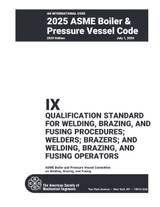
ASME BPVC.IX-2025 Section IX - Welding, Brazing, and Fusing Qualifications
ASME BPVC Section IX-2025 covers WPS/PQR qualification, welders, welding operators, brazers, plastic fusing, variables and qualification testing.
About this publication
Product Description
ASME BPVC.IX-2025, Section IX - Welding, Brazing, and Fusing Qualifications, is the 2025 edition of the ASME Boiler and Pressure Vessel Code qualification standard governing welding, brazing and plastic fusing procedures and the personnel who perform those joining operations. Section IX provides the qualification framework used by other ASME BPVC Sections, the ASME B31 Codes for Pressure Piping and other codes, standards and specifications that reference its requirements.
The Section addresses two closely related but distinct qualification functions. Procedure qualification demonstrates that a proposed joining procedure is capable of producing joints with the required properties for the intended application. Performance qualification demonstrates the ability of welders, welding operators, brazers, brazing operators and plastic fusing operators to perform the applicable joining process within defined qualification limits.
Scope of Section IX
Section IX applies to qualification of material-joining procedures and personnel when required by an ASME construction code or another referencing code, standard or specification. It is not itself a complete construction code for boilers, pressure vessels or piping. Instead, it supplies the joining-qualification rules used by the governing construction document.
The 2025 edition states that when a referencing code, standard or specification imposes qualification requirements that differ from Section IX, the requirements of that referencing document take precedence.
Four-Part Organization
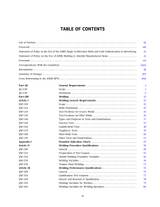
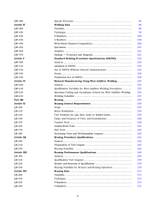
Section IX is divided into four principal parts:
Part QG: General Requirements applicable to material-joining processes;
Part QW: Welding requirements;
Part QB: Brazing requirements;
Part QF: Plastic fusing requirements.
This organization separates process-specific qualification rules while providing common terminology and general requirements through Part QG.
Part QG - General Requirements
Part QG establishes general concepts applicable across the material-joining processes covered by Section IX. It includes the overall scope, qualification responsibilities, general definitions and provisions connecting Section IX requirements with the codes, standards and specifications that invoke them.
Part QG also distinguishes procedure qualification from performance qualification. This distinction is fundamental to proper use of Section IX because a qualified procedure establishes the capability of the joining process, while personnel qualification establishes the ability of the individual or operator performing that process.
Procedure Qualification Records
The Procedure Qualification Record, commonly identified as the PQR, documents the actual variables used when producing a procedure-qualification test coupon and records the results of the required examinations and tests.
Section IX requires the PQR to document applicable essential variables. When toughness qualification is required by the referencing code, standard or specification, applicable supplementary essential variables must also be addressed. The PQR forms the supporting qualification basis for one or more Welding Procedure Specifications or other applicable joining-procedure specifications.
Welding Procedure Specifications
Part QW contains requirements governing Welding Procedure Specifications, commonly identified as WPSs. A WPS provides the qualified instructions and ranges used for production welding and is supported by the applicable procedure qualification record unless an alternative permitted qualification route applies.
Section IX defines which changes to welding variables require requalification of the procedure and which changes can be made without repeating procedure qualification testing. This distinction is handled through essential, supplementary essential and nonessential variables.
Essential Variables
Essential variables are welding, brazing or fusing variables for which a change outside the qualified limits requires requalification of the applicable procedure or performance qualification. Section IX organizes these variables according to the joining process involved.
Depending on the process, applicable variables can involve joints, base materials, filler materials, positions, preheat, postweld heat treatment, shielding or backing gases, electrical characteristics and joining technique.
Supplementary Essential Variables
Supplementary essential variables become qualification requirements when toughness or other applicable notch-toughness requirements are imposed by the referencing construction code, standard or specification.
These variables supplement the normal essential variables and help ensure that changes capable of materially affecting toughness are addressed within the qualification range.
Nonessential Variables
Nonessential variables are variables that must be addressed by the procedure specification where applicable but can generally be changed without requiring a new procedure qualification test. Their treatment allows production procedures to be revised within the framework permitted by Section IX while retaining the underlying qualified procedure basis.
Part QW - Welding
Part QW contains the Section IX requirements applicable to welding. It is organized into general welding requirements, welding procedure qualifications, welding performance qualifications and detailed welding data.
The welding rules apply to preparation of WPSs and qualification of welding procedures, welders and welding operators for the manual and machine welding processes covered by the Section.
Article I - Welding General Requirements
Article I addresses fundamental requirements affecting welding qualification. Its subjects include weld orientation, groove-weld and fillet-weld test positions, qualification tests, examinations and acceptance criteria.
The Article provides the testing framework used by later procedure and performance qualification provisions.
Tension Testing
Section IX uses tension testing where required to demonstrate mechanical properties of procedure-qualification welds. Test-specimen preparation and acceptance requirements are specified within the qualification framework.
Guided-Bend Testing
Guided-bend tests are used to evaluate weld soundness and ductility in applicable procedure and performance qualifications. Section IX provides requirements covering specimen type, preparation and acceptance.
Notch-Toughness Testing
Where toughness is required by the referencing construction code, Section IX provides qualification rules that connect toughness testing with supplementary essential variables.
Visual and Volumetric Examination
Section IX includes visual and volumetric examination provisions for qualifications where those examination methods are permitted. The 2025 edition revises terminology in this area, including titles associated with volumetric examination of welders and welding operators.
Article II - Welding Procedure Qualifications
Article II addresses qualification of welding procedures. It establishes requirements for procedure specifications, procedure qualification test coupons, qualification ranges, process variables and special qualification applications.
The resulting PQR records the conditions actually used for qualification, while the WPS specifies the qualified production ranges permitted by Section IX.
Base-Metal Qualification
Section IX groups many base metals using P-Numbers to reduce the number of procedure qualifications required where materials have comparable joining characteristics. Group Numbers can provide additional classification where required for specific qualification purposes.
Table QW/QB-422 is a major working reference within Section IX and identifies base-metal assignments used by both welding and brazing provisions.
Filler-Metal Qualification
Filler-metal variables are addressed according to the welding process and the qualification requirements applicable to the procedure. Section IX uses filler-metal classifications and groupings, including F-Numbers and A-Numbers where applicable, as part of its qualification structure.
Thickness Qualification
Qualification test thickness establishes ranges of base-metal and deposited weld-metal thickness that can be used in production within the limits specified by Section IX. The applicable ranges depend on whether the qualification concerns a procedure, welder, welding operator or specialized application.
Welding Position
Section IX defines welding positions and establishes the relationship between the position used for qualification and the production positions for which the qualification is valid. Tables and figures provide the orientation and qualification relationships used for groove and fillet welds.
Article III - Welding Performance Qualifications
Article III covers performance qualification of welders and welding operators. Performance qualification is intended to demonstrate an individual's ability to deposit acceptable weld metal or, for a welding operator, the ability to operate the welding equipment within applicable qualification limits.
Qualification ranges are controlled by essential performance variables appropriate to the welding process. Changes outside those ranges require additional qualification.
Welder Qualifications
Welder qualification can involve mechanical testing or permitted volumetric examination methods depending on the process and qualification arrangement. Section IX establishes the applicable testing, examination, position, thickness and diameter limits.
Welding Operator Qualifications
Welding operators using mechanized or automatic welding processes are qualified under rules appropriate to operation of the welding equipment and the applicable process variables.
Renewal and Continuity
Section IX contains provisions governing continuity and renewal of welding performance qualifications. These rules are important to organizations maintaining active qualification records for production welders and welding operators.
Article IV - Welding Data
Article IV contains extensive welding data used throughout Parts QW and QB. It organizes qualification variables and includes the base-metal, filler-metal, position, thickness and process information referenced by the procedural and performance qualification articles.
This data section is one of the most heavily used portions of Section IX when preparing WPSs, reviewing PQRs or determining the production limits established by a qualification test.
Welding Process Variables
Section IX provides process-specific variable tables covering commonly used welding processes and specialized joining processes. The applicable variables determine which changes require requalification and which can be incorporated into an existing qualified procedure.
Users must evaluate the variables associated with the specific welding process rather than assuming that qualification rules are interchangeable among processes.
Tube-to-Tubesheet Welding
Section IX includes specialized requirements for tube-to-tubesheet procedure and performance qualification when invoked by the applicable construction code. These requirements address demonstration mockups and qualification variables relevant to this specialized type of joining.
Corrosion-Resistant and Hard-Facing Weld Metal Overlay
The Section contains qualification provisions for weld metal overlay applications. These applications require consideration of variables and qualification ranges that differ from ordinary groove-weld qualification because the production objective is deposition of an overlay rather than joining two components with a conventional groove weld.
Part QB - Brazing
Part QB establishes qualification requirements for brazing procedures, brazers and brazing operators. Its organization parallels the welding portion in several respects, with articles devoted to general requirements, procedure qualification, performance qualification and brazing data.
Brazing qualification addresses the variables and test methods appropriate to brazed joints rather than simply applying welding requirements to a different process.
Brazing Procedure Qualification
Brazing procedure qualification demonstrates that the proposed brazing procedure is capable of producing joints meeting the applicable qualification requirements. Essential variables establish the limits within which the qualified procedure can be used.
Brazer and Brazing Operator Qualification
Performance qualification establishes the applicable range for brazers and brazing operators. Section IX provides process-specific requirements for test joints, positions and acceptance testing.
Part QF - Plastic Fusing
Part QF contains requirements for plastic fusing procedure and operator qualification. Plastic fusing was added to Section IX to provide a qualification framework for thermoplastic joining processes referenced by ASME construction codes and other standards.
The fusing provisions address procedure qualification, performance qualification and variables associated with the applicable fusion process and equipment.
Fusing Procedure Qualification
Procedure qualification establishes the capability of the fusion procedure and defines the qualified range of applicable variables.
Fusing Operator Qualification
Performance qualification establishes that the fusing operator can properly use the applicable equipment and procedure. Qualification limits can involve the process, equipment, dimensions and other variables specified in Part QF.
2025 Plastic Fusing Revisions
The 2025 edition includes revisions intended to distinguish more clearly between plastic fusing and fusion welding terminology. It also revises several Part QF pressure terms and qualification requirements associated with plastic fusing.
The 2025 changes include revised pipe-diameter qualification limits and additional treatment of fusing-machine changes for large pipe applications.
Wire-Additive Welding
Section IX includes qualification requirements for wire-additive welding. The 2025 edition continues development of these provisions and includes changes to variables and qualification requirements used for wire-additive welding procedure specifications and production applications.
This material is relevant to organizations applying Section IX qualification principles to additive manufacturing and deposited-metal construction methods covered by referencing ASME requirements.
2025 Edition Changes
ASME BPVC.IX-2025 revises and supersedes the 2023 edition. The official Summary of Changes identifies revisions throughout Parts QG, QW, QB and QF and in mandatory and nonmandatory appendices.
Revised General Requirements and Terminology
The 2025 edition revises general provisions in Part QG and updates terminology associated with plastic fusing and other material-joining processes. Definitions and cross-references were revised to improve consistency among the joining technologies covered by Section IX.
Welding Test and Examination Revisions
Several Part QW requirements for examination and acceptance were revised. These include changes affecting volumetric examination terminology, bend-test acceptance criteria and qualification requirements for selected test configurations.
Performance Qualification Revisions
The 2025 edition revises several welder and welding-operator qualification provisions. Changes include clarification of deposited weld-metal thickness and qualification limits and revisions affecting selected P-Number groupings used for performance qualification.
Duplex Stainless Steel Guidance
A significant addition is new Nonmandatory Appendix M, providing guidance for qualification of welding procedures and personnel for duplex stainless steels used in corrosion-resistant applications.
The appendix discusses considerations such as ferrite-austenite phase balance, detrimental intermetallic phases, heat input, preheat and interpass temperature, shielding and backing gases and qualified thickness ranges. Because it is nonmandatory, it applies when invoked by a referencing code, standard, specification or contractual document or when voluntarily adopted by the user.
Standard Welding Procedure Specifications
The 2025 edition updates edition references associated with Standard Welding Procedure Specifications in Mandatory Appendix E.
P-Number Assignment Process
Mandatory Appendix J was revised so requests involving P-Number assignments are directed through the ASME process established by Section IX.
Relationship to Other ASME Codes
Section IX is a service section used by numerous ASME construction codes. It is routinely referenced by Boiler and Pressure Vessel Code sections governing power boilers, heating boilers, pressure vessels, nuclear components and other pressure equipment as well as by ASME B31 piping codes.
The construction code determines when procedure or personnel qualification is required and can establish additional requirements. Section IX then supplies the detailed qualification rules within that framework.
Use in ASME Certification Programs
Section IX is one of the required Code books for numerous ASME Boiler and Pressure Vessel certification scopes where welding, brazing or fusing falls within the organization's authorized work. It is therefore frequently used by manufacturers and quality-control organizations preparing for ASME certification, renewal or Code fabrication.
WPS, PQR and Performance Qualification Documentation
For fabrication shops and quality organizations, Section IX is also a critical documentation standard. Welding Procedure Specifications, Procedure Qualification Records, Welder Performance Qualification records, operator qualifications, supporting test results and continuity records must be prepared and maintained in accordance with the requirements applicable to the work.
Correct documentation allows organizations, Authorized Inspectors, customers and auditors to verify that production welding and other joining work falls within established qualification ranges.
American National Standard Status
ASME BPVC.IX-2025 was developed under procedures accredited as meeting the criteria for American National Standards and is identified by ASME as an American National Standard.
Who Should Use ASME BPVC Section IX
welding engineers and welding specialists;
WPS and PQR developers;
welders and welding operators;
brazers and brazing operators;
plastic fusing personnel;
quality assurance and quality control professionals;
Authorized Inspectors and inspection organizations;
boiler and pressure vessel manufacturers;
pressure equipment and piping fabricators;
repair and alteration organizations;
engineering contractors;
materials and metallurgical engineers;
ASME certificate holders and certification applicants;
auditors and compliance personnel responsible for joining qualifications.
Why Section IX Matters
Weld quality cannot be controlled only by examining a finished joint. Code construction also requires evidence that the joining procedure has demonstrated the ability to produce the required properties and that the personnel performing the work have demonstrated the required skill or operating capability.
Section IX provides the common qualification framework used to establish that evidence. By defining procedure variables, test requirements, performance qualification ranges and documentation requirements, it creates a repeatable basis for qualifying joining procedures and personnel across a wide range of ASME construction applications.
Product Features
2025 edition of ASME BPVC Section IX
Current qualification standard for welding, brazing and plastic fusing under applicable ASME requirements
Covers Welding Procedure Specifications and Procedure Qualification Records
Covers welder and welding-operator performance qualification
Covers brazing procedure, brazer and brazing-operator qualification
Covers plastic fusing procedure and operator qualification
Defines essential, supplementary essential and nonessential variables
Includes P-Number and other material-grouping information
Addresses base-metal and deposited weld-metal thickness qualification
Includes groove-weld and fillet-weld position qualification
Covers tension, guided-bend and applicable toughness testing
Includes visual and volumetric examination provisions
Contains tube-to-tubesheet qualification provisions
Addresses corrosion-resistant and hard-facing weld overlays
Includes wire-additive welding qualification requirements
Includes updated plastic fusing terminology and qualification provisions
Adds Nonmandatory Appendix M guidance for duplex stainless steel welding qualification
Used by multiple ASME BPVC sections and ASME B31 piping codes
American National Standard
Product Details
Standard: ASME BPVC.IX-2025
Section: Section IX
Title: Welding, Brazing, and Fusing Qualifications
Full Qualification Title: Qualification Standard for Welding, Brazing, and Fusing Procedures; Welders; Brazers; and Welding, Brazing, and Fusing Operators
Publisher: ASME International
Edition: 2025 Edition
Date of Issuance: July 1, 2025
Print ISBN: 9780791877258
Page Count: 429
ASME Order Number: 500090
ANSI Status: American National Standard
Committee: ASME Boiler and Pressure Vessel Committee on Welding, Brazing, and Fusing
Previous Edition: ASME BPVC.IX-2023
Language: English
Publication Type: Code Qualification Standard
Edition Status and Errata Note
ASME BPVC.IX-2025 is the current edition of Section IX and revises ASME BPVC.IX-2023. It was issued July 1, 2025. Under Section IX's general provisions, a new edition can be used beginning on its issuance date and becomes mandatory six months after issuance unless the applicable referencing code, standard or specification establishes otherwise.
An errata document for BPVC.IX-2025 was issued in October 2025. Users applying the 2025 edition should consult the current ASME or authorized standards catalog for applicable errata and Code Cases in addition to the base publication.