

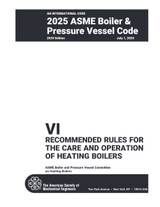
ASME BPVC.VI-2025 Section VI — Recommended Rules for the Care and Operation of Heating Boilers
ASME BPVC.VI-2025 covers heating boiler operation, maintenance, controls, relief valves, inspections, water treatment, repairs and boiler layup.
About this publication
Product Description
ASME BPVC.VI-2025, Section VI — Recommended Rules for the Care and Operation of Heating Boilers, provides operational, maintenance and safety guidance for steel and cast iron heating boilers operating within the service limitations established by ASME BPVC Section IV.
The Section is intended primarily for personnel directly responsible for operating and maintaining steam-heating boilers, hot-water heating boilers and hot-water supply boilers. Its guidance extends beyond the boiler pressure vessel itself to associated controls, automatic fuel-burning equipment, piping connections, safety devices, accessories and auxiliary equipment that can affect safe and reliable boiler operation.
Scope and Operating Limits
Section VI applies to heating boilers subject to the service restrictions of ASME BPVC Section IV. The 2025 edition identifies the principal operating limits as steam boilers operating at pressures not exceeding 15 psi (100 kPa), and hot-water heating or hot-water supply boilers operating at pressures not exceeding 160 psi (1 100 kPa) and/or temperatures not exceeding 250°F (120°C).
The guidance applies to the boiler proper and to piping connections up to and including the valves required by the Code. It also addresses auxiliary equipment and appliances that influence the safe and reliable operation of the heating-boiler installation.
Relationship to ASME BPVC Section IV
Section VI should be used together with the current edition of ASME BPVC Section IV, Rules for Construction of Heating Boilers. Section IV contains mandatory construction requirements, while Section VI provides recommended practices for care, operation and maintenance after the equipment has been installed and placed into service.
The Section explains that use of the word shall within its guidance reflects mandatory requirements originating in Section IV. Operators and owners should therefore distinguish between Section VI recommendations and referenced mandatory construction requirements.
Jurisdictional and Manufacturer Requirements
Section VI recognizes that boiler installations are also subject to local jurisdictional requirements, inspection rules and manufacturer instructions. Its recommendations are not intended to replace inspections or operating requirements mandated by jurisdictions, the National Board Inspection Code, insurers or other governing authorities.
Manufacturer operating and maintenance instructions remain an important source of equipment-specific requirements and should be used together with Section VI.
Article 2 — Boiler Terminology
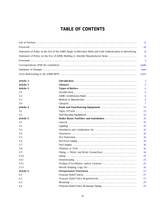
The Code includes a glossary covering terminology commonly associated with heating boilers, boiler controls, fuel-burning equipment and related operating systems. This provides operators, inspectors, service personnel and owners with a common vocabulary for applying the recommendations throughout the Section.
Article 3 — Types of Boilers
Article 3 introduces major heating-boiler classifications and construction arrangements. It addresses boiler classification, the ASME Certification Mark, methods of manufacture and boiler categories.
Illustrations in the Section include examples of horizontal-tube boilers, Scotch-type boilers, firebox boilers, vertical firetube boilers and sectional cast iron boilers. These examples help users relate the operating and maintenance guidance to common boiler configurations encountered in service.
Steel Boilers
The Section covers steel heating boilers used within the Section IV operating ranges and provides illustrations and operating information applicable to common firetube and related configurations.
Cast Iron Boilers
Cast iron sectional boilers are also within the scope of Section VI. The publication illustrates horizontal and vertical sectional arrangements and provides operating and maintenance guidance appropriate to these systems.
Article 4 — Fuels and Fuel-Burning Equipment
Article 4 addresses fuels used by heating boilers and the equipment that introduces and burns those fuels. Fuels can include gaseous, liquid and solid fuels, and the Section also recognizes electrically heated boilers.
The guidance emphasizes matching the boiler, burner and ancillary equipment to the fuel being used. Differences in fuel characteristics and heating value can affect burner configuration, combustion controls and safe operating practices.
Gaseous Fuels
The Section discusses gaseous fuels such as natural gas and liquefied petroleum gases and recognizes the different characteristics that operators must consider when using or changing fuel types.
Liquid and Solid Fuels
Guidance also encompasses boilers fired by oil and solid fuels. Proper equipment configuration, fuel supply and combustion-control practices are important to safe and efficient operation.
Article 5 — Boiler Room Facilities and Installation
Article 5 provides extensive guidance covering the boiler-room environment and supporting installation conditions. Its topics include lighting, ventilation, combustion air, equipment clearances, fire protection, electrical supply, fuel supply, chimneys and vents, piping, safety, housekeeping and operating records.
Lighting
Adequate boiler-room lighting supports safe operation, inspection, maintenance and observation of gauges, controls, burners, valves and other equipment.
Ventilation and Combustion Air
The Section addresses ventilation and combustion-air requirements because fuel-fired boilers require adequate air supply for proper combustion and safe boiler-room conditions.
Clearances and Accessibility
Appropriate equipment clearances help provide access for operation, inspection, cleaning, servicing and repair. Boiler-room arrangements should therefore consider both normal operating access and maintenance requirements.
Fire Protection
Article 5 includes boiler-room fire-protection considerations associated with fuels, burners and heating equipment.
Electrical Supply
Electrical systems supporting burners, pumps, controls and safety devices are addressed as part of the boiler installation.
Fuel Supply
The fuel-supply system must be appropriate for the fuel-burning equipment and installation. The Section coordinates fuel considerations with burner operation and boiler-room safety.
Chimneys and Vents
Combustion products must be safely conveyed from fuel-fired boilers. Section VI therefore includes guidance concerning chimney and vent arrangements as part of the overall installation.
Heating Boiler Piping
Article 5 includes guidance and numerous illustrations for heating-boiler piping arrangements. Examples include single hot-water boilers, multiple hot-water boilers, individual steam boilers and steam-boiler batteries using pumped or gravity return systems.
The Section also illustrates modular boiler installations using parallel and primary-secondary piping arrangements.
Feedwater and Makeup Water
Guidance addresses feedwater and makeup-water connections for steam and hot-water boilers. Boiler-room piping should permit appropriate filling, flushing and maintenance while preventing undesirable backflow into the water supply.
Return Connections
Steam-boiler return piping is addressed to help maintain safe boiler water levels and proper condensate return. The Section illustrates acceptable arrangements for both single and multiple boiler installations.
Bottom Blowoff and Drain Connections
The Section includes guidance for steam-boiler bottom blowoff connections and boiler drains. These provisions support removal of sediment, draining, cleaning and water-management activities.
Record Keeping and Logs
Article 5 includes recommendations for operating records and logs. Maintaining records of boiler operation, maintenance, testing and unusual conditions can help operators recognize changes in performance and demonstrate that routine care has been performed.
Article 6 — Overpressure Protection
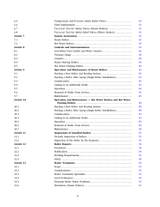
Overpressure protection is a major safety subject in Section VI. Article 6 addresses pressure-relief devices used on steam and hot-water heating boilers.
Pressure Relief Valves
The Section discusses pressure-relief-valve requirements, mounting arrangements and associated operating considerations.
Discharge Piping
Guidance is provided for pressure-relief-valve discharge piping so released steam or hot water can be directed in a manner consistent with safe boiler operation.
Temperature and Pressure Safety Relief Valves
Temperature and pressure safety-relief valves used on applicable hot-water systems are included within the overpressure-protection guidance.
Valve Replacement
Article 6 addresses replacement of safety and safety-relief valves and the importance of maintaining appropriate pressure-relief protection when a device is replaced.
Try-Lever Testing
The Section includes recommendations for try-lever testing of safety valves on steam boilers and safety-relief valves on water boilers.
Article 7 — System Accessories
Article 7 covers system accessories used with steam and hot-water boiler installations. These accessories influence system operation and can affect the boiler even though they are not part of the pressure vessel itself.
Illustrations include common steam traps and return arrangements, helping users understand how accessories fit into heating-system operation.
Article 8 — Controls and Instrumentation
Controls and instruments are essential to maintaining safe boiler operation. Article 8 addresses low-water fuel cutoffs, water feeders, pressure gauges and operating, limit and safety controls used with steam and hot-water heating boilers.
Low-Water Fuel Cutoffs
Low-water fuel cutoffs protect boilers against continued firing under unsafe low-water conditions. Section VI includes examples of float-type and probe-type devices and provides recommendations for their care and operation.
Water Feeders
Automatic or controlled water-feeding equipment is addressed in conjunction with low-water protection and boiler water-level management.
Pressure Gauges
The Section discusses pressure-gauge installation and use on steam and hot-water boilers. It also includes recommendations concerning pressure-gauge range and periodic calibration.
Operating and Safety Controls
Automatically fired boilers can use operating, limit, safety and programming controls. Section VI provides guidance for maintaining these devices and their relationship to burner operation.
Article 9 — Operation and Maintenance of Steam Boilers
Article 9 is devoted specifically to steam-heating boilers. It addresses starting a new boiler and heating system, restarting after layup, condensation, placing an additional boiler into service, normal operation, removing a boiler from service and maintenance.
This progression follows the practical life cycle of boiler operation rather than limiting the guidance to steady-state firing conditions.
Startup
Startup guidance helps operators place a new or previously laid-up steam boiler into service in a controlled manner while checking the associated heating system and equipment.
Normal Operation
Operating recommendations address routine observation and care needed while the boiler is in service.
Removal From Service
Procedures for taking boilers out of service are addressed so shutdown and subsequent maintenance or layup can be performed in an orderly manner.
Article 10 — Operation and Maintenance of Hot-Water Boilers
Article 10 provides corresponding guidance for hot-water boilers and hot-water heating boilers. Subjects include startup of new installations, restart after layup, condensation, operation of multiple boilers, routine operation, shutdown and maintenance.
Separating steam and hot-water operating guidance recognizes the different system conditions and operating issues associated with the two boiler types.
Article 11 — Inspection of Installed Boilers
Section VI addresses periodic inspection of installed heating boilers and inspection activities performed by the responsible inspector. This helps connect everyday boiler operation with the formal inspection process required by applicable jurisdictions and inspection programs.
Operators and owners benefit from understanding the conditions inspectors examine so boiler cleaning, access, records and maintenance can be managed appropriately before the inspection occurs.
Article 12 — Boiler Repairs
Article 12 provides recommended guidance relating to heating-boiler repairs. Its subjects include precautions, notification requirements, welding considerations and safety.
Repair work can be subject to jurisdictional rules and other applicable repair codes. Section VI therefore should not be interpreted as replacing the approval, inspection or repair requirements imposed by the governing authority.
Article 13 — Water Treatment
Water treatment is important to boiler reliability because untreated or improperly controlled water can contribute to scale, deposits, corrosion and other operating problems. Article 13 addresses water-treatment considerations for heating boilers.
Water Treatment Specialists
The Section recognizes the value of qualified water-treatment specialists where boiler-water conditions require professional evaluation and treatment planning.
Potential Boiler Water Problems
Article 13 identifies boiler-water problems that operators should consider when establishing maintenance and treatment practices.
Blowdown
Steam-boiler blowdown is addressed as one method used in management of boiler-water conditions and accumulated solids.
Chemical Feeders
The Section discusses chemical-feeding arrangements used when treatment chemicals are required as part of the boiler-water program.
Article 14 — Treatment of Laid-Up Boilers
Boilers removed from service for an extended period require protection against deterioration during layup. Article 14 addresses both dry and wet layup methods.
Dry Layup
The dry method is addressed for situations where the boiler is stored without being maintained full of treated water.
Wet Layup
The wet method provides an alternative approach where maintaining the boiler filled with appropriately controlled water is suitable for the planned outage conditions.
Mandatory Appendix I — Periodic Testing and Maintenance
The 2025 edition includes a mandatory appendix addressing periodic testing and maintenance. It covers the inspection and maintenance program and identifies responsibilities of personnel involved in maintaining the boiler installation.
This appendix reinforces the principle that safe heating-boiler operation depends on a continuing maintenance program rather than response only after equipment failure or an operating problem occurs.
2025 Edition Changes
ASME BPVC.VI-2025 revises the 2023 edition. The official Summary of Changes shows that the technical changes to Section VI itself are limited. In addition to editorial updates to the foreword, committee personnel information and BPVC section references, paragraph 11.2 concerning inspection of the boiler by the inspector was revised.
The relatively limited 2025 change list is consistent with Section VI's current stabilized-maintenance status.
Relationship to Boiler Codes and Inspection Requirements
Section VI is intended to supplement, not replace, applicable laws, regulations, manufacturer instructions and inspection requirements. Owners and operators should determine which jurisdictional rules apply to a particular installation and should consult the current Section IV requirements where Section VI references mandatory Code provisions.
Who Should Use ASME BPVC Section VI
heating boiler operators;
facility engineers and maintenance departments;
boiler service technicians;
building and plant engineers;
boiler inspectors;
mechanical contractors;
owners and operators of institutional and commercial boiler plants;
school, hospital and government facility maintenance departments;
property and facilities management organizations;
heating-boiler manufacturers and service organizations;
insurance and inspection personnel;
engineering consultants responsible for heating-boiler systems.
Why This Section Matters
Safe boiler operation does not end when a boiler has been manufactured and installed in accordance with a construction Code. Controls must continue to operate properly, relief devices must remain functional, boiler-water conditions must be managed, burners and fuel systems require care, and operating personnel must recognize conditions that can affect safety and reliability.
Section VI brings these operational topics together in a single ASME reference specifically focused on heating boilers. It provides a practical bridge between the construction requirements of Section IV and the day-to-day responsibilities of personnel operating and maintaining installed equipment.
Product Features
2025 edition of ASME BPVC Section VI
Recommended operating and maintenance rules for heating boilers
Applies to steel and cast iron boilers within BPVC Section IV service limits
Covers steam-heating, hot-water heating and hot-water supply boilers
Addresses boiler classifications and common boiler configurations
Covers gaseous, liquid and solid fuels and fuel-burning equipment
Provides boiler-room installation and safety guidance
Addresses combustion air, ventilation, clearances and fire protection
Includes heating-boiler piping illustrations and installation guidance
Covers pressure-relief valves and overpressure protection
Addresses steam and hot-water system accessories
Covers low-water fuel cutoffs, water feeders, gauges and controls
Provides separate operating and maintenance guidance for steam and hot-water boilers
Addresses periodic inspection of installed boilers
Includes repair precautions and welding considerations
Covers boiler-water treatment, blowdown and chemical feeding
Includes dry and wet boiler layup guidance
Includes a mandatory appendix on periodic testing and maintenance
American National Standard
Product Details
Standard: ASME BPVC.VI-2025
Section: Section VI
Title: Recommended Rules for the Care and Operation of Heating Boilers
Publisher: ASME International
Edition: 2025 Edition
Date of Issuance: July 1, 2025
Print ISBN: 9780791877203
Page Count: 101
ASME Order Number: 500060
ANSI Status: American National Standard
Committee: ASME Boiler and Pressure Vessel Committee on Heating Boilers
Previous Edition: ASME BPVC.VI-2023
Language: English
Publication Type: Boiler Code Operating and Maintenance Standard
Edition Status Note
ASME BPVC.VI-2025 is the current edition of Section VI and supersedes BPVC.VI-2023. ASME identifies the 2025 edition as remaining in effect and has placed Section VI on stabilized maintenance. The official 2025 Summary of Changes identifies limited revisions, including editorial updates and a revision to paragraph 11.2 concerning inspection of the boiler by the inspector.