
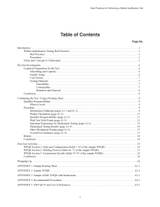
AWS BPWQ Best Practices for Performing a Welder Qualification Test
AWS BPWQ provides best practices for welder qualification planning, test administration, routing sheets, mechanical testing and WPQR records.
Wrong edition, wrong file, or a file that won’t open? We replace or refund — contact us within 7 days.
Buy now is for one copy. Buying for a team? Get a quote
About this publication
Product Description
AWS BPWQ, Best Practices for Performing a Welder Qualification Test, First Edition, is a technical manual published by the American Welding Society to help welding inspectors, test supervisors, qualifiers, engineers and managers conduct welder performance qualification testing in a controlled, repeatable and well-documented manner.
The publication is intentionally written as a high-level reference that can be used with a variety of welding qualification codes and standards. Rather than prescribing one universal qualification test, it provides recommended practices for organizing, administering, documenting and completing a qualification test while the user applies the specific requirements of the governing code or standard and the applicable Welding Procedure Specification (WPS).
Important Publication Status
AWS explicitly identifies BPWQ as a nonstandard publication. It is not an official AWS standard and does not replace the qualification requirements contained in an applicable welding code, specification or qualification standard.
The guide reflects the recommendations of welding qualification subject-matter experts and is intended to be used together with the applicable qualification standard, the WPS used for the test and any other requirements governing the qualification activity.
Purpose of the Manual
The principal purpose of BPWQ is to define practical best practices for welder qualification testing. The manual focuses on improving accuracy, consistency, repeatability, documentation and control throughout the qualification process.
The publication recognizes that welder performance qualification can be performed under many different codes and standards and that the specific essential variables, acceptance criteria, testing requirements and qualification ranges depend on the governing document. BPWQ therefore concentrates on the administrative and practical process used to conduct the test correctly.
Three-Phase Qualification Process
The manual organizes welder performance qualification testing into three major phases:
- Pre-Test Investigation — determining the applicable requirements and preparing the test before welding begins;
- Conducting the Test — administering and controlling the qualification test using a structured routing-sheet approach;
- Post-Test Activities — recording test variables, examination results and qualification information in the Welder Performance Qualification Record.
This structure helps qualifiers establish a repeatable workflow rather than treating each qualification test as an improvised event.
Welder Qualification Testing Best Practices
BPWQ begins by discussing recommended practices and procedures that can help improve consistency and code compliance during welder performance qualification testing. Documentation is treated as an important element of both qualification and certification activities.
The manual encourages organizations and individual qualifiers to establish written procedures that define how testing will be planned, controlled, documented and completed.
Terms and Concepts
The guide introduces terms and concepts that qualifiers should understand before administering performance qualification testing. A clear understanding of the governing qualification document, WPS, test variables, examination methods and required documentation is essential before the test begins.
Because different codes can establish different qualification requirements, BPWQ emphasizes determining exactly which qualification standard and edition apply to the test rather than assuming that qualification rules are interchangeable among welding codes.
Pre-Test Investigation
The Pre-Test Investigation section addresses information and decisions that should be completed before a welder begins the qualification test. This stage is intended to identify the governing requirements and reduce preventable errors, delays and disputes during testing.
The qualifier must determine the applicable qualification standard, establish which edition is being used, obtain the appropriate WPS and identify the examination and testing requirements that will determine whether the welder passes the test.
Qualification Standard and WPS Review
The applicable qualification standard establishes requirements such as test configuration, welding variables, visual examination, acceptance criteria and required mechanical or nondestructive testing. BPWQ stresses that the qualifier cannot rely on the best-practices manual alone.
The WPS used during the qualification test also needs to be available and appropriate for the welding process, materials and test being performed.
Logistical Preparation
The manual includes a dedicated section on logistical preparation for qualification testing. Effective preparation helps ensure that the required facility, materials, equipment, personnel and testing resources are available when the test begins.
Scheduling and Capacity
Scheduling and testing capacity are addressed so the qualifier can coordinate welders, test stations, equipment, inspection resources and subsequent examination or mechanical testing without unnecessary delays.
Facility Setup
The qualification facility should be configured to support the requirements of the applicable test. BPWQ addresses planning the test environment so that the welder can perform the required test while the qualifier can properly monitor and document the activity.
Cost Factors
The guide includes consideration of cost factors involved in qualification testing. Material, consumables, facility use, test specimen preparation, mechanical testing, nondestructive examination and administrative activities can all affect the cost of a qualification program.
Testing Materials
BPWQ addresses the materials required for the qualification test and emphasizes controlling those materials according to the requirements of the governing qualification standard and WPS.
Material Traceability
Traceability is treated as an important part of qualification-test control. The qualifier should be able to identify the materials and test pieces used and maintain appropriate documentation linking them to the qualification activity.
Welding Consumables
The guide addresses welding consumables used during qualification testing. Consumables should be appropriate for the WPS and applicable qualification requirements and should be controlled so that the materials actually used during the test can be documented.
Retention and Disposal
BPWQ also discusses retention and disposal of test specimens and related records or radiographic material. Retention requirements can arise from contracts, company procedures or governing documents, so responsibility and retention periods should be established before the test where applicable.
Conducting the Test Using a Routing Sheet
The central test-administration section uses a routing-sheet approach to provide a repeatable sequence for conducting welder performance qualification testing. The sample routing sheet functions as both a control tool and a documentation aid.
The routing process helps the qualifier confirm that required information has been collected and that critical steps are completed in the proper sequence.
Information Gathering
The routing sheet begins with information gathering. Typical records include a unique test identifier, the WPS used for qualification, the applicable qualification standard, test date, welder identification information, employer information where applicable and information identifying the qualifier.
Capturing this information before welding begins helps establish traceability between the welder, test coupon, procedure, qualification requirements and final qualification record.
Welder Orientation
The manual includes guidance for orienting the welder before the test. The welder should understand how the qualification test will be conducted and what is expected without receiving inappropriate assistance that would compromise the validity of the performance test.
Clear communication can reduce confusion while preserving the requirement that the test demonstrate the welder's own ability to produce an acceptable weld under the specified qualification conditions.
Qualifier Responsibilities
BPWQ discusses responsibilities of the person administering the qualification test. The qualifier is responsible for controlling the process, verifying required information, monitoring the test and ensuring that testing is conducted in accordance with the applicable qualification requirements.
The publication also identifies practices that should be avoided when administering tests, particularly actions that could create inconsistencies or deviate from the governing qualification document.
Weld Test Hold Points
The routing-sheet procedure includes weld test hold points. Hold points provide opportunities for the qualifier to verify required conditions or inspect the test at defined stages before allowing the welder or test coupon to proceed to the next step.
This approach helps prevent an improperly configured or nonconforming test from progressing through the entire qualification process before the error is discovered.
Specimen Preparation for Mechanical Testing
After welding is complete, the manual addresses preparation of specimens required for mechanical testing. The type, number, location and preparation of specimens depend on the applicable qualification standard.
The routing-sheet process provides a means of documenting specimen preparation and maintaining the relationship between the original qualification coupon and the specimens subsequently evaluated.
Mechanical Testing Results
BPWQ includes guidance for recording mechanical testing results and determining whether the results satisfy the acceptance requirements established by the governing qualification standard.
The manual also recognizes that other mechanical or examination methods can apply depending on the qualification document and test configuration.
Retests
A dedicated section addresses retests. Retesting must be handled according to the requirements of the applicable qualification standard rather than by an informal decision made by the qualifier or employer.
The best-practices approach encourages clear documentation of the original test result, the basis for any permitted retest and the results of the subsequent test.
Post-Test Activities
Once welding, examination and testing are complete, the manual turns to post-test documentation. This phase focuses on preparing a complete Welder Performance Qualification Record, commonly abbreviated WPQR.
The WPQR records the variables and results needed to document the test and establish the welder's qualification within the ranges permitted by the governing qualification code or standard.
WPQR Section 1 — Data and Configuration
The sample WPQR divides the post-test documentation process into structured sections. The first section covers test data and configuration information, allowing the qualifier to document the basic conditions under which qualification was performed.
WPQR Section 2 — Welding Process
The second section captures information associated with the welding process and variables used during the test. Proper recording is essential because the welder's qualified range can depend on the variables actually used during qualification.
WPQR Section 3 — Examination Results
The third section records examination and test results. This provides the documented basis for determining whether the welder successfully completed the performance qualification test.
Sample Routing Sheet
Appendix 1 provides a sample routing sheet designed to help qualifiers standardize test administration. The document can be adapted to an organization's procedures and provides a practical framework for information gathering, test control, hold points, testing and final disposition.
Sample Welder Performance Qualification Record
Appendix 2 contains a sample WPQR that demonstrates how qualification information and examination results can be organized into a permanent test record.
Sample ASME WPQR With Instructions
Appendix 3 provides a sample ASME-style Welder Performance Qualification Record together with instructions. This is useful for personnel who administer qualification tests associated with ASME welding qualification requirements and need an example of structured documentation.
Recommended Procedures
Appendix 4 contains recommended procedures supporting qualification-test administration. These resources are intended to help qualifiers develop repeatable internal practices rather than relying solely on individual experience or memory.
AWS QC47 and Reference Material
Appendix 5 includes AWS QC47 material and a list of references. AWS QC47 addresses AWS welder certification and test-facility accreditation and provides related context for personnel involved in formal welder qualification and certification activities.
Relationship to Other Welding Qualification Documents
BPWQ is intended to supplement rather than replace governing qualification documents. Depending on the work being performed, users may need standards such as AWS B2.1/B2.1M, AWS B5.4, API 1104, ASME Boiler and Pressure Vessel Code Section IX or another applicable qualification document.
The governing code or standard determines the actual qualification variables, test configuration, examination methods, acceptance criteria and qualified ranges. BPWQ provides the organizational and practical framework for administering that process consistently.
Who Should Use AWS BPWQ
- welding inspectors and Certified Welding Inspectors;
- welder qualification test supervisors;
- personnel serving as welder performance qualifiers;
- welding engineers and welding coordinators;
- quality assurance and quality control personnel;
- fabrication and construction supervisors;
- welding training and test facilities;
- employers responsible for qualifying welders;
- organizations developing internal welder qualification procedures;
- professionals preparing or maintaining Welder Performance Qualification Records.
Why This Manual Matters
A technically valid welder qualification test depends on more than having a welder deposit weld metal on a coupon. The correct qualification standard and WPS must be identified, the test configuration and materials must be controlled, the welder must be properly identified, critical test stages must be monitored, specimens must be prepared and evaluated correctly and the final qualification record must accurately document the test.
BPWQ brings these activities together in a practical workflow. Its routing sheets, sample records and recommended procedures can help organizations reduce omissions and improve consistency while still allowing the specific requirements of the applicable welding code or standard to control the qualification.
Product Features
- First edition AWS technical manual published in 2019
- High-level reference for welder performance qualification testing
- Applicable across multiple welding qualification codes and standards
- Organized around pre-test, test and post-test phases
- Addresses qualification-standard and WPS review
- Covers scheduling, facility setup and testing logistics
- Addresses test materials, consumables and traceability
- Provides guidance on retention and disposal of test materials
- Uses a routing-sheet approach for test administration
- Addresses welder orientation and qualifier responsibilities
- Includes weld-test hold points
- Covers preparation of mechanical test specimens
- Addresses mechanical testing results and retests
- Covers preparation of Welder Performance Qualification Records
- Includes a sample routing sheet
- Includes a sample WPQR
- Includes a sample ASME WPQR with instructions
- Includes recommended qualification procedures
- Includes AWS QC47 and reference material
- Designed to supplement, not replace, the governing qualification standard and WPS
Product Details
- Publication: AWS BPWQ — Best Practices for Performing a Welder Qualification Test
- Publisher: American Welding Society
- Edition: First Edition
- Publication Year: 2019
- Print ISBN: 978-1-64322-058-1
- Page Count: 50
- AWS Order Code: BPWQ
- Issuing Committee: AWS Qualification & Certification Committee
- Language: English
- Publication Type: Technical Manual / Best Practices Guide
- Official AWS Standard: No — AWS identifies BPWQ as a nonstandard publication
Edition Status Note
The 2019 First Edition remains listed for sale in the current American Welding Society publications catalog. AWS does not currently identify a second edition or replacement BPWQ publication. The current AWS product description continues to characterize the publication as a high-level reference guide for welder performance qualification testing and explicitly states that it is not an official AWS standard.