
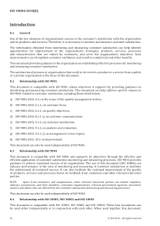
ISO 10004:2018 Quality Management — Customer Satisfaction — Guidelines for Monitoring and Measuring
Buy ISO 10004:2018 Quality Management — Customer Satisfaction — Guidelines for Monitoring and Measuring, the current ISO guide for customer feedback, satisfaction measurement, analysis, improvement, a
Wrong edition, wrong file, or a file that won’t open? We replace or refund — contact us within 7 days.
About this publication
The ISO 10004:2018 Quality Management — Customer Satisfaction — Guidelines for Monitoring and Measuring standard provides internationally recognized guidance for organizations that need a structured way to monitor, measure, analyze, and improve customer satisfaction.
Developed by the International Organization for Standardization (ISO), this standard helps organizations establish processes for understanding how customers perceive their products, services, and overall experience. It is designed for organizations of any size and in virtually any industry, making it useful for manufacturers, service providers, government agencies, healthcare organizations, technology companies, consultants, quality departments, and customer-experience teams.
Unlike a complaints-handling standard, ISO 10004 focuses specifically on measuring customer satisfaction itself. It helps organizations determine what information should be collected, how customer expectations and perceptions can be monitored, how measurement activities should be planned, and how results can be analyzed to identify meaningful opportunities for improvement.
ISO states that the standard provides guidelines for defining and implementing processes to monitor and measure customer satisfaction, with its primary focus on customers external to the organization. This makes it especially useful for businesses that want to move beyond anecdotal feedback and create a systematic, repeatable approach to understanding customer experience.
A major strength of ISO 10004 is its emphasis on using customer feedback as a management and improvement tool, rather than treating surveys as a box-checking exercise. Organizations can use the guidance to identify trends, determine areas where customer expectations are not being met, recognize strengths that should be preserved, and prioritize changes to products, services, processes, or customer interactions.
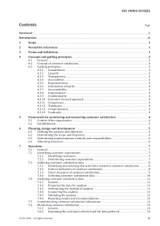
The standard supports the development of customer-satisfaction monitoring processes that may include surveys, interviews, focus groups, direct feedback, customer observations, service data, complaints information, market feedback, and other relevant sources. The goal is not simply to collect more information, but to gather useful evidence that management can convert into decisions and measurable improvements.
ISO 10004 also helps organizations define appropriate customer satisfaction indicators and measurement methods. Depending on the organization, this may involve tracking satisfaction scores, customer perceptions, loyalty indicators, repeat-business trends, service performance, expectations, or other measures linked to customer experience.
The guidance is particularly valuable for organizations operating an ISO 9001-based Quality Management System. Customer focus and monitoring customer perceptions are important elements of quality management, and ISO 10004 provides a more detailed framework for organizations that want to strengthen the way those activities are planned and managed.
The standard works naturally alongside other customer-satisfaction standards within the ISO 10000 family. For example, ISO 10002 addresses complaints handling, while ISO 10004 focuses on monitoring and measuring satisfaction. Used together, these standards can help organizations develop a more complete picture of customer experience, dissatisfaction, loyalty, and opportunities for improvement.
Importantly, ISO 10004 does not prescribe one universal customer survey or scoring system. Instead, it gives organizations a framework that can be adapted to their own customers, markets, products, services, and business objectives. That flexibility makes it suitable for both small organizations developing their first structured feedback process and larger organizations operating sophisticated customer-experience programmes.
The 2018 Second Edition remains current. ISO reviewed the publication in 2023 and confirmed it without replacement. Organizations maintaining ISO-based quality systems can therefore continue using ISO 10004:2018 as the current international reference for monitoring and measuring customer satisfaction.
At 35 pages, ISO 10004:2018 is a concise but practical management standard. It is particularly valuable for organizations that already collect customer feedback but need a more disciplined framework for turning that information into decisions, process improvements, and better customer outcomes.
Why This Standard Matters
ISO 10004:2018 is a strong reference for organizations that want to understand customer perceptions using a structured and internationally recognized approach. It is especially valuable for:
Quality managers and QMS professionals
Customer experience and customer-success teams
ISO 9001 implementation teams
Business and operations managers
Marketing and market-research professionals
Service organizations
Manufacturers and suppliers
Internal auditors
Consultants and trainers
Process-improvement teams
Organizations developing customer feedback programmes
Quality and management-system libraries
Product Features
Official ISO 10004:2018 International Standard
Current 2nd Edition
Reviewed and confirmed by ISO in 2023
Provides guidelines for monitoring and measuring customer satisfaction
Applicable to organizations of any type or size
Focuses on external customers
Supports structured collection and evaluation of customer perceptions
Helps organizations identify customer needs and expectations
Supports selection of appropriate customer-satisfaction measurement methods
Provides guidance for analyzing and interpreting customer feedback
Helps identify trends and opportunities for improvement
Supports customer-focused decision making
Useful for organizations operating an ISO 9001-based QMS
Can complement ISO 10002 complaints-handling processes
Applicable across manufacturing, service, government, healthcare, technology, and other sectors
Supports improved customer retention, loyalty, and organizational performance
Product Details
Title: ISO 10004:2018 Quality Management — Customer Satisfaction — Guidelines for Monitoring and Measuring
Publisher: International Organization for Standardization (ISO)
Edition: 2nd
Published: July 2018
Number of Pages: 35
Status: Current / Confirmed
Last Systematic Review: Confirmed in 2023
Technical Committee: ISO/TC 176/SC 3
ICS: 03.120.10
Previous Edition: ISO 10004:2012