

ISO 10005:2018 Quality Management — Guidelines for Quality Plans
Buy ISO 10005:2018 Quality Management — Guidelines for Quality Plans, the current ISO guide for developing, implementing, reviewing, and updating quality plans for products, services, projects, proces
Wrong edition, wrong file, or a file that won’t open? We replace or refund — contact us within 7 days.
About this publication
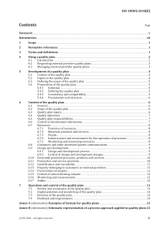
The ISO 10005:2018 Quality Management — Guidelines for Quality Plans standard provides internationally recognized guidance for organizations that need to develop, review, approve, implement, control, and update effective quality plans for products, services, processes, projects, and contracts.
Developed by the International Organization for Standardization (ISO), ISO 10005 helps organizations translate quality requirements into a practical plan identifying what needs to be done, who is responsible, which resources and controls are required, and how quality objectives will be achieved for a specific case. It can be used by organizations of any size and in virtually any industry.
A major strength of ISO 10005 is its flexibility. The standard applies to quality plans for virtually any intended output, including a process, product, service, project, or contract. It can be used whether or not the organization already operates a management system conforming to ISO 9001, making it useful both for mature ISO-certified organizations and companies developing more structured quality controls for the first time.
A quality plan provides a focused framework for determining how applicable requirements will actually be fulfilled. Rather than relying only on high-level quality policies, organizations can use the plan to define the activities, responsibilities, resources, methods, controls, documentation, verification activities, and acceptance criteria appropriate to a particular project, contract, product, service, or process.
ISO specifically highlights quality plans as useful when introducing new products, services, processes, or projects, because they allow organizations to establish required controls before work begins. They can also help demonstrate to customers and other interested parties how requirements will be addressed and how quality will be managed throughout delivery.
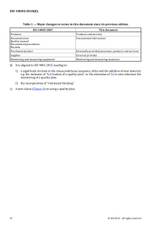
The 2018 edition was updated to better reflect modern quality-management practices and terminology associated with ISO 9001:2015. ISO notes that the revision strengthened guidance involving the needs and expectations of relevant interested parties, organizational knowledge, and risk-based thinking when deciding which processes, resources, and methods should be included in a quality plan.
This risk-based approach is particularly valuable for complex projects and contracts. Organizations can use the quality-planning process to identify areas where failures, uncertainty, supplier issues, process variability, or inadequate controls could affect the intended output and then determine appropriate preventive controls, verification activities, responsibilities, and resources.
ISO 10005 can also help organizations coordinate quality activities across customers, suppliers, subcontractors, project teams, production departments, engineering groups, and other interested parties. By documenting how quality requirements will be achieved, organizations can reduce ambiguity and establish clearer expectations before problems appear during execution.
The standard is especially valuable for project-based and contract-driven industries such as engineering, construction, manufacturing, aerospace, energy, defense, transportation, information technology, professional services, and government contracting, where customers may require a documented quality plan for individual projects, products, or contracts.
Importantly, ISO 10005 provides guidance rather than mandatory requirements. It is not intended as a stand-alone certification standard. Organizations can tailor the guidance to the complexity, risks, customer requirements, regulatory obligations, and quality objectives associated with each specific application.
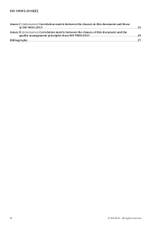
The standard is also complementary to an ISO 9001-based Quality Management System. ISO 9001 provides organization-wide QMS requirements, while ISO 10005 offers more focused guidance for determining how those quality principles and controls can be applied to a specific product, service, project, process, or contract.
The 2018 Third Edition remains current. ISO completed a systematic review in 2023 and confirmed the standard without replacement, making ISO 10005:2018 the current international reference for quality-plan guidance.
At 27 pages, ISO 10005:2018 is concise but highly practical. It gives organizations a structured way to turn broad quality commitments into an actionable plan specifying who does what, using which resources and controls, to produce an acceptable result. A refreshingly practical concept in a world where “quality plan” can otherwise mean three meetings and a spreadsheet nobody admits to owning.
Why This Standard Matters
ISO 10005:2018 is a valuable reference for organizations that need formal, repeatable quality planning for specific products, projects, services, processes, or contracts. It is especially useful for:
Quality managers and QMS professionals
Project managers and project quality engineers
ISO 9001 implementation teams
Engineering and construction organizations
Manufacturing and production teams
Contract and supplier quality professionals
Quality assurance and quality control personnel
Consultants and internal auditors
Government and defense contractors
Procurement and supply-chain teams
Organizations preparing customer-specific quality plans
Project and quality-management libraries
Product Features
Official ISO 10005:2018 International Standard
Current 3rd Edition
Reviewed and confirmed by ISO in 2023
Provides guidance for developing and using quality plans
Applies to a process, product, service, project, or contract
Applicable to organizations of any size or industry
Can be used with or without an ISO 9001-conforming QMS
Covers establishing quality plans
Addresses review and acceptance of quality plans
Covers application and implementation
Provides guidance for revising quality plans when conditions change
Supports definition of responsibilities and resources
Helps identify appropriate processes, controls, and methods
Incorporates risk-based thinking
Addresses the needs and expectations of relevant interested parties
Reflects modern quality-management terminology and concepts
Helps organizations demonstrate how customer and contractual requirements will be fulfilled
Useful for validating new products, services, processes, and projects
Supports project, contract, supplier, and product-specific quality management
Provides guidance rather than certification requirements
Product Details
Title: ISO 10005:2018 Quality Management — Guidelines for Quality Plans
Publisher: International Organization for Standardization (ISO)
Edition: 3rd
Official Publication Date: June 20, 2018
Number of Pages: 27
Status: Current / Confirmed
Last Systematic Review: Confirmed in 2023
Technical Committee: ISO/TC 176/SC 3
ICS: 03.120.10
Previous Edition: ISO 10005:2005