
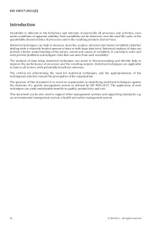
ISO 10017:2021 Quality Management — Guidance on Statistical Techniques for ISO 9001:2015
Buy ISO 10017:2021, the ISO guide to statistical techniques for ISO 9001:2015 covering SPC, process capability, measurement systems, sampling, DOE, regression, reliability, and quality-data analysis.
Wrong edition, wrong file, or a file that won’t open? We replace or refund — contact us within 7 days.
About this publication
The ISO 10017:2021 Quality Management — Guidance on Statistical Techniques for ISO 9001:2015 standard provides practical guidance for organizations that need to select and apply appropriate statistical techniques to support an ISO 9001:2015 Quality Management System (QMS).
Developed by the International Organization for Standardization (ISO), ISO 10017 helps organizations understand where statistical methods can provide useful information for developing, implementing, maintaining, and improving a quality management system. It is applicable regardless of an organization's size or complexity, making it relevant to manufacturing, engineering, healthcare, laboratories, service organizations, technology companies, government agencies, and other environments where data is used to support quality decisions.
The central value of ISO 10017 is its connection between ISO 9001 requirements and quantitative data. Quality management systems generate enormous amounts of information through inspections, measurements, process monitoring, customer feedback, nonconformities, audits, equipment performance, supplier results, and operational metrics. This standard helps organizations determine which statistical approaches may be useful for analyzing that information and turning raw data into meaningful evidence.
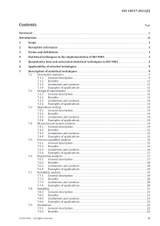
ISO 10017:2021 identifies a broad range of statistical techniques that can support quality-management activities, including descriptive statistics, design of experiments, hypothesis testing, measurement system analysis, process capability analysis, regression analysis, reliability analysis, sampling, simulation, statistical process control, statistical tolerancing, and time-series analysis.
These techniques can support important quality objectives such as understanding process variation, evaluating measurement systems, determining process capability, identifying relationships between variables, monitoring trends, evaluating reliability, designing experiments, establishing sampling strategies, and maintaining statistical control over processes.
A major strength of ISO 10017 is that it helps organizations choose statistical techniques based on the type of quantitative information and the quality-management objective involved. Not every quality problem requires an advanced statistical model, and not every data set should be treated the same way. The standard gives quality professionals a structured framework for determining which techniques may provide useful information in a given situation.
For manufacturing and process-driven organizations, techniques such as statistical process control (SPC), process capability analysis, measurement system analysis, sampling, and design of experiments (DOE) can support tighter control over variation, product conformity, production processes, and continuous improvement. For organizations dealing with performance trends, forecasting, reliability, or complex relationships between variables, techniques such as time-series analysis, regression, simulation, and reliability analysis can provide additional insight.
The standard is especially useful for organizations operating an ISO 9001:2015-based QMS because it links statistical thinking directly to quality-system implementation. ISO 9001 requires organizations to monitor, measure, analyze, and evaluate appropriate data and information. ISO 10017 helps quality teams determine which statistical techniques may support those activities without prescribing a single method that every organization must use.
Importantly, ISO 10017 is not a statistics textbook. It does not provide detailed instructions for performing each statistical technique. Instead, it describes the techniques, their potential benefits, limitations, assumptions, and situations where they may be useful. Organizations can then use specialist references, software, training, or qualified personnel when detailed statistical implementation is required.
The 2021 edition replaced the withdrawn ISO/TR 10017:2003, moving the guidance from Technical Report status to a full International Standard and updating its relationship from ISO 9001:2000 to ISO 9001:2015. This makes the 2021 edition the appropriate reference for organizations working with the modern ISO 9001 quality-management framework.
At 30 pages, ISO 10017:2021 is a compact but technically valuable companion to ISO 9001. It is particularly useful for quality professionals who already collect plenty of data but would prefer to do something more productive with it than feed another spreadsheet nobody opens after the monthly meeting.
Why This Standard Matters
ISO 10017:2021 is a valuable reference for organizations that want to make stronger, evidence-based quality decisions using appropriate statistical methods. It is especially useful for:
Quality managers and QMS professionals
ISO 9001 implementation teams
Quality engineers
Manufacturing and process engineers
Six Sigma and continuous-improvement professionals
Laboratory and measurement personnel
Production and operations managers
Reliability engineers
Internal auditors and consultants
Data and process analysts
Supplier quality professionals
Organizations developing data-driven quality programmes
Product Features
Official ISO 10017:2021 International Standard
Current published 1st Edition
Specifically supports ISO 9001:2015
Provides guidance for selecting appropriate statistical techniques
Applicable regardless of organizational size or complexity
Supports development, implementation, maintenance, and improvement of a QMS
Connects quantitative data with quality-management applications
Covers descriptive statistics
Covers design of experiments (DOE)
Covers hypothesis testing
Covers measurement system analysis (MSA)
Covers process capability analysis
Covers regression analysis
Covers reliability analysis
Covers sampling
Covers simulation
Covers statistical process control (SPC)
Covers statistical tolerancing
Covers time-series analysis
Helps organizations understand the applicability, benefits, and limitations of different statistical techniques
Supports evidence-based decisions and continual improvement
Replaces the withdrawn ISO/TR 10017:2003
Product Details
Title: ISO 10017:2021 Quality Management — Guidance on Statistical Techniques for ISO 9001:2015
Publisher: International Organization for Standardization (ISO)
Edition: 1st
Published: July 2021
Number of Pages: 30
Status: Published / Current Published Edition
Review Status: Under Systematic Review as of July 15, 2026
Technical Committee: ISO/TC 176/SC 3
ICS: 03.120.10 / 03.120.30
Replaces: ISO/TR 10017:2003