
ISO 14001:2026 Environmental Management Systems — Requirements with Guidance for Use
Buy ISO 14001:2026 Environmental Management Systems — Requirements with Guidance for Use. Current ISO EMS standard for environmental managers, compliance teams, consultants, auditors, and sustainabili
About this publication
The ISO 14001:2026 Environmental Management Systems — Requirements with Guidance for Use standard is the current international benchmark for organizations that need to establish, implement, maintain, and continually improve an effective Environmental Management System (EMS).
Published by the International Organization for Standardization (ISO), ISO 14001 provides a structured framework for managing environmental responsibilities, improving environmental performance, meeting compliance obligations, controlling environmental risks, reducing waste and resource consumption, and integrating environmental considerations into organizational decision-making.
The 2026 Fourth Edition replaces ISO 14001:2015 and its 2024 climate-action amendment, making it the current reference for organizations establishing new environmental management systems as well as organizations transitioning existing ISO 14001 systems to the updated framework.
A major focus of ISO 14001:2026 is a clearer understanding of the environmental context in which an organization operates. Organizations are expected to consider environmental conditions such as climate change, biodiversity, ecosystem health, pollution, and resource availability, including how these conditions may affect the organization and how the organization’s activities may affect the environment.
The new edition also strengthens the connection between environmental management and organizational strategy and leadership. Environmental performance is increasingly treated as a management and governance responsibility rather than an isolated compliance function. Top management is expected to ensure that environmental considerations are integrated into organizational direction, decision-making, culture, risks, opportunities, and performance objectives.
Another important emphasis is measurable environmental performance. ISO 14001:2026 reinforces the relationship between environmental aspects, compliance obligations, objectives, actions, monitoring, and results. Organizations are encouraged to demonstrate meaningful environmental outcomes rather than relying solely on policies or stated commitments.
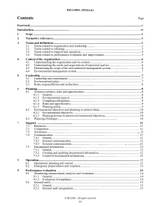
The standard provides requirements covering the complete EMS framework, including organizational context, leadership, planning, resources, competence, awareness, communication, documented information, operational controls, performance evaluation, internal auditing, management review, and improvement.
ISO 14001:2026 also continues to emphasize a life-cycle perspective. Organizations are expected to consider environmental impacts associated with products and services across relevant stages of their life cycles and determine where they can control or influence environmental effects. This helps prevent environmental impacts from simply being transferred from one part of the value chain to another.
The revised edition improves alignment with ISO’s current harmonized structure for management system standards, making ISO 14001 easier to integrate with other systems such as ISO 9001 quality management, ISO 45001 occupational health and safety, and ISO/IEC 27001 information security. Organizations operating integrated management systems can therefore coordinate common requirements for leadership, risk, documentation, auditing, management review, and continual improvement more efficiently.
ISO describes the 2026 revision as maintaining the proven foundation of ISO 14001 while making the standard clearer, easier to navigate, and more closely aligned with current environmental priorities. The revision places additional attention on climate action, biodiversity, resource efficiency, environmental conditions, leadership accountability, and the relationship between environmental actions and measurable results.
ISO 14001 is applicable to organizations of any size, sector, or geographic location. It can be used by manufacturers, construction companies, utilities, energy companies, transportation organizations, healthcare providers, government agencies, service businesses, technology companies, agricultural organizations, and virtually any organization seeking a systematic approach to environmental management.
ISO 14001 is also a certifiable management system standard. Organizations may implement the requirements for their own operational benefit or seek independent third-party certification to demonstrate that their EMS conforms to ISO 14001 requirements. Organizations previously certified to ISO 14001:2015 will need to transition to the 2026 edition according to the transition arrangements established by their certification and accreditation bodies.
At 36 pages, ISO 14001:2026 is concise compared with many technical standards, but its reach across an organization can be enormous. For organizations managing environmental risk, compliance, resource use, sustainability expectations, supply-chain requirements, and environmental performance, it is one of the most important management-system standards available.
Why This Standard Matters
ISO 14001:2026 is an essential reference for organizations seeking a systematic and internationally recognized approach to environmental management. It is especially valuable for:
Environmental managers and EMS coordinators
Sustainability and ESG teams
ISO 14001 implementation teams
Compliance and regulatory professionals
Internal and external auditors
Manufacturing and industrial organizations
Construction and engineering firms
Energy and utility companies
Supply-chain and procurement professionals
Government and public-sector organizations
Environmental consultants
Organizations preparing for ISO 14001 certification or transition
Product Features
Official ISO 14001:2026 International Standard
Current 4th Edition
Replaces ISO 14001:2015
Replaces ISO 14001:2015/Amd 1:2024
Establishes requirements for an Environmental Management System (EMS)
Applicable to organizations of any size or industry
Supports improved environmental performance
Addresses environmental risks and opportunities
Supports compliance with applicable legal and other obligations
Strengthens consideration of climate change
Strengthens consideration of biodiversity and ecosystem health
Addresses resource availability and resource efficiency
Reinforces leadership and management accountability
Strengthens alignment between environmental management and organizational strategy
Clarifies environmental context and environmental conditions
Emphasizes measurable environmental outcomes
Incorporates a life-cycle perspective
Addresses competence, awareness, and communication
Covers documented information and operational controls
Includes monitoring, measurement, analysis, and evaluation requirements
Addresses internal auditing and management review
Supports continual improvement
Uses ISO’s current harmonized management-system structure
Designed for easier integration with ISO 9001, ISO 45001, and other management-system standards
Can support independent third-party certification
Product Details
Title: ISO 14001:2026 Environmental Management Systems — Requirements with Guidance for Use
Publisher: International Organization for Standardization (ISO)
Edition: 4th
Official Publication Date: April 15, 2026
Number of Pages: 36
Status: Current / Published
Technical Committee: ISO/TC 207/SC 1 — Environmental Management Systems
ICS: 03.100.70 / 13.020.10
Replaces: ISO 14001:2015 and ISO 14001:2015/Amd 1:2024