


ISO 14068:2026 Climate change management — Carbon neutrality
ISO 14068:2026 establishes requirements for carbon neutrality, GHG reductions, removals, offsetting, carbon credits, reporting and claims.
Wrong edition, wrong file, or a file that won’t open? We replace or refund — contact us within 7 days.
Buy now is for one copy. Buying for a team? Get a quote
About this publication
Product Description
ISO 14068:2026, Climate change management — Carbon neutrality, specifies principles, requirements and guidance for achieving and demonstrating carbon neutrality. It establishes a standardized framework for quantifying a carbon footprint, reducing greenhouse gas emissions, enhancing greenhouse gas removals and offsetting the remaining carbon footprint using qualifying carbon credits.
The standard is intended to improve the credibility, consistency and transparency of carbon-neutrality programmes and claims by requiring organizations to prioritize actual greenhouse gas reductions and removal enhancements before relying on offsetting.
Current ISO 14068 Edition
ISO 14068:2026 is the current International Standard for carbon neutrality. It was published on September 11, 2026 and cancels and replaces ISO 14068-1:2023.
ISO describes the 2026 publication as a minor revision. The technical requirements remain unchanged from ISO 14068-1:2023; the title was revised and the former Part 1 designation was removed.
Change from ISO 14068-1:2023
The previous publication was titled ISO 14068-1:2023, Climate change management — Transition to net zero — Part 1: Carbon neutrality. The 2026 edition is now designated simply ISO 14068:2026, Climate change management — Carbon neutrality.
ISO specifically states that the changes consist of updating the title and removing the part number. Organizations updating procedures, contracts, reports or claims should therefore reference the current ISO 14068:2026 designation.
Scope
ISO 14068 specifies principles, requirements and guidance for achieving and demonstrating carbon neutrality through quantification, reduction and offsetting of a carbon footprint.
The document also defines terminology relating to carbon neutrality and provides guidance on actions necessary to achieve and demonstrate carbon-neutral status.
Organizations and Products
The standard applies to a wide range of subjects, including organizations and products.
Organizations can include companies, financial institutions, public authorities and other entities. Products can include goods and services as well as buildings and events.
Territories Are Outside the Scope
ISO 14068 is not intended to be used for territories such as countries, regions, states or cities when accounting for territorial greenhouse gas emissions.
It is also not intended to replace greenhouse gas reporting performed by parties to the United Nations Framework Convention on Climate Change for national reporting purposes.
Carbon Neutrality and Net Zero
ISO 14068 distinguishes carbon neutrality from net zero greenhouse gas emissions at the organizational and product level.
Carbon neutrality under this standard can involve offsetting the carbon footprint that remains after emission reductions and removal enhancements. The standard does not establish requirements or recommendations for achieving net zero greenhouse gas emissions.
Continual Improvement
Carbon neutrality is treated as a pathway of continual improvement rather than merely a one-time purchase of offsets.
The objective is for the subject's carbon footprint to decrease progressively through emission reductions and enhanced removals so that reliance on offsetting also decreases over time.
Principles
Clause 4 establishes the principles underlying credible carbon-neutrality programmes and claims.
These principles include transparency, conservativeness, use of the carbon-neutrality hierarchy, support for transition, ambition, urgency, a science-based approach, avoidance of adverse impacts, accountability and consideration of the value chain or product life cycle.
Transparency
Transparency requires relevant information concerning carbon-neutrality activities, assumptions, boundaries, methods and claims to be disclosed sufficiently for stakeholders to understand how carbon neutrality has been determined.
Conservativeness
The conservativeness principle addresses situations involving uncertainty and helps prevent assumptions or methodologies from overstating greenhouse gas reductions, removals or carbon-neutral performance.
Hierarchy Approach
A central requirement of ISO 14068 is its carbon-neutrality management hierarchy. Direct and indirect greenhouse gas emission reductions and greenhouse gas removal enhancements occurring within the value chain are given priority over offsetting.
Offsetting is used to counterbalance the carbon footprint remaining after these actions rather than as a substitute for meaningful emission-reduction activity.
Ambition and Urgency
The standard expects carbon-neutrality programmes to demonstrate ambition and recognize the urgency of climate-change mitigation.
Organizations are expected to establish pathways and targets that drive continuing reductions in greenhouse gas emissions and enhancements in removals rather than maintaining an unchanged emissions profile supported indefinitely by offsets.
Science-Based Approach
ISO 14068 includes a science-based approach among its core principles. Carbon-neutrality planning should therefore take account of relevant scientific knowledge and credible climate-change mitigation pathways.
Avoiding Adverse Impacts
Climate mitigation actions should consider potential adverse environmental or social impacts rather than focusing solely on reported greenhouse gas quantities.
This supports a broader approach in which carbon-neutrality activities do not create unacceptable unintended consequences elsewhere.
Accountability
The entity pursuing carbon neutrality remains accountable for the carbon-neutrality programme, documented information, management plan, reporting and claims associated with the subject.
Value Chain and Life Cycle Approach
The standard emphasizes consideration of greenhouse gas emissions and removals across relevant organizational value chains and product life cycles.
This helps reduce the risk of presenting a narrow carbon-neutrality claim that excludes significant indirect emissions associated with the subject.
Carbon Neutrality Framework
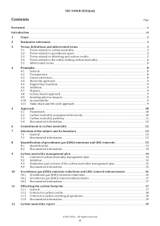
Clause 5 establishes the overall carbon-neutrality approach, including the framework, management hierarchy, carbon-neutrality pathway and documented information.
The framework connects commitment, boundary selection, carbon-footprint quantification, planning, reductions, removal enhancements, offsetting, reporting and claims into a structured management process.
Commitment to Carbon Neutrality
Clause 6 addresses the entity's commitment to carbon neutrality. A credible programme begins with a defined commitment rather than a retrospective declaration made only after carbon credits have been purchased.
The commitment forms the basis for the management plan, targets, responsibilities and actions used to achieve and maintain carbon neutrality.
Selection of the Subject and Boundary
Clause 7 requires the subject of the carbon-neutrality programme and its boundary to be clearly defined.
For an organization, the boundary can include direct and significant indirect greenhouse gas sources and removals. For a product, the boundary is based on the relevant product system and life-cycle approach.
Quantification of Greenhouse Gas Emissions and Removals
Clause 8 addresses quantification of greenhouse gas emissions and greenhouse gas removals associated with the subject.
The resulting carbon footprint provides the quantitative foundation for reduction targets, removal-enhancement activities, offsetting requirements and carbon-neutrality reporting.
Related Greenhouse Gas Standards
ISO 14068 builds on established ISO greenhouse gas standards rather than creating a completely separate carbon-footprint accounting system.
Normative references include ISO 14064-1 for organization-level greenhouse gas quantification and reporting, ISO 14064-3 for validation and verification of greenhouse gas statements, and ISO 14067 for quantification of product carbon footprints.
Carbon Neutrality Management Plan
Clause 9 requires the entity to establish, implement and maintain a carbon-neutrality management plan for the subject.
The plan provides the documented roadmap connecting the current carbon footprint with future emission reductions, removal enhancements, targets, offsetting and achievement of carbon neutrality.
Management Commitment and Responsibilities
The management plan includes a statement of commitment from top management and identification of responsibilities for implementation.
Subject and Boundary
The plan documents the subject covered by the programme and the boundary used when calculating its greenhouse gas emissions and removals.
Timeframe
The management plan establishes a timeframe for implementing the programme and for achieving and maintaining carbon neutrality.
Baseline and Base Period
A baseline and appropriate base period are established to allow progress in reducing the carbon footprint to be measured over time.
Carbon Neutrality Pathway
The management plan includes a carbon-neutrality pathway containing short- and long-term targets for greenhouse gas emission reductions and greenhouse gas removal enhancements.
The pathway is intended to progressively reduce unabated emissions and move the subject toward a condition where only residual emissions remain.
Emission Reductions
Clause 10 requires greenhouse gas emission reductions to be pursued as part of the carbon-neutrality pathway.
These reductions can address both direct and indirect emissions within the applicable boundary and value chain.
Greenhouse Gas Removal Enhancements
The standard also recognizes greenhouse gas removal enhancements within the subject's value chain as part of the hierarchy.
Removal enhancements are prioritized together with emission reductions before external offsetting is used.
Unabated and Residual Emissions
ISO 14068 distinguishes between unabated greenhouse gas emissions and residual greenhouse gas emissions.
Residual emissions are those remaining after technically and economically feasible emission reductions have been implemented. Informative Annex A provides additional material explaining the carbon-neutrality pathway and these concepts.
Offsetting the Carbon Footprint
Clause 11 establishes requirements for offsetting the carbon footprint remaining after required reduction and removal-enhancement actions.
Offsetting is accomplished through retirement of qualifying carbon credits. The credits are used to counterbalance the remaining carbon footprint and cannot substitute for compliance with the hierarchy and management plan.
Carbon Credits
ISO 14068 defines a carbon credit as a tradable certificate representing one tonne of carbon dioxide equivalent resulting from a greenhouse gas emission reduction or greenhouse gas removal enhancement.
Carbon credits used for carbon-neutrality purposes must satisfy the criteria established by the standard and the applicable carbon-crediting programme.
Retirement of Carbon Credits
The final step in offsetting is retirement or cancellation of the applicable carbon credits in a public registry by or on behalf of the entity.
Retirement ensures the credits cannot subsequently be traded or claimed again, reducing the risk of double use.
Carbon Crediting Programmes
Clause 11 includes criteria both for carbon credits and for the programmes that issue those credits.
ISO 14068 is greenhouse-gas-programme neutral, meaning it does not require participation in one particular crediting programme. Where another GHG programme applies, its requirements are additional to those of ISO 14068.
Carbon Neutrality Report
Clause 12 requires preparation of a carbon-neutrality report documenting the basis for achieving and demonstrating carbon neutrality.
The reporting framework supports transparency by providing documented information on the subject, carbon footprint, management activities, reductions, removals and offsetting underlying the carbon-neutrality determination.
Carbon Neutrality Claims
Clause 13 establishes requirements for making carbon-neutrality claims.
A carbon-neutrality claim is a public declaration concerning the carbon neutrality of a defined subject. ISO 14068 is intended to improve consistency and credibility in such claims by tying them to the management, quantification, reduction, offsetting and reporting requirements of the standard.
Annex A — Carbon Neutrality Pathway
Informative Annex A provides additional guidance concerning the carbon-neutrality pathway, including the relationship among emission reductions, removal enhancements, unabated emissions, residual emissions and offsetting over time.
Annex B — Additional Requirements for Specific Cases
Normative Annex B contains additional requirements applicable to specific carbon-neutrality cases.
Because this annex is normative, its applicable provisions form part of the standard's requirements rather than serving only as explanatory guidance.
Annex C — Comparison of GHG Quantification Frameworks
Informative Annex C compares relevant International Standards on greenhouse gas quantification with GHG Protocol Accounting and Reporting Standards.
This material assists organizations that already use established corporate or product greenhouse gas accounting frameworks and need to understand their relationship to ISO 14068.
Annex D — Ambition
Informative Annex D provides additional guidance concerning ambition within a carbon-neutrality programme.
The annex supports the principle that carbon-neutrality pathways should drive meaningful improvement in emissions performance rather than merely maintain a static dependence on offsetting.
Relationship to ISO 14064 and ISO 14067
ISO 14068 builds directly upon the ISO greenhouse gas management family. Organization-level inventories can be developed using ISO 14064-1, greenhouse gas statements can be validated or verified using ISO 14064-3, and product carbon footprints can be quantified using ISO 14067.
ISO 14068 then adds the management hierarchy, commitment, pathway, offsetting, reporting and claim requirements needed to achieve and demonstrate carbon neutrality.
Who Should Use ISO 14068:2026
- companies establishing carbon-neutrality programmes;
- financial institutions;
- manufacturers and product providers;
- service organizations;
- building owners and developers;
- event organizers;
- sustainability and ESG professionals;
- greenhouse gas inventory managers;
- environmental and climate consultants;
- validation and verification bodies;
- organizations making public carbon-neutrality claims;
- organizations using carbon credits as part of a climate strategy.
Why This Standard Matters
Carbon-neutrality claims can vary dramatically in scope and credibility when organizations use different boundaries, accounting methodologies or offsetting practices. A claim based almost entirely on purchased credits can represent a very different level of climate action from one supported by substantial reductions throughout the value chain.
ISO 14068 addresses this problem by establishing a common hierarchy in which emission reductions and removal enhancements come first, offsetting addresses the remaining carbon footprint, and documented commitments, management plans, reporting and claims provide transparency and accountability.
Product Features
- Current ISO carbon-neutrality standard
- First edition under the ISO 14068 designation
- Published September 11, 2026
- Replaces and withdraws ISO 14068-1:2023
- Technical content unchanged from ISO 14068-1:2023
- Applies to organizations and products
- Includes goods, services, buildings and events
- Prioritizes emission reductions and removal enhancements before offsetting
- Establishes carbon-neutrality management principles
- Requires definition of subject and boundary
- Addresses greenhouse gas quantification
- Requires a carbon-neutrality management plan
- Includes a carbon-neutrality pathway
- Establishes requirements for carbon credits and crediting programmes
- Requires retirement of credits used for offsetting
- Includes carbon-neutrality reporting requirements
- Includes requirements for public carbon-neutrality claims
- Builds on ISO 14064-1, ISO 14064-3 and ISO 14067
- Includes normative and informative annexes supporting implementation
Product Details
- Standard: ISO 14068:2026
- Title: Climate change management — Carbon neutrality
- Publisher: International Organization for Standardization
- Edition: First Edition
- Publication Date: September 11, 2026
- Page Count: 38
- Status: Published / Current
- Technical Committee: ISO/TC 207/SC 7, Greenhouse gas and climate change management and related activities
- ICS: 13.020.40
- Supersedes: ISO 14068-1:2023
- Language: English
- Publication Type: International Standard
Edition Status Note
ISO 14068:2026 is the current edition of the ISO carbon-neutrality standard. It was published on September 11, 2026 and simultaneously replaced ISO 14068-1:2023, which is now withdrawn. ISO identifies the change as a minor revision consisting only of an updated title and removal of the former part number; the remaining technical content is unchanged.