
ISO 9001:2026 + ISO 19011:2026 QMS & Auditing Bundle
Buy ISO 9001:2026 + ISO 19011:2026 bundle for QMS requirements, internal auditing, audit programs, auditor competence and improvement.
Wrong edition, wrong file, or a file that won’t open? We replace or refund — contact us within 7 days.
Buy now is for one copy. Buying for a team? Get a quote
About this publication
The ISO 9001:2026 + ISO 19011:2026 QMS & Auditing Bundle combines the current international requirements standard for quality management systems with the current international guidance standard for auditing management systems.
Included are:
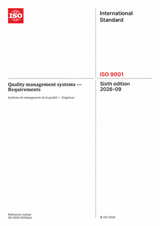
ISO 9001:2026 Quality management systems — Requirements
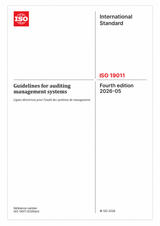
ISO 19011:2026 Guidelines for auditing management systems
Together, these two newly revised standards provide organizations with a coordinated framework for both operating a Quality Management System (QMS) and auditing that system to determine whether it is effectively implemented, maintained, and continually improved.
The relationship between the two standards is especially practical.
ISO 9001:2026 establishes the QMS requirements.
ISO 19011:2026 provides guidance for auditing management systems, managing audit programmes, conducting audits, and evaluating auditor competence.
ISO specifically identifies ISO 19011 as applicable to management systems including ISO 9001 quality management systems and notes that effective auditing supports successful implementation and continued conformity.
This makes the bundle particularly valuable for quality managers, internal auditors, lead auditors, QMS coordinators, consultants, compliance professionals, certification-support teams, operations managers, and organizations transitioning to ISO 9001:2026.
ISO 9001:2026 — Current QMS Requirements
ISO 9001:2026 Quality management systems — Requirements is the sixth and current edition of the world’s most widely used quality management system standard.
Published on September 16, 2026, it replaces ISO 9001:2015 and the associated ISO 9001:2015/Amd 1:2024 climate amendment. ISO now lists those publications as withdrawn and ISO 9001:2026 as the current edition.
ISO 9001 establishes requirements for organizations seeking to consistently provide products and services that meet customer and applicable requirements while improving performance and customer satisfaction.
The standard continues to organize the QMS around major areas including:
Context of the organization
Leadership
Planning
Support
Operation
Performance evaluation
Improvement
The 2026 Edition preserves the familiar ISO 9001 framework while modernizing several important areas.
ISO identifies stronger emphasis on:
Leadership
Quality culture
Accountability
Risks and opportunities
Strategic alignment
People and awareness
Continual improvement
Integration with other management systems
The revised standard also more clearly separates risk management from the pursuit of opportunities, encouraging organizations to actively seek beneficial outcomes instead of treating risk-based thinking only as a defensive activity.
ISO 9001:2026 also places greater attention on quality culture and ethical behaviour, recognizing that an effective quality system depends not only on procedures but also on the behaviour, awareness, and decisions of people throughout the organization.
Climate-related considerations introduced through the 2024 amendment have been carried forward into the 2026 edition, and the standard continues to use ISO’s Harmonized Structure to simplify integration with other management system standards.
A revised Annex A provides additional clarification of concepts, terminology, and the intent behind the requirements, helping users interpret and apply the new edition more consistently.
ISO 19011:2026 — Current Management System Auditing Guidance
ISO 19011:2026 Guidelines for auditing management systems is the fourth and current edition of ISO’s principal management-system auditing guidance standard.
Published May 27, 2026, the 46-page standard replaces ISO 19011:2018.
ISO 19011 provides guidance covering:
Principles of auditing
Managing audit programmes
Planning audits
Conducting management-system audits
Audit methods and techniques
Auditor responsibilities
Audit reporting
Auditor competence
Auditor evaluation and development
Internal audits
External audits
ISO describes the standard as providing a common framework intended to help organizations conduct audits consistently and effectively.
The standard is applicable to organizations conducting first-party, second-party, and third-party management-system audits, although ISO 19011 itself is a guidance standard and does not provide certification.
Major ISO 19011:2026 Updates
The 2026 edition responds directly to changes in how organizations and auditors now work.
ISO identifies increased attention to:
Technology
Digitization
Virtual environments
Remote auditing
Risk analysis
Risk mitigation
Expanded Remote Auditing Guidance
One of the most important changes is expanded guidance on remote auditing methods.
The fourth edition incorporates guidance derived from ISO/IEC TS 17012 and expands Annex A to address remote auditing and virtual locations.
ISO defines a remote auditing method as conducting audit activities from somewhere other than the physical location of the auditee.
Remote methods may be used:
Alone where appropriate
In combination with on-site auditing
For virtual workplaces
For geographically dispersed operations
To audit another organizational site remotely
This makes the 2026 edition especially relevant to organizations operating through:
Cloud platforms
Distributed teams
Remote employees
Virtual service environments
Digital processes
Multiple facilities
Global supply chains
Greater Risk Focus
ISO also identifies increased emphasis on risk analysis and mitigation within management-system auditing.
This helps organizations design audit programmes around what actually matters most rather than conducting identical audits of every process simply because a calendar says it is Tuesday.
Audit resources can be directed toward:
Higher-risk processes
Significant changes
Repeated nonconformities
Critical suppliers
New technologies
Major organizational changes
Previous audit findings
Performance concerns
How ISO 9001 and ISO 19011 Work Together
The value of this bundle is the direct relationship between the two standards.
ISO 9001:2026
Defines what an effective Quality Management System must address.
It covers:
QMS requirements
Leadership responsibilities
Risks and opportunities
Operational controls
Customer requirements
Monitoring and measurement
Internal audits
Management review
Corrective action
Continual improvement
ISO 19011:2026
Provides guidance on how management systems are audited.
It covers:
Audit principles
Audit programme management
Audit planning
Audit execution
Audit evidence
Audit findings
Reporting
Auditor competence
Auditor evaluation
Remote audit methods
Practical Relationship
ISO 9001 tells you what to implement.
ISO 19011 helps you evaluate whether it is working.
This makes the combination particularly useful throughout the full QMS lifecycle.
Internal Auditing
ISO 9001 requires organizations to conduct internal audits at planned intervals as part of performance evaluation.
ISO 19011 provides the supporting methodology organizations can use to build and operate those audit programmes effectively.
Together, the standards help organizations address:
Audit objectives
Audit scope
Audit criteria
Audit frequency
Auditor selection
Auditor independence
Evidence collection
Audit findings
Nonconformities
Audit reporting
Corrective-action follow-up
Improvement opportunities
Rather than viewing an internal audit simply as a certification requirement, ISO 19011 encourages auditing as a tool for understanding performance, identifying weaknesses, and improving management systems.
Audit Programme Management
ISO 19011 provides guidance for managing an entire audit programme, not merely performing individual audits.
This includes consideration of:
Audit programme objectives
Risks and opportunities
Resources
Auditor availability
Audit methods
Scheduling
Monitoring
Programme effectiveness
Improvement of the audit programme
This is particularly useful to quality managers responsible for coordinating multiple audits across departments, locations, suppliers, subsidiaries, or integrated management systems.
Auditor Competence
ISO 19011 also provides a framework for evaluating and developing auditor competence.
Relevant considerations include:
Knowledge
Skills
Audit experience
Management-system knowledge
Industry knowledge
Professional behaviour
Continuing development
Auditor evaluation
ISO specifically identifies consistent auditor training and evaluation as one of the major benefits of using ISO 19011.
First-, Second- and Third-Party Auditing
The auditing guidance can support several types of audits.
First-Party Audits
Internal audits performed by or on behalf of an organization on its own management system.
Second-Party Audits
Audits conducted on suppliers, contractors, or other external providers.
Third-Party Audits
Independent audits such as certification or other conformity-assessment activities.
ISO 19011 provides broadly applicable guidance that can support all three environments.
Why This Bundle Matters
The ISO 9001:2026 + ISO 19011:2026 QMS & Auditing Bundle is particularly useful for:
Quality managers
Quality engineers
QMS coordinators
Internal auditors
Lead auditors
Supplier auditors
ISO consultants
Compliance managers
Certification-support personnel
Operations managers
Process owners
Senior management
Manufacturing companies
Engineering organizations
Construction companies
Technology companies
Service organizations
Healthcare organizations
Supply-chain teams
Procurement professionals
Organizations preparing for ISO 9001 certification
Organizations transitioning from ISO 9001:2015
Companies developing or improving internal audit programmes
What’s Included
1. ISO 9001:2026 Quality Management Systems — Requirements
Publisher: International Organization for Standardization
Edition: 6th
Publication Date: September 16, 2026
Pages: 36
Technical Committee: ISO/TC 176/SC 2
ICS: 03.100.70 / 03.120.10
Status: Current
Supersedes: ISO 9001:2015 and ISO 9001:2015/Amd 1:2024
Major coverage includes:
QMS requirements
Context
Leadership
Quality culture
Risks and opportunities
Planning
Resources
Competence
Documented information
Operations
Performance evaluation
Internal auditing
Management review
Corrective action
Continual improvement
2. ISO 19011:2026 Guidelines for Auditing Management Systems
Publisher: International Organization for Standardization
Edition: 4th
Publication Date: May 27, 2026
Pages: 46
Technical Committee: ISO/TMBG
ICS: 03.120.20
Status: Current
Supersedes: ISO 19011:2018
Major coverage includes:
Auditing principles
Audit programme management
Audit planning
Conducting audits
Audit evidence
Audit findings
Audit reporting
Auditor competence
Auditor evaluation
Remote auditing
Virtual locations
Risk-based audit considerations
Continual improvement of auditing activities
Bundle Features
Includes 2 current 2026 ISO standards
Includes ISO 9001:2026
Includes ISO 19011:2026
Approximately 82 combined pages
Covers QMS requirements
Covers internal auditing
Covers external auditing
Covers audit programme management
Covers auditor competence
Covers audit planning and reporting
Covers audit evidence and findings
Covers remote auditing
Covers virtual locations
Covers risk-based auditing
Covers quality culture
Covers leadership
Covers risks and opportunities
Covers management-system performance
Supports ISO 9001 implementation
Supports ISO 9001 certification preparation
Supports internal audit programmes
Supports supplier auditing
Supports continual improvement
Product Details
Bundle Title: ISO 9001:2026 + ISO 19011:2026 QMS & Auditing Bundle
Publisher: International Organization for Standardization (ISO)
Standards Included: 2
Combined Pages: 82
Language: English
Edition Years: 2026
Subject: Quality Management / QMS / Internal Auditing / Management System Auditing / ISO Certification / Compliance / Continual Improvement
ISO 9001:2026
Title: Quality management systems — Requirements
Edition: 6th
Publication Date: September 16, 2026
Pages: 36
Status: Current
ISO 19011:2026
Title: Guidelines for auditing management systems
Edition: 4th
Publication Date: May 27, 2026
Pages: 46
Status: Current
Certification Note
ISO 9001:2026 is the certifiable requirements standard in this bundle.
ISO 19011:2026 is not itself a certification standard. It provides auditing guidance that supports management systems such as ISO 9001 and ISO 14001.
Organizations preparing for ISO 9001 certification should follow the requirements of ISO 9001 and applicable certification-body procedures.
ISO 19011 can be used to strengthen the organization’s internal audit programme and improve the consistency, competence, and effectiveness of management-system auditing.