

ISO 9001:2026 Quality Management Systems — Requirements
Buy ISO 9001:2026, the current QMS requirements standard for quality culture, leadership, risk, opportunities, change and continual improvement.
Wrong edition, wrong file, or a file that won’t open? We replace or refund — contact us within 7 days.
About this publication
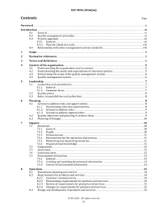
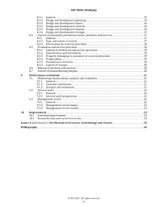
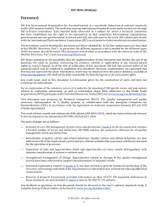
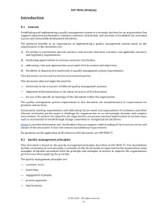
The ISO 9001:2026 Quality management systems — Requirements standard is the newly published sixth edition of the world’s most widely used quality management system standard and the current international benchmark for establishing, implementing, maintaining, and continually improving a Quality Management System (QMS).
Published by the International Organization for Standardization (ISO) on September 16, 2026, this edition replaces ISO 9001:2015 and ISO 9001:2015/Amd 1:2024. ISO now lists both previous publications as withdrawn and ISO 9001:2026 as the current edition.
ISO 9001 is used by organizations of every size and sector, including manufacturers, technology companies, construction firms, healthcare organizations, universities, government agencies, financial institutions, professional service firms, social enterprises, and small businesses. ISO states that more than one million organizations worldwide rely on the ISO 9001 framework.
The 2026 revision is the first full revision of ISO 9001 in more than a decade. Rather than replacing the familiar QMS framework, the new edition modernizes it with targeted changes intended to improve clarity, usability, integration, strategic relevance, and applicability to today’s rapidly changing business environment.
The standard continues to establish requirements for managing quality through an organization’s context, leadership, planning, support, operations, performance evaluation, and improvement activities. Its objective remains consistent delivery of products and services, greater customer confidence, effective processes, evidence-based decision-making, and continual improvement.
One of the most important changes in ISO 9001:2026 is the stronger emphasis on leadership and quality culture. The revised requirements recognize that quality cannot be sustained through procedures and documentation alone. Leadership is expected to help create an organizational environment in which quality values, accountability, and appropriate behaviours are embedded throughout the organization.
The revision also brings greater attention to ethical behaviour. Leadership responsibilities and employee awareness now more clearly connect quality management with organizational values and ethical conduct, reinforcing the idea that a functioning QMS depends on how people actually make decisions and perform their work, not merely what is written in controlled documents.
Another major change is a clearer separation between risks and opportunities. ISO 9001:2015 introduced risk-based thinking, but the 2026 edition more distinctly addresses managing risks and actively pursuing opportunities. This supports a more strategic approach in which organizations not only protect themselves from undesirable outcomes but also identify beneficial changes, improvements, and opportunities for better performance.
Management of change has also been strengthened. The revision places greater emphasis on planning, controlling, implementing, and evaluating changes so that organizations can adapt without undermining the effectiveness of their quality management systems. This is particularly relevant in environments affected by new technology, organizational restructuring, supply-chain disruption, market changes, automation, and rapidly changing customer expectations.
Climate-related considerations are now integrated into the main ISO 9001 framework. The climate-change provisions introduced through ISO 9001:2015/Amd 1:2024 have been carried forward into the 2026 revision rather than remaining a separate amendment.
The 2026 edition also adopts the latest ISO Harmonized Structure for management system standards. This improves consistency with standards such as ISO 14001 and other ISO management-system standards, making it easier for organizations to operate integrated management systems rather than maintaining completely separate systems for quality, environment, health and safety, information security, and other disciplines.
Another useful change is the treatment of terminology. Clause 3 now contains a limited number of terms and definitions directly within ISO 9001, while ISO 9000 remains the normative reference for quality-management terminology. This helps make key concepts easier to use while maintaining consistency across the wider ISO 9000 family.
The informative Annex A has been substantially expanded and revised. Its purpose is to clarify the structure, terminology, intent, and interpretation of the requirements without creating additional certification requirements. This added explanation is intended to reduce ambiguity and help both experienced users and organizations implementing ISO 9001 for the first time.
The former Annex B, which provided information about other ISO/TC 176 quality-management standards, has been removed. Relevant references are instead incorporated into Annex A and supporting ISO resources.
Despite these changes, ISO 9001:2026 is deliberately an evolution rather than a complete redesign. Core concepts such as customer focus, process management, leadership involvement, continual improvement, evidence-based decision-making, and risk-based thinking remain fundamental to the standard. Organizations with mature ISO 9001:2015 systems should therefore be able to build on their existing QMS rather than start over.
ISO 9001 continues to be applicable regardless of an organization’s size, industry, product, service, ownership structure, or geographic location. Its generic requirements allow organizations to adapt the QMS framework to their own processes while maintaining internationally recognized quality-management principles.
ISO also confirms that within the ISO 9000 family, ISO 9001 is the standard against which organizations can be certified, although certification itself is voluntary. This makes ISO 9001 particularly important for companies whose customers, contracts, supply chains, regulators, or procurement programs require independently verified quality-management systems.
Organizations currently certified to ISO 9001:2015 will need to transition to ISO 9001:2026 according to the applicable certification arrangements. ISO advises certified organizations to work directly with their certification bodies regarding the timing and requirements for transition.
At 36 pages, ISO 9001:2026 remains intentionally concise. The value of the standard is not in sheer page count but in establishing a globally recognized framework organizations can apply across complex operations, supply chains, processes, people, products, and services.
For quality managers, auditors, consultants, executives, process owners, suppliers, manufacturers, service organizations, and businesses preparing for certification or transition, ISO 9001:2026 is now the essential current reference for quality management system requirements.
What’s New in ISO 9001:2026
The sixth edition introduces targeted updates including:
Stronger emphasis on leadership
Greater focus on quality culture
Explicit emphasis on ethical behaviour
Clearer separation of risks and opportunities
Stronger focus on actively pursuing opportunities
Enhanced management of change
Climate-change considerations integrated into the main standard
Updated organizational-context expectations
Greater alignment between the QMS and strategic direction
Updated ISO Harmonized Structure
Improved integration with other ISO management-system standards
Selected terms and definitions incorporated into Clause 3
Expanded and revised Annex A
Clearer explanations of the intent behind requirements
Removal of the former Annex B
Improved wording and usability
Continued focus on customer satisfaction and continual improvement
Core Areas of Coverage
Context of the Organization
Organizations must understand the internal and external issues that can affect their QMS and its intended results.
This includes consideration of:
Organizational context
Interested parties
Customer expectations
Strategic direction
Relevant external influences
QMS scope
Processes and interactions
Leadership
The standard emphasizes active leadership involvement in the QMS.
Key areas include:
Leadership and commitment
Customer focus
Quality policy
Quality culture
Ethical behaviour
Organizational responsibilities
Accountability
Strategic alignment
Planning
Planning requirements address:
Risks
Opportunities
Quality objectives
Actions to achieve objectives
Management of change
Maintaining QMS effectiveness during change
Support
Support requirements include:
Resources
People
Infrastructure
Environment for process operation
Monitoring and measuring resources
Organizational knowledge
Competence
Awareness
Communication
Documented information
Operation
Operational requirements address the processes necessary to consistently provide conforming products and services.
Coverage includes:
Operational planning and control
Customer requirements
Design and development
Externally provided processes, products, and services
Production and service provision
Release of products and services
Control of nonconforming outputs
Performance Evaluation
Organizations must evaluate whether their QMS is functioning effectively through:
Monitoring
Measurement
Analysis
Evaluation
Customer satisfaction
Internal audits
Management review
Improvement
ISO 9001 requires organizations to continually improve QMS suitability, adequacy, and effectiveness.
Key areas include:
Improvement opportunities
Nonconformity
Corrective action
Continual improvement
Leadership involvement in improvement
Why This Standard Matters
ISO 9001:2026 is an essential reference for:
Quality managers
Quality engineers
Internal auditors
Lead auditors
ISO consultants
QMS coordinators
Compliance managers
Operations managers
Manufacturing organizations
Service organizations
Construction companies
Technology companies
Healthcare organizations
Government agencies
Educational organizations
Supply-chain professionals
Procurement teams
Senior management
Organizations pursuing ISO 9001 certification
Organizations transitioning from ISO 9001:2015
Product Features
Official ISO 9001:2026
Newly published 6th Edition
Published September 16, 2026
Current ISO quality management system requirements standard
Replaces ISO 9001:2015
Replaces ISO 9001:2015/Amd 1:2024
Applicable to organizations of all sizes and sectors
Certifiable QMS requirements standard
Stronger leadership requirements
Greater focus on quality culture
Introduces stronger emphasis on ethical behaviour
Separates risks from opportunities more clearly
Strengthens management-of-change expectations
Integrates climate-change considerations
Uses latest ISO Harmonized Structure
Improves integration with other management systems
Adds selected terminology directly into Clause 3
Includes substantially expanded Annex A guidance
Supports customer confidence
Supports process improvement
Supports continual improvement
Supports integrated management systems
36 pages
Developed by ISO/TC 176/SC 2
ISO 9001:2015 vs. ISO 9001:2026
ISO 9001:2015
The previous edition introduced:
Risk-based thinking
Stronger process approach
Organizational context
Interested parties
Leadership accountability
Greater flexibility around documented information
ISO 9001:2026
The new edition builds on that foundation with:
Stronger quality culture
Greater emphasis on ethical behaviour
Clearer distinction between risks and opportunities
More deliberate opportunity-based thinking
Stronger change management
Climate considerations incorporated into the standard
Greater connection between QMS and strategy
Latest Harmonized Structure
Expanded Annex A clarification
Improved terminology and usability
The result is a modernized QMS framework rather than a wholesale replacement of ISO 9001:2015.
Product Details
Title: ISO 9001:2026 Quality management systems — Requirements
Publisher: International Organization for Standardization (ISO)
Edition: 6th Edition
Publication Date: September 16, 2026
Number of Pages: 36
Language: English
Status: Current / Published
Stage: 60.60 — International Standard Published
Technical Committee: ISO/TC 176/SC 2
ICS: 03.100.70 / 03.120.10
Supersedes: ISO 9001:2015
Also Replaces: ISO 9001:2015/Amd 1:2024
Subject: Quality Management / Quality Management Systems / QMS / ISO Certification / Business Management / Continual Improvement
Certification & Transition Note
ISO 9001:2026 is now the current edition.
ISO 9001:2015 and ISO 9001:2015/Amd 1:2024 are listed by ISO as withdrawn and replaced by the new 2026 edition.
Organizations currently certified to ISO 9001:2015 should coordinate with their certification body regarding transition arrangements, audit scheduling, and certification-cycle requirements.
Organizations do not necessarily need to rebuild an existing QMS from the ground up. The 2026 edition retains the familiar ISO 9001 foundation while refining and strengthening selected requirements.