

ISO/IEC 17025:2017 General Requirements for the Competence of Testing and Calibration Laboratories
Buy ISO/IEC 17025:2017 General Requirements for the Competence of Testing and Calibration Laboratories, the current international standard for laboratory competence, accreditation, testing
Wrong edition, wrong file, or a file that won’t open? We replace or refund — contact us within 7 days.
About this publication
The ISO/IEC 17025:2017 General Requirements for the Competence of Testing and Calibration Laboratories standard is the internationally recognized benchmark for laboratories that need to demonstrate technical competence, impartiality, and the ability to consistently produce valid and reliable testing and calibration results.
Jointly published by the International Organization for Standardization (ISO) and the International Electrotechnical Commission (IEC), ISO/IEC 17025 is used worldwide by testing laboratories, calibration laboratories, accreditation bodies, regulators, manufacturers, research organizations, and quality professionals. It provides the framework laboratories use to establish confidence not only in their management systems, but also in the technical validity of the work they perform.
Unlike a general quality-management standard, ISO/IEC 17025 is specifically designed for laboratory competence. Its requirements address both the organizational controls needed to operate a reliable laboratory and the technical factors that directly influence the validity of test and calibration results.
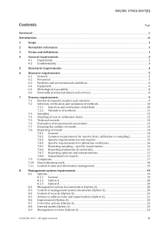
The standard covers critical areas including personnel competence, facilities and environmental conditions, equipment, metrological traceability, externally provided products and services, selection and validation of methods, sampling, handling of test and calibration items, technical records, measurement uncertainty, ensuring the validity of results, reporting, complaints, nonconforming work, data management, corrective action, internal audits, and management review.
A major strength of ISO/IEC 17025 is its emphasis on technical competence rather than paperwork alone. Laboratories must be able to demonstrate that personnel are competent, equipment is suitable and controlled, methods are appropriate, measurements are traceable where required, uncertainty is properly considered, and results are generated under conditions capable of producing dependable outcomes.
The standard also places strong emphasis on impartiality and confidentiality. Laboratories must identify risks to impartiality and manage activities in a way that protects the objectivity and integrity of testing and calibration work. This is particularly important for commercial laboratories, manufacturer-owned laboratories, regulatory testing facilities, and organizations where business relationships could potentially influence technical decisions.
ISO/IEC 17025:2017 introduced a stronger risk-based approach compared with earlier editions. Rather than relying heavily on prescriptive procedures, laboratories are expected to identify risks and opportunities that could affect the validity of results, customer confidence, operational effectiveness, and the integrity of laboratory activities.
Modern information management is another important part of the 2017 edition. The standard reflects increased reliance on computerized laboratory systems, electronic records, automated equipment, digital reporting, and laboratory information management systems (LIMS). Laboratories must control the systems used to collect, process, record, report, store, and retrieve laboratory data.
ISO/IEC 17025 also plays a central role in laboratory accreditation. Accreditation bodies use the standard as the principal criteria when evaluating testing and calibration laboratories. Accreditation provides independent confirmation that a laboratory has demonstrated competence to perform specific activities within its accredited scope.
The international recognition of ISO/IEC 17025 also helps reduce unnecessary duplicate testing. When laboratory results are produced under internationally recognized accreditation arrangements, test reports and calibration certificates can receive broader acceptance between customers, regulators, organizations, and countries. This can reduce costs, eliminate repeated testing, and support international trade.
The 2017 Third Edition remains current. ISO systematically reviewed the publication and confirmed it in 2023, meaning organizations should continue using ISO/IEC 17025:2017 as the current international reference for testing and calibration laboratory competence.
At 30 pages, ISO/IEC 17025 is concise compared with many technical standards, but its influence is enormous. For laboratories seeking accreditation, maintaining an existing accreditation, improving technical controls, qualifying suppliers, or demonstrating trustworthy results, this standard is one of the most important laboratory quality and competence references available.
Why This Standard Matters
ISO/IEC 17025:2017 is an essential reference for laboratories that need to demonstrate reliable, technically valid, and internationally recognized testing or calibration capabilities. It is especially valuable for:
Testing laboratories
Calibration laboratories
Analytical laboratories
Metrology laboratories
Research and development laboratories
Manufacturer and in-house laboratories
Quality assurance and laboratory managers
Laboratory technicians and technical managers
Accreditation and conformity-assessment bodies
Regulatory and government laboratories
Consultants and internal auditors
Organizations preparing for laboratory accreditation
Product Features
Official ISO/IEC 17025:2017 International Standard
Current 3rd Edition
Reviewed and confirmed by ISO in 2023
Establishes requirements for laboratory competence, impartiality, and consistent operation
Applies to both testing and calibration laboratories
Used as the principal basis for laboratory accreditation
Addresses laboratory personnel competence
Covers facilities and environmental conditions
Includes requirements for laboratory equipment
Addresses metrological traceability
Covers method selection, verification, and validation
Includes requirements relating to sampling
Addresses handling of test and calibration items
Covers technical records
Addresses evaluation of measurement uncertainty
Requires procedures for ensuring the validity of results
Covers reporting of test and calibration results
Includes requirements for complaints and nonconforming work
Addresses control of laboratory data and information management systems
Incorporates a risk-based approach
Covers corrective action, internal audits, and management review
Supports wider international acceptance of laboratory reports and calibration certificates
Product Details
Title: ISO/IEC 17025:2017 General Requirements for the Competence of Testing and Calibration Laboratories
Publisher: International Organization for Standardization (ISO) / International Electrotechnical Commission (IEC)
Edition: 3rd
Published: November 2017
Number of Pages: 30
Status: Current / Confirmed
Last Systematic Review: Confirmed in 2023
Technical Committee: ISO/CASCO
ICS: 03.120.20
Previous Edition: ISO/IEC 17025:2005