


ISO/IEC 42001:2023 Information technology — Artificial intelligence — Management system
ISO/IEC 42001:2023 specifies requirements for AI governance, risk treatment, impact assessment, lifecycle controls and responsible AI management.
Wrong edition, wrong file, or a file that won’t open? We replace or refund — contact us within 7 days.
Buy now is for one copy. Buying for a team? Get a quote
About this publication
Product Description
ISO/IEC 42001:2023, Information technology — Artificial intelligence — Management system, specifies requirements and provides guidance for establishing, implementing, maintaining and continually improving an artificial intelligence management system, or AIMS, within an organization.
ISO identifies ISO/IEC 42001 as the world's first international AI management system standard. It provides a structured governance framework for organizations that develop, provide or use products and services utilizing artificial intelligence systems.
Purpose of ISO/IEC 42001
The standard is intended to help organizations develop, provide and use AI systems responsibly while pursuing organizational objectives and addressing applicable requirements, obligations to interested parties and stakeholder expectations.
Rather than regulating one particular AI technology or application, ISO/IEC 42001 establishes an organization-wide management framework for managing AI-related risks, opportunities, responsibilities and impacts.
Who Can Use ISO/IEC 42001
ISO/IEC 42001 is applicable to organizations regardless of size, type or nature that provide or use products or services involving AI systems.
This includes AI developers, technology providers, organizations integrating third-party AI, businesses using AI for decision-making or automation, public-sector organizations, financial institutions, healthcare organizations, manufacturers, service providers and non-profit organizations.
Artificial Intelligence Management System
An AI management system provides interconnected policies, objectives, processes, responsibilities and controls for governing an organization's relationship with artificial intelligence.
The AIMS framework enables AI governance to become part of normal organizational management rather than remaining an isolated technical activity performed solely by data scientists or information technology teams.
AI-Specific Management Challenges
The standard recognizes characteristics of AI that can require management approaches beyond those traditionally used for conventional information technology systems.
These include automated decision-making that can lack transparency or explainability, development based on data and machine learning rather than solely human-coded logic, and AI systems capable of changing behavior through continuous learning.
Responsible AI
ISO/IEC 42001 is designed to help organizations demonstrate responsibility and accountability for their roles in relation to AI systems.
The framework supports management of issues associated with security, safety, fairness, transparency, data quality, system quality and other characteristics that can affect AI trustworthiness throughout the AI system lifecycle.
Risk-Based Approach
The standard uses a risk-based approach so organizations can determine the appropriate level of governance and control for different AI systems, applications, services and products.
The required level of control can therefore reflect the organization's context, AI use cases, interested parties, objectives, potential impacts and applicable external requirements.
Context of the Organization
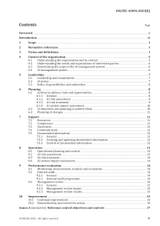
Clause 4 requires organizations to understand internal and external issues relevant to their AI management system, understand the needs and expectations of interested parties, determine the scope of the AIMS and establish the management system.
This creates the organizational foundation for AI governance and ensures that management-system controls are appropriate to the organization's role in developing, providing or using AI systems.
Interested Parties
Organizations must determine interested parties relevant to the AI management system and understand applicable expectations and requirements.
Interested parties can include customers, users, personnel, regulators, suppliers, partners and individuals or groups affected by AI systems.
Leadership and Commitment
Clause 5 requires top management to demonstrate leadership and commitment to the AI management system.
Leadership responsibilities include ensuring integration of AIMS requirements into organizational processes, providing resources, communicating the importance of effective AI management and supporting continual improvement.
AI Policy
Top management must establish an AI policy appropriate to the organization's purpose.
The policy provides a framework for AI objectives, includes commitments to applicable requirements and continual improvement and is maintained as documented information.
Roles, Responsibilities and Authorities
The organization must assign and communicate responsibilities and authorities for roles relevant to the AI management system.
Annex A further addresses AI roles and responsibilities and mechanisms for reporting concerns regarding AI systems throughout their lifecycle.
AI Risk Assessment
Clause 6.1.2 establishes requirements for AI risk assessment.
Organizations must define and apply a process that enables AI-related risks to be identified, analyzed and evaluated consistently. The assessment process supports decisions concerning appropriate controls and risk-treatment actions.
AI Risk Treatment
Clause 6.1.3 requires organizations to establish an AI risk-treatment process based on the results of risk assessment.
The organization selects appropriate treatment options, determines necessary controls, considers the reference controls in Annex A, evaluates whether additional controls are needed and establishes an AI risk-treatment plan.
Statement of Applicability
The risk-treatment process includes preparation of a Statement of Applicability identifying the controls needed by the organization and providing justification for their inclusion or exclusion.
Organizations are not required to implement every Annex A control automatically. Control selection is driven by identified risks, organizational objectives and applicable external requirements.
AI System Impact Assessment
ISO/IEC 42001 contains explicit requirements for AI system impact assessment.
Organizations must establish a process for assessing potential consequences of AI systems for individuals, groups and society where relevant to the organization's role and the applicable AI system.
Impact assessment complements AI risk assessment and can incorporate specialized assessments involving privacy, safety, security or other areas where appropriate.
AI Objectives
The organization establishes AI objectives at relevant organizational functions and levels.
Objectives must be consistent with the AI policy, consider applicable requirements, be monitored and be measurable where practicable. Organizations must determine actions, resources, responsibilities, timing and methods for evaluating results.
Planning of Changes
Changes to the AI management system must be planned and controlled.
This helps organizations address changes in AI technology, operating environments, business objectives, legal requirements, data sources, suppliers and organizational responsibilities without losing effective governance.
Resources and Competence
Clause 7 establishes support requirements covering resources, competence, awareness, communication and documented information.
Organizations need appropriate human, technical, data, tooling and computing resources to operate an effective AI management system.
Awareness and Communication
Personnel performing work under the organization's control need awareness of relevant AI policies, their contribution to effective AI management and the consequences of failing to meet AIMS requirements.
The organization also determines relevant internal and external communications concerning the AI management system.
Documented Information
ISO/IEC 42001 requires documented information necessary for effective operation of the AIMS and evidence that required processes and controls have been performed.
Documented information can include policies, risk assessments, impact assessments, control decisions, technical documentation, roles, lifecycle records, monitoring results and management reviews.
Operational Planning and Control
Clause 8 requires organizations to plan, implement and control processes needed to meet AIMS requirements and implement actions determined during planning.
Operational controls can include processes related to AI system development, provision, deployment and use throughout the lifecycle.
Operational AI Risk Assessment
AI risk assessments are performed at planned intervals and when significant changes are proposed or occur.
Organizations retain documented information concerning the results so changes in risk can be tracked and treatment decisions reviewed.
Operational AI Risk Treatment
The organization implements the AI risk-treatment plan and verifies the effectiveness of selected controls.
Changes in technology, data, system behavior, intended use or operating conditions can require controls and residual risks to be reassessed.
Operational AI Impact Assessment
Clause 8.4 brings AI system impact assessment into ongoing operations.
This supports reassessment where significant system changes, new uses or emerging impacts alter the organization's understanding of an AI system's effects.
Performance Evaluation
Clause 9 requires monitoring, measurement, analysis and evaluation of the AI management system.
The organization determines what needs to be monitored, appropriate methods, timing and how results will be analyzed and evaluated.
Internal Audit
Internal audits must be conducted at planned intervals to determine whether the AI management system conforms to organizational and ISO/IEC 42001 requirements and is effectively implemented and maintained.
An internal audit programme considers the importance of relevant processes, organizational changes and previous audit results.
Management Review
Top management reviews the AIMS at planned intervals to ensure its continuing suitability, adequacy and effectiveness.
Management review provides a formal mechanism for evaluating performance, changing risks, stakeholder expectations, audit results and opportunities for improvement.
Continual Improvement
Clause 10 requires continual improvement of the suitability, adequacy and effectiveness of the AI management system.
Organizations must also respond to nonconformities, take corrective action, address causes and evaluate whether similar problems could occur elsewhere.
Normative Annex A — Reference AI Controls
Annex A provides reference control objectives and controls for managing risks associated with the design, development, operation and use of AI systems.
The controls are organized into major areas covering policies related to AI, internal organization, resources for AI systems, AI system impacts, the AI system lifecycle, data for AI systems, information for interested parties, responsible use of AI systems and third-party and customer relationships.
Policies Related to AI
Annex A addresses creation of an AI policy, alignment of AI policy with other organizational policies and periodic policy review.
Internal Organization
Controls address allocation of AI roles and responsibilities and establishment of processes for reporting concerns associated with AI systems.
Resources for AI Systems
Resource controls address documentation of AI system resources, including data resources, tooling resources, system and computing resources and human resources.
Assessing AI System Impacts
Controls address establishment and documentation of an AI system impact-assessment process and consideration of effects on individuals, groups and society.
AI System Lifecycle
Lifecycle controls address responsible AI development objectives, requirements and specification, design and development, verification and validation, deployment, operation, monitoring, technical documentation and event logging.
Data for AI Systems
Controls address data used in AI development and operation, including data acquisition, quality, provenance and preparation.
These requirements are significant because AI system behavior and reliability can depend heavily on the suitability and quality of training, validation, testing and operational data.
Information for Interested Parties
Annex A contains controls for providing relevant information to interested parties concerning AI systems, including documentation, capabilities, limitations, adverse impacts and incident-related information where appropriate.
Use of AI Systems
Controls address responsible-use processes, objectives for responsible use and ensuring that AI systems are used consistently with their intended use and accompanying documentation.
Third-Party and Customer Relationships
Controls require allocation of AI lifecycle responsibilities among the organization, partners, suppliers, customers and other third parties.
Supplier processes should align externally provided products, services and materials with the organization's responsible AI approach, while customer expectations and needs are considered in development and use.
Normative Annex B — Implementation Guidance
Annex B provides implementation guidance corresponding to the AI controls in Annex A.
This gives organizations additional practical information for designing and applying controls selected through the AI risk-treatment process.
Informative Annex C — AI Objectives and Risk Sources
Annex C provides information concerning potential AI-related organizational objectives and risk sources.
This supports organizations in identifying relevant AI governance objectives and considering sources of risk that could affect individuals, organizations or society.
Informative Annex D — Application Across Domains and Sectors
Annex D provides information concerning use of the AI management system across different domains and sectors.
The management-system structure is intentionally generic so organizations can adapt it to different industries, AI technologies, applications and regulatory environments.
Relationship to ISO/IEC 22989
ISO/IEC 22989:2022, Artificial intelligence concepts and terminology, is a normative reference for ISO/IEC 42001 and provides AI concepts and terminology used by the management system standard.
Relationship to ISO/IEC 23894
ISO/IEC 23894 provides guidance on artificial-intelligence risk management and can complement the risk-management framework in ISO/IEC 42001.
Relationship to ISO/IEC 42005
ISO/IEC 42005:2025 provides a dedicated framework for AI system impact assessment and complements the impact-assessment requirements contained in ISO/IEC 42001.
Relationship to ISO/IEC 42006
ISO/IEC 42006:2025 establishes requirements for bodies that audit and certify artificial intelligence management systems.
This complements ISO/IEC 42001, which contains the organizational management-system requirements against which conformity can be assessed.
Integration with Other Management Systems
ISO/IEC 42001 uses ISO's harmonized management-system structure, making it easier to integrate with other management systems covering information security, privacy, quality, safety and related governance functions.
Organizations already using standards such as ISO/IEC 27001 can therefore integrate AI governance into an existing management-system framework rather than creating an entirely separate governance structure.
Certification
ISO/IEC 42001 is a requirements standard and can be used as the basis for independent certification of an organization's AI management system.
Certification is voluntary. ISO and IEC develop and publish the standard but do not themselves certify organizations; certification is performed by independent certification bodies.
Who Should Use ISO/IEC 42001:2023
- organizations developing AI systems;
- organizations providing AI-enabled products and services;
- organizations deploying or using third-party AI systems;
- technology and software companies;
- financial institutions;
- healthcare organizations;
- manufacturing organizations;
- public authorities and government agencies;
- AI governance, risk and compliance teams;
- information security and privacy professionals;
- internal and external auditors;
- organizations preparing for AI management system certification.
Why This Standard Matters
Artificial intelligence can create risks that do not map neatly to traditional information technology governance. AI systems can make automated decisions, depend on complex data pipelines, exhibit limited explainability, change through learning and create impacts extending beyond the organization deploying them.
ISO/IEC 42001 provides an internationally standardized management framework for addressing these issues through leadership, policy, risk and impact assessment, control selection, lifecycle governance, data management, transparency, third-party oversight, performance evaluation and continual improvement.
Product Features
- First edition of ISO/IEC 42001
- Published December 18, 2023
- World's first international AI management system standard
- Applicable to organizations of any size or sector
- Applies to organizations developing, providing or using AI systems
- Establishes an Artificial Intelligence Management System framework
- Uses a risk-based management approach
- Requires AI risk assessment and risk treatment
- Requires AI system impact assessment
- Includes AI policy and leadership requirements
- Addresses AI roles, responsibilities and accountability
- Addresses AI system lifecycle management
- Includes data governance controls for AI systems
- Addresses transparency and information for interested parties
- Covers suppliers, customers and third-party AI relationships
- Includes internal audit and management review
- Requires continual improvement and corrective action
- Includes normative reference AI controls and implementation guidance
- Supports voluntary third-party certification
Product Details
- Standard: ISO/IEC 42001:2023
- Title: Information technology — Artificial intelligence — Management system
- Publisher: ISO/IEC
- Edition: First Edition
- Publication Date: December 18, 2023
- Page Count: 51
- Status: Published / Current
- Technical Committee: ISO/IEC JTC 1/SC 42, Artificial intelligence
- ICS: 35.020; 03.100.70
- Normative Reference: ISO/IEC 22989:2022
- Language: English
- Publication Type: International Standard
Edition Status Note
ISO/IEC 42001:2023 is the current first edition of the International Standard. It was published on December 18, 2023 and remains at ISO publication stage 60.60. No ISO/IEC amendment or corrigendum is currently listed for this edition. European national adoptions carrying a 2026 publication year reproduce ISO/IEC 42001:2023 and do not constitute a newer second edition of the underlying ISO/IEC standard.