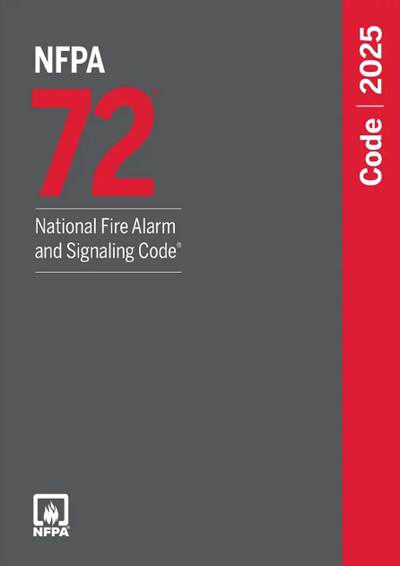
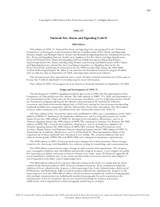
NFPA 72:2025 National Fire Alarm and Signaling Code
NFPA 72:2025 covers fire alarms, detection, notification, emergency communications, cybersecurity, supervising stations and system testing.
Wrong edition, wrong file, or a file that won’t open? We replace or refund — contact us within 7 days.
Buy now is for one copy. Buying for a team? Get a quote
About this publication
Product Description
NFPA 72®, National Fire Alarm and Signaling Code®, 2025 Edition provides comprehensive requirements for fire alarm systems, emergency communications systems and related signaling equipment used to protect life and property.
The Code addresses the application, installation, location, performance, inspection, testing and maintenance of fire alarm systems, supervising station alarm systems, public emergency alarm reporting systems, fire and carbon monoxide detection and warning equipment, emergency communications systems and their associated components.
Current Edition
NFPA identifies the 2025 edition as the current active edition of NFPA 72. It supersedes NFPA 72:2022.
The edition was issued by the NFPA Standards Council on August 29, 2024, became effective September 18, 2024 and was approved as an American National Standard on September 18, 2024.
Scope
NFPA 72 establishes requirements for systems and equipment used to detect fire and other emergency conditions, initiate alarm or supervisory signals, notify occupants, transmit signals to supervising or emergency-response locations and control associated emergency functions.
The Code covers both conventional fire alarm functions and broader emergency communications and mass notification applications.
Administration
Chapter 1 establishes the scope, purpose, application, code adoption requirements, units and other administrative provisions needed to apply NFPA 72.
Referenced Publications and Definitions
Chapters 2 and 3 identify referenced standards and establish the terminology used throughout NFPA 72.
Consistent terminology is particularly important because the Code covers detection equipment, notification appliances, communications pathways, supervising stations, emergency control functions and increasingly network-connected systems.
Documentation
Chapter 7 establishes documentation requirements for fire alarm and signaling systems.
Coverage includes minimum required documentation, design documentation, shop drawings, completion documentation, inspection and testing documentation, records and record retention.
Accurate documentation supports system design, installation, commissioning, inspection, maintenance, modification and long-term code compliance.
Fundamentals
Chapter 10 establishes fundamental requirements applying to fire alarm and signaling systems.
Core subjects include system purpose, equipment, power supplies, personnel qualifications, signals, annunciation, system functions, impairments, unwanted alarms and other fundamental operating requirements.
Cybersecurity
One of the most significant changes in the 2025 edition is the addition of a dedicated Chapter 11 on Cybersecurity.
The chapter addresses network-connectable equipment, software development and production environments, security levels, physical pathways, shared pathways, unused data ports, external network connections, cybersecurity software updates, termination of update support, system support tools, evidence of compliance and documentation.
The provisions recognize that modern fire alarm and signaling systems increasingly depend on networked equipment and software and can therefore be exposed to cybersecurity threats capable of affecting life-safety functions.
Cybersecurity Security Levels
Chapter 11 establishes security-level concepts for network-connectable equipment and references recognized cybersecurity frameworks including ISA/IEC 62443 and UL cybersecurity requirements.
Requirements vary according to the nature of the network interface, accessibility and connection to publicly accessible networks.
Circuits and Pathways
Chapter 12 covers circuits and pathways used to interconnect fire alarm and signaling system components.
The chapter includes pathway class designations, survivability levels, shared pathways, monitoring of integrity and circuit performance and nomenclature used to describe system interconnections.
Inspection, Testing and Maintenance
Chapter 14 establishes requirements for inspection, testing and maintenance of fire alarm and signaling systems.
Requirements address periodic inspection, functional testing, maintenance and records intended to verify that installed systems continue to operate as designed throughout their service life.
These provisions are essential for building owners, service providers, inspectors, authorities having jurisdiction and facility personnel responsible for maintaining life-safety systems.
Initiating Devices
Chapter 17 establishes requirements for initiating devices that detect fire or other conditions and initiate system signals.
Coverage includes smoke detection, heat detection, radiant-energy detection, manual fire alarm boxes and other initiating technologies.
New Acoustic Leak Detectors
The 2025 edition introduces requirements for acoustic leak detectors. These devices detect the sound associated with pressurized gas leakage and expand NFPA 72's coverage of modern detection technologies.
New Thermal Image Fire Detectors
The edition also introduces requirements for thermal image fire detectors, reflecting increasing use of advanced sensing and imaging technologies for fire detection.
Smoke Detector Spacing and High Ceilings
The 2025 edition clarifies smoke detector spacing requirements for high ceilings.
NFPA states that standard smoke-detector spacing remains unchanged for ceilings up to 40 ft (12.2 m). Above that height, performance-based design methods are required for determining appropriate spacing.
Notification Appliances
Chapter 18 establishes requirements for notification appliances used to communicate alarm and emergency information to building occupants.
Requirements cover audible, visible, textual, graphical and tactile notification methods and address performance, location, synchronization and other application factors.
Restricted Audible Mode Operation
The 2025 edition introduces Restricted Audible Mode Operation (RAMO) as a new notification mode.
The provision permits a RAMO notification zone to apply private-mode audible levels where the applicable requirements are met, giving designers another tool for addressing specific occupancy and notification needs.
Notification Circuit Voltage Drop
The 2025 edition provides more detailed instructions for calculating voltage drop in notification appliance circuits.
NFPA identifies these revisions in Chapters 18 and 24 as an effort to standardize calculation procedures and improve consistency in system design.
Emergency Control Function Interfaces
Chapter 21 addresses interfaces between fire alarm systems and other emergency control functions.
Subjects include elevator recall and shutdown, fire service access elevators, occupant evacuation elevators, HVAC control, high-volume low-speed fans, door and shutter release, electrically locked doors and related emergency functions.
Protected Premises Alarm and Signaling Systems
Chapter 23 establishes requirements for systems protecting individual premises.
Coverage includes system features, performance and integrity, initiating device circuits, signaling line circuits, notification appliance circuits, emergency voice and alarm communications, suppression-system actuation, off-premises signals, protected-premises emergency control functions and wireless systems.
Emergency Communications Systems
Chapter 24 addresses Emergency Communications Systems, or ECSs.
These systems can communicate instructions and emergency information during fire and non-fire emergencies, including severe weather, security events and other hazards requiring coordinated occupant communication.
Mass Notification Systems
NFPA 72 includes requirements for mass notification systems used during events such as weather emergencies, terrorist incidents and biological, chemical, nuclear and other threats.
This broader emergency-communications role extends NFPA 72 beyond traditional fire alarm signaling.
Supervising Station Alarm Systems
Chapter 26 addresses supervising station alarm systems and transmission of alarm, supervisory and trouble signals from protected premises.
The chapter covers supervising station services, communications methods, signal processing, transmission technologies and associated service providers.
Auxiliary Service Providers
The 2025 edition makes significant changes involving Auxiliary Service Providers (ASPs) and communications technologies used between protected premises and supervising stations.
Several prepublication Tentative Interim Amendments revised terminology and provisions in this area before the 2025 edition was printed.
Public Emergency Alarm Reporting Systems
Chapter 27 addresses public emergency alarm reporting systems.
Requirements include management and maintenance, communications methods, alarm processing equipment and alarm boxes used to transmit emergency reports.
Household Signaling Systems
Chapter 29 covers single- and multiple-station alarms and household signaling systems.
Subjects include smoke and carbon monoxide detection, notification, power supplies, installation, equipment performance, optional functions, inspection, testing and maintenance.
Fuel Gas Detection
The 2025 edition revises Chapter 29 to direct users to NFPA 715, Standard for the Installation of Fuel Gases Detection and Warning Equipment, for fuel-gas detection requirements.
This change helps separate fuel-gas detection requirements from the principal fire alarm and household signaling provisions of NFPA 72.
Emergency Communication Strategies
Informative annex material provides additional guidance for emergency communication strategies in buildings and campuses.
This information assists system designers and emergency planners in developing communication strategies appropriate to different hazards, occupancies and emergency-response objectives.
Carbon Monoxide
The Code includes provisions and explanatory material addressing carbon monoxide detection and warning equipment.
CO detection remains an important component of household and building life-safety systems where required by applicable codes and regulations.
Inspection and System Reliability
A fire alarm system cannot provide its intended protection if detectors are impaired, notification appliances fail, communications pathways are compromised or system changes are not documented.
NFPA 72 therefore integrates installation requirements with ongoing inspection, testing, maintenance and documentation requirements.
Authorities Having Jurisdiction
NFPA 72 is a model consensus code. Legal requirements depend on adoption by the applicable jurisdiction and any local amendments.
Designers, contractors and owners should verify which edition has been adopted by the authority having jurisdiction for the project.
2025 Edition Major Changes
- new mandatory Chapter 11 cybersecurity requirements;
- security levels for network-connectable fire alarm equipment;
- cybersecurity software-update and support provisions;
- new acoustic leak detector requirements;
- new thermal image fire detector requirements;
- clarified smoke detector spacing for ceilings up to and above 40 ft;
- new Restricted Audible Mode Operation notification option;
- more detailed notification circuit voltage-drop calculations;
- significant changes involving Auxiliary Service Providers;
- updated supervising station communications technology provisions;
- revised Chapter 29 coordination with NFPA 715 for fuel-gas detection.
Tentative Interim Amendments
NFPA currently lists five issued Tentative Interim Amendments for the 2025 edition.
TIA 25-1 and TIA 25-2 were issued April 18, 2024. TIA 25-3 and TIA 25-4 were issued August 29, 2024. NFPA states that these first four TIAs were approved for incorporation before printing.
TIA 25-5 was issued June 24, 2026 and became effective July 14, 2026. It updates the UL publication references in Section 2.3.11, including the reference to UL 864.
Errata
NFPA currently lists two errata for the 2025 edition.
Errata 72-25-1, issued August 29, 2024, corrects a cross-reference in Section 26.2.11.1 relating to Auxiliary Service Providers.
Errata 72-25-2, issued September 30, 2025, corrects cross-references in Figure A.24.3.14.4.6.3, the simplified riser diagram for a high-rise building with relocation or partial evacuation.
Who Should Use NFPA 72:2025
- fire alarm system designers and engineers;
- electrical engineers and contractors;
- fire alarm installation contractors;
- fire protection engineers;
- fire and building inspectors;
- authorities having jurisdiction;
- system commissioning personnel;
- inspection, testing and maintenance technicians;
- facility managers and building owners;
- emergency communications system designers;
- supervising station providers;
- security and life-safety system professionals.
Why This Code Matters
Modern fire alarm systems are no longer isolated panels connected only to smoke detectors and horns. They can include networked equipment, software, voice communications, mass notification, supervising stations, emergency control interfaces, wireless devices and cloud-connected communications services.
NFPA 72:2025 responds to that evolution by combining traditional detection and notification requirements with mandatory cybersecurity provisions, updated communications requirements and newer detection technologies while retaining extensive inspection, testing and maintenance requirements needed to preserve system reliability.
Product Features
- Current 2025 edition of NFPA 72
- American National Standard
- Supersedes NFPA 72:2022
- Covers fire alarm and signaling systems
- Covers emergency communications and mass notification systems
- Includes mandatory cybersecurity requirements
- Includes circuits and pathway requirements
- Covers inspection, testing and maintenance
- Addresses smoke, heat and other initiating devices
- Adds acoustic leak and thermal image fire detector provisions
- Covers audible, visible, textual and tactile notification
- Adds Restricted Audible Mode Operation
- Covers emergency control function interfaces
- Covers protected-premises systems
- Covers supervising station alarm systems
- Addresses Auxiliary Service Providers
- Covers public emergency alarm reporting systems
- Covers household smoke and carbon monoxide signaling
- Includes current TIAs and errata that users should review
Product Details
- Standard: NFPA 72:2025
- Title: National Fire Alarm and Signaling Code
- Publisher: National Fire Protection Association
- Edition: 2025 Edition
- Issued: August 29, 2024
- Effective Date: September 18, 2024
- ANSI Approval: September 18, 2024
- Print ISBN: 978-1-4559-3152-1
- NFPA Product Code: 7225
- Page Count: 457
- Binding: Softbound
- Previous Edition: NFPA 72:2022
- Status: Active / Current Edition
- Language: English
- Publication Type: Code / Standard
Edition Status Note
NFPA 72:2025 is the current active edition of the National Fire Alarm and Signaling Code and supersedes NFPA 72:2022. Four TIAs were approved for incorporation before printing. NFPA subsequently issued TIA 25-5 in June 2026, effective July 14, 2026. The edition also has Errata 72-25-1 and 72-25-2. Users applying the Code should consult NFPA's current document-information page for the latest issued amendments and corrections.