
TMS 402/602-22 Building Code Requirements and Specification for Masonry Structures
TMS 402/602-22 masonry design and construction standard with commentary, 2024 IBC reference, revised veneer rules, strength design and GFRP provisions.
Wrong edition, wrong file, or a file that won’t open? We replace or refund — contact us within 7 days.
Buy now is for one copy. Buying for a team? Get a quote
About this publication
Product Description
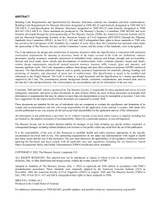
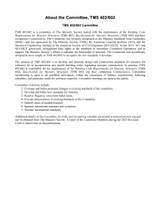
TMS 402/602-22, Building Code Requirements and Specification for Masonry Structures, is the current coordinated masonry design and construction standard published by The Masonry Society.
The publication contains two standards and their accompanying commentaries: TMS 402-22, Building Code Requirements for Masonry Structures, and TMS 602-22, Specification for Masonry Structures. TMS 402 establishes structural design and construction provisions intended for adoption by reference in building codes, while TMS 602 establishes minimum construction requirements for masonry work.
The commentaries provide technical background, committee rationale and supporting research used in development of the standards. The commentary material is informative rather than mandatory.
2022 Edition
The 2022 edition supersedes TMS 402/602-16 and represents the first edition developed under a six-year revision cycle. The expanded development period allowed The Masonry Society to reorganize portions of the standard, incorporate new materials and design approaches and coordinate the publication with newer referenced standards.
The standards were formally adopted by The Masonry Society on July 1, 2022.
Referenced by the 2024 International Building Code
TMS 402/602-22 provides the primary masonry structural design and construction provisions referenced by the 2024 International Building Code.
Designers using the 2024 IBC for structural masonry therefore rely on TMS 402-22 for applicable structural design requirements and TMS 602-22 for corresponding masonry construction specifications.
Updated Referenced Standards
The 2022 edition updates references throughout the standards, including coordination with ASCE/SEI 7-22 and numerous current ASTM material, testing and construction standards.
This coordination is important because masonry design depends on loading criteria, material properties, anchors, reinforcement, mortar, grout, masonry units and testing methods defined in separate referenced standards.
TMS 402-22 — Building Code Requirements for Masonry Structures
TMS 402 is written in mandatory code language so it can be adopted directly by reference in model or jurisdictional building codes.
The standard addresses analysis, design, detailing, materials, seismic performance and construction-related requirements for structural masonry systems.
Chapter 1 — General Requirements
Chapter 1 establishes the general scope and application of the masonry structural standard.
Its provisions provide the administrative and technical framework used by the remaining chapters and establish how referenced standards and project requirements are applied.
Chapter 2 — Notation and Definitions
Chapter 2 defines the notation and technical terminology used throughout TMS 402.
Consistent use of these definitions is particularly important when applying strength design, allowable stress design, seismic requirements, veneer requirements and specialized masonry provisions.
Chapter 3 — Quality and Construction
Chapter 3 addresses quality and construction provisions that influence structural performance.
Requirements coordinate design assumptions with construction documents, quality assurance, inspection and masonry construction practices.
Chapter 4 — General Analysis and Design Considerations
Chapter 4 establishes general analytical and design principles applicable to masonry structures.
The chapter provides the framework for evaluating structural response, loads, member behavior and conditions that must be considered before applying a specific masonry design method.
Chapter 5 — Structural Members
Chapter 5 addresses requirements applicable to structural masonry members.
Provisions support design of walls, beams, columns and other masonry elements that resist gravity, lateral or combined loading.
Chapter 6 — Reinforcement, Metal Accessories and Anchor Bolts
Chapter 6 contains requirements for reinforcement, connectors, metal accessories and anchor bolts used with masonry construction.
The 2022 edition includes revisions affecting anchor-bolt strength calculations. The Masonry Society identifies a change from anchor-bolt steel strength based on yield strength to provisions based on ultimate strength.
Chapter 7 — Seismic Design Requirements
Chapter 7 provides seismic design and detailing requirements for masonry structures.
The 2022 edition coordinates these provisions with updated seismic design requirements and ASCE/SEI 7-22.
Seismic provisions address structural systems, detailing, reinforcement and other requirements necessary for masonry to resist earthquake effects.
Chapter 8 — Allowable Stress Design
Chapter 8 contains requirements for Allowable Stress Design of masonry.
The method evaluates stresses under applicable service-level load combinations and compares them with permitted masonry, reinforcement and connection stresses.
The 2022 edition includes an increase in allowable compressive force for masonry under applicable allowable-stress-design provisions.
Chapter 9 — Strength Design
Chapter 9 establishes Strength Design requirements for masonry structures.
Strength design evaluates factored loads and nominal or design strengths for masonry members and structural systems.
Compression-Controlled Sections — Major 2022 Change
One of the most important structural changes in TMS 402-22 is introduction of compression-controlled sections into strength design.
This revision changes the treatment of reinforcement limits and member behavior. As a result, previous maximum-reinforcement provisions were deleted for many applications, although specific limits remain for beams and certain intermediate and special shear walls subjected to in-plane loading.
Shear Design Revisions
The 2022 edition also refines shear-related design provisions.
The Masonry Society identifies revisions involving net shear area, partially grouted shear-wall factors and increases or refinements to allowable and nominal shear-friction strength.
Chapter 10 — Prestressed Masonry
Chapter 10 addresses prestressed masonry.
Prestressing applies compressive force to masonry to improve structural response and can be used in specialized wall and structural applications.
Chapter 11 — Strength Design of Autoclaved Aerated Concrete Masonry
Chapter 11 contains strength-design requirements for autoclaved aerated concrete masonry.
AAC masonry has material properties and construction characteristics that differ from conventional concrete or clay masonry and therefore receives specialized treatment.
Chapter 12 — Design of Masonry Infill
Chapter 12 contains requirements for masonry infill.
This material was reorganized from the previous edition, with content formerly located in an appendix incorporated into a dedicated chapter in the 2022 standard.
Masonry infill can interact significantly with surrounding structural frames and therefore requires appropriate analysis and detailing.
Chapter 13 — Masonry Veneer
The masonry veneer provisions were completely rewritten for the 2022 edition and moved to Chapter 13.
The revised chapter provides a more rational engineering framework for both anchored veneer and adhered veneer.
Anchored Masonry Veneer
Anchored veneer relies on mechanical anchorage connecting the veneer to the supporting wall or structural backing.
The revised provisions provide expanded options and updated requirements for anchors, backing systems, support and veneer behavior.
Adhered Masonry Veneer
Adhered veneer uses mortar, adhesive or other permitted bonding systems to attach masonry units to the supporting surface.
The 2022 edition substantially revises the design and specification provisions for these systems and replaces earlier prescriptive treatment with a more comprehensive approach.
Chapter 14 — Glass Unit Masonry
Chapter 14 addresses glass unit masonry construction.
The chapter was renumbered as part of the reorganization created by the new masonry infill and veneer chapter structure.
Chapter 15 — Masonry Partition Walls
Chapter 15 addresses masonry partition walls.
Partition walls can be subject to out-of-plane loads and must be detailed to accommodate building movement and structural interaction while maintaining stability.
Appendix C — Limit Design
Appendix C contains provisions for limit design of masonry.
The appendix provides an alternative analytical framework for qualifying applications and includes provisions affected by seismic and limit-state design updates in the 2022 edition.
New Appendix D — Composite Reinforcement in Masonry
The 2022 edition adds Appendix D, providing requirements for composite reinforcement in masonry.
The Masonry Society identifies this appendix as the first U.S. masonry standard provisions addressing use of glass fiber reinforced polymer, or GFRP, reinforcement in masonry.
GFRP Reinforced Masonry
GFRP reinforcement provides a noncorrosive reinforcement option for masonry applications where conventional steel reinforcement can be undesirable because of corrosion exposure or other service conditions.
The new appendix establishes a standardized design and specification framework so GFRP reinforcement can be incorporated into masonry structural design under defined conditions.
TMS 602-22 — Specification for Masonry Structures
TMS 602 establishes minimum construction requirements intended to accompany designs performed under TMS 402.
The Specification is written in mandatory language suitable for incorporation into construction documents and project specifications.
TMS 602 Part 1 — General
Part 1 establishes general specification requirements, including administrative provisions, submittals, quality assurance and other requirements governing execution of masonry work.
The requirements help connect the engineer's design assumptions with field construction and verification procedures.
TMS 602 Part 2 — Products
Part 2 addresses masonry products and materials.
Requirements coordinate applicable masonry units, mortar, grout, reinforcement, anchors, accessories and related products with current referenced ASTM standards.
TMS 602 Part 3 — Execution
Part 3 establishes execution requirements for masonry construction.
Topics include installation, placement, tolerances, reinforcement, grout, joints, embedded items, curing and other field practices affecting masonry quality and structural performance.
Quality Assurance
TMS 402 and TMS 602 work together to establish requirements for inspection, testing and quality assurance appropriate to the masonry system and level of structural risk.
Construction quality directly affects masonry strength, reinforcement placement, grout consolidation, anchorage and overall structural behavior.
Masonry Units
The standards apply to multiple masonry materials and unit types within their respective provisions.
Material requirements are coordinated with ASTM standards covering concrete masonry units, clay masonry, AAC masonry and other qualifying products.
Mortar
Mortar properties influence masonry bond, constructability, durability and structural performance.
TMS 602 coordinates mortar requirements with referenced material and testing standards and establishes field requirements necessary to achieve the specified masonry construction.
Grout
Grout is used to fill masonry cells or spaces around reinforcement and embedded components.
Specification provisions address grout materials, placement, lift and pour procedures and other construction practices needed for reliable reinforced masonry.
Reinforcement
Steel reinforcement and permitted composite reinforcement increase tensile, flexural and shear resistance of masonry.
TMS 402 establishes structural design requirements while TMS 602 establishes corresponding construction and placement requirements.
Masonry Anchors and Accessories
Anchors, ties and metal accessories transfer loads between masonry wythes, veneer, structural backing and connected components.
Selection, spacing, embedment and installation must conform to the applicable design and construction provisions.
Structural Masonry Walls
TMS 402 provides requirements for masonry walls resisting gravity and lateral loads.
Walls can function as bearing walls, shear walls, nonbearing walls, partition walls or components of more complex structural systems.
Masonry Shear Walls
Masonry shear walls resist lateral forces from wind and earthquakes.
The standard includes requirements affecting reinforcement, shear strength, flexural capacity, seismic detailing and system classification.
Masonry Beams and Columns
The structural design provisions address beams, lintels, columns and other members subjected to axial load, bending, shear or combinations of these demands.
Seismic and Limit-State Design
The 2022 edition includes important refinements to seismic and limit-state design requirements.
These changes are coordinated with ASCE/SEI 7-22 and updated structural design research.
Commentaries
Both TMS 402 and TMS 602 include accompanying commentaries.
The commentaries explain the technical background, committee considerations and research supporting requirements in the mandatory standards.
The commentary is intended to help engineers, architects, contractors and code officials understand the intent of provisions, but commentary text itself is not mandatory.
Former ACI and ASCE Designations
Earlier editions of these masonry standards were jointly developed by The Masonry Society, the American Concrete Institute and the Structural Engineering Institute of ASCE through the Masonry Standards Joint Committee.
TMS 402 was formerly designated TMS 402/ACI 530/ASCE 5, while TMS 602 was formerly designated TMS 602/ACI 530.1/ASCE 6.
ACI and ASCE transferred their rights to The Masonry Society in 2013, after which TMS became the sole sponsoring organization.
2022 Edition Major Changes
updated references to ASCE/SEI 7-22;
updated ASTM standards throughout;
new compression-controlled section requirements in strength design;
deletion of many previous maximum reinforcement provisions;
revised net shear area provisions;
revised anchor-bolt steel strength calculations;
increased allowable compressive force in allowable stress design;
revised partially grouted shear-wall factors;
revised shear-friction provisions;
masonry infill moved from former Appendix B to a dedicated Chapter 12;
veneer moved to Chapter 13 and completely rewritten;
expanded anchored and adhered veneer options;
new Appendix D for composite reinforcement in masonry;
new standardized provisions for GFRP reinforced masonry.
Errata
The Masonry Society maintains an official errata record for TMS 402/602-22.
The current TMS errata listing identifies corrections for the 2022 edition as of January 2, 2024. Users applying the standard should review the current TMS errata in addition to the base publication.
The separately sold TMS protected-download version is identified as incorporating errata through September 22, 2022; users should therefore also review the later January 2024 errata record.
Who Should Use TMS 402/602-22
structural engineers;
masonry design engineers;
architects;
building officials and plan reviewers;
masonry contractors;
masonry inspectors;
specification writers;
quality assurance and testing agencies;
concrete masonry and brick manufacturers;
GFRP reinforcement designers and suppliers;
building-code consultants;
engineering and architecture students;
technical libraries supporting structural design and construction.
Why TMS 402/602 Matters
Structural masonry performance depends on much more than member calculations. Design assumptions must be coordinated with material specifications, reinforcement placement, mortar and grout, anchors, tolerances, quality assurance and field construction practices.
TMS 402/602 provides that coordinated framework by pairing a structural design code with a construction specification and explanatory commentaries in one publication.
Product Features
2022 edition of TMS 402/602
Current published edition as of October 2026
Referenced by the 2024 International Building Code
410 pages
Includes TMS 402-22 Building Code Requirements
Includes TMS 602-22 Specification for Masonry Structures
Includes commentaries for both standards
Covers allowable stress and strength design
Covers seismic masonry design
Covers prestressed masonry
Covers AAC masonry
Covers masonry infill
Includes completely revised masonry veneer provisions
Covers anchored and adhered veneer
Covers glass unit masonry and partition walls
Introduces compression-controlled sections
Includes new Appendix D for composite reinforcement
Includes provisions for GFRP reinforced masonry
Updated to ASCE/SEI 7-22 and current ASTM references
Current TMS errata dated January 2, 2024
Product Details
Standards: TMS 402-22 and TMS 602-22
Combined Publication: TMS 402/602-22
Title: Building Code Requirements and Specification for Masonry Structures
Publisher: The Masonry Society
Edition: 2022 Edition
Adoption Date: July 1, 2022
Print ISBN: 978-1-929081-65-3
Page Count: 410
TMS SKU: TMS-0402-22
Binding: Paperback
Weight: 2.2 lb
Dimensions: 10.79 × 8.38 × 0.8 in
Referenced By: 2024 International Building Code
Previous Edition: TMS 402/602-16
Language: English
Publication Type: Masonry Structural Design and Construction Standard
Edition Status Note
TMS 402/602-22 remains the current published edition as of October 2026 and supersedes TMS 402/602-16. The standards were adopted July 1, 2022 and are referenced by the 2024 International Building Code. The Masonry Society currently lists errata for the 2022 edition dated January 2, 2024. Users should consult the current TMS errata record whenever applying the standard.